4. 12. 2025 | EUTI, Peace and security, PR
On 3 and 4 December 2025, Jable Castle hosted participants from across Europe for the first training delivered under the European Union Training Initiative. Organised by the Centre for European Perspective, the course focused on the Foundations of Project Management in Civilian Crisis Management and brought together both pre-mission personnel and experts already deployed in the field.
Over two intensive days, participants explored how project management directly contributes to mission success. The training opened with an introduction to the project mindset and the specific ecosystem of civilian missions, helping participants distinguish between projects and routine operations. They worked through the full project lifecycle, learned how to define project success using SMART objectives, and gained practical tools for setting clear goals and scope.

A strong focus was placed on planning and implementation. Sessions covered how to structure project tasks, allocate resources and budgets, manage timelines, identify and mitigate risks, and monitor progress through effective reporting. Horizontal principles, including human rights, gender equality and the Women, Peace and Security agenda, were also integrated into the project framework, alongside the use of the Logical Framework approach.
The heart of the training was the hands-on capstone exercise. Working in groups on a mission-based scenario, participants developed their own project charter, which they refined, presented and discussed together. Through this practical work, they strengthened key skills such as teamwork, leadership, problem-solving and decision-making under pressure.

The final sessions focused on best practices and real-life application in mission environments. Participants reflected on common challenges, learned how to motivate teams and stakeholders, and created individual plans for applying newly acquired project management skills in their next deployment.
With highly engaged and motivated participants, the training days passed quickly. Participants left Jable Castle equipped with a strong foundation in project management and a practical toolkit they can immediately use in civilian crisis management missions.

4. 12. 2025 | Nacionalno varnostno mislišče, PR
Povzetek okrogle mize »Slovenija v svetu prelomnic: od inovacij do varnosti«
Slovenija ima odlično priložnost, da svojo odpornost gradi na domačem znanju, povezovanju podjetij, vlaganjih v visoke tehnologije in krepitvi lokalnih okolij. Varnost danes ni več ločena od gospodarstva – je njegov rezultat.
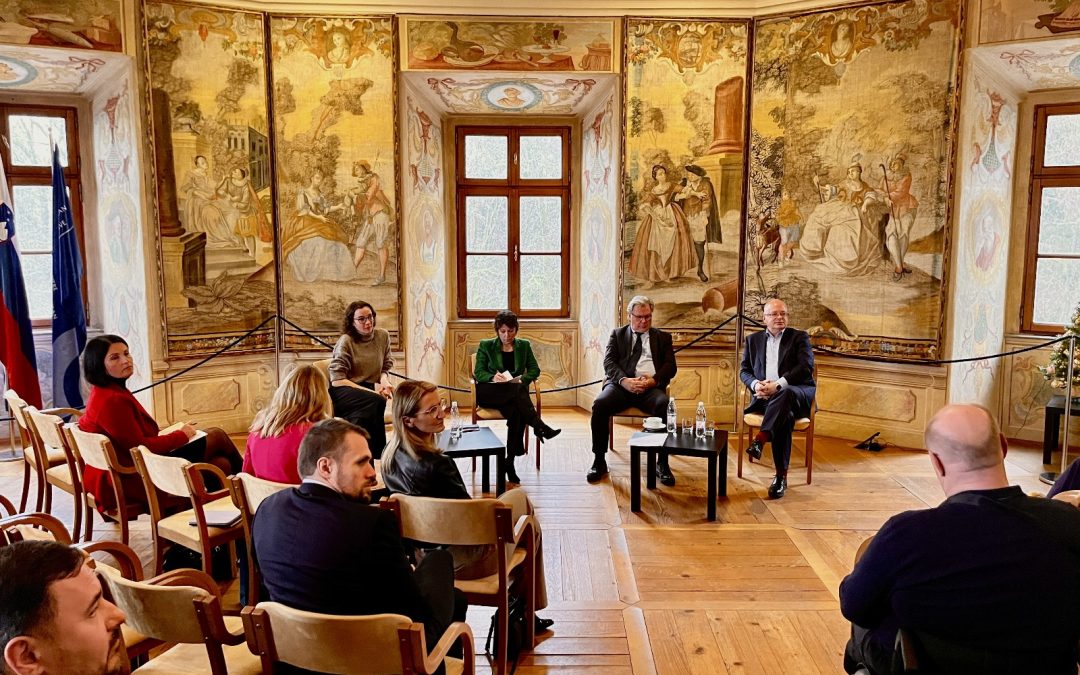
To je bilo ključno sporočilo razprave, ki je potekala v v Trbovljah 4. 12. 2025. Govorci so izpostavili, da se globalno okolje spreminja hitreje, kot smo bili navajeni, »ne iz meseca v mesec, ampak iz sestanka v sestanek«. Svet pa se vrača k logiki moči, kjer vojaška in ekonomska dominanca ponovno oblikujeta odnose med državami, »Evropa pa pri veliki mizi pogosto sedi ob strani«
V tem kontekstu gospodarstvo ni le del države, ki ustvarja delovna mesta in rast. Je temelj strateške odpornosti – od energetske varnosti, industrijskih zmogljivosti, tehnološkega razvoja in inovacij, do zaupanja v domači kapital, solastništvo in sposobnosti hitrega prilagajanja.
Razprava je pokazala, da se odpornost ne gradi samo na ravni države, temveč skozi povezovanje med podjetji, institucijami, lokalnimi skupnostmi in zavezništvi, ki omogočajo pretok znanja, tehnologij in priložnosti.
Govorci
🔸 Matjaž Han, minister za gospodarstvo, turizem in šport
🔸 Boštjan Pavlin, državni sekretar na Ministrstvu za obrambo
🔸 dr. Jure Knez, soustanovitelj in predsednik Dewesoft
🔸 Moderatorka: Sonja Šmuc, Dewesoft
Glavna sporočila razprave
Svet se nahaja v obdobju ekonomske in geopolitične nestabilnosti
V tem okolju je stabilno gospodarstvo ena ključnih oblik strateške moči. Slovenija mora razumeti, da mir in predvidljivost nista več dana samoumevno, temveč rezultat aktivne politike in vlaganj.
Evropa izgublja strateški vpliv – kar ima posledice za podjetja
Slovenija je odvisna od odločitev, ki jih sprejemata politična in gospodarska teža velesil. Če Evropa ne sedi »za veliko mizo«, so podjetja prva, ki občutijo negotovost, volatilnost in izgubo konkurenčnosti
Majhna gospodarstva lahko izrazito povečajo svoj uspeh s povezovanjem in specializacijo
Slovenija je premajhna, da bi bila samozadostna: potrebno je aktivno povezovanje znotraj države kot tudi v EU ter usmerjanje k nišnim sektorjem, kjer lahko pokaže moč znanja.
Podjetja potrebujejo stabilno okolje in dolgoročno miselnost
Za trajnostno rast so pomembni domači kapital in strateško načrtovanje. Solastništvo, kot dokazuje Dewesoft, je odlična praksa, ki kaže, da podjetja, ki ostajajo v slovenski lasti in vlagajo v razvoj, ustvarjajo odpornost gospodarstva in države.
Tehnologije odpirajo nove priložnosti za Slovenijo
Razvoj vesoljskih in drugih visokotehnoloških industrij kaže, da lahko Slovenija s povezovanjem in znanjem dosega globalno relevantnost – tudi na področjih z obrambnimi aplikacijami.
26. 11. 2025 | Nacionalno varnostno mislišče, PR
Join us on Tuesday, December 2, 2025, for an event co-organised by CEP in cooperation with Friedrich Ebert Stiftung, the Euro-Atlantic Council of Slovenia, and the Faculty of Social Sciences, University of Ljubljana. The programme will begin with a presentation of FES’s Security Radar, followed by a discussion exploring security policy and public perceptions of security in Slovenia.
How have security perceptions changed in countries in- and outside of NATO since the Russian invasion of Ukraine in 2022? This is the core question of the “Security Radar”, a multi-annual research project, which is regularly presented at the Munich Security conference. The aim of the Security Radar is to provide a realistic picture of public perception regarding current geopolitical challenges and security threats. It also surveys what political responses people in Europe and beyond consider necessary in relation to the war and other urgent issues in the realm of European security.
In scope of our discussion round, we want to explore how the changing trends in security perception are reflected in Slovenia: Has the public mood changed towards more readiness to defend NATO territory, or are Slovenians still more relucted that other citizens of NATO member states for example looking at increased defence spending? We will discuss Slovenia’s (perhaps) special position in the newly emerging NATO defence architecture with high-ranking experts form the field of foreign and security policy – and together with you!
AGENDA
5:00 PM – 5:15 PM Opening Remarks
- Sonja Schirmbeck, Director of the FES for Croatia and Slovenia
- Iztok Prezelj, Head of Defense Research Centre at the Faculty of Social Sciences UL and President of the Euro-Atlantic Council of Slovenia
5:15 PM – 5:45 PM Presentation of the Security radar 2025
- Christos Katsioulis, Director of the FES Regional Office for International Cooperation and Peace
5:45 PM – 6:30 PM Discussion with:
- Neva Grašič, State Secretary at Ministry of Foreign and European Affairs
- H.E. Sylvia Groneick, Ambassador of Germany to Slovenia
- Jelena Juvan, Head of Chair of Defense Studies Faculty of Social Sciences UL and Vice-president of the Euro-Atlantic Council of Slovenia
- Moderator: Magdalena Rakovec, Centre for European Perspective
VENUE
Faculty of Social Sciences, Kardeljeva ploščad 5, Lecture hall 3
25. 11. 2025 | EUTI, Peace and security, PR
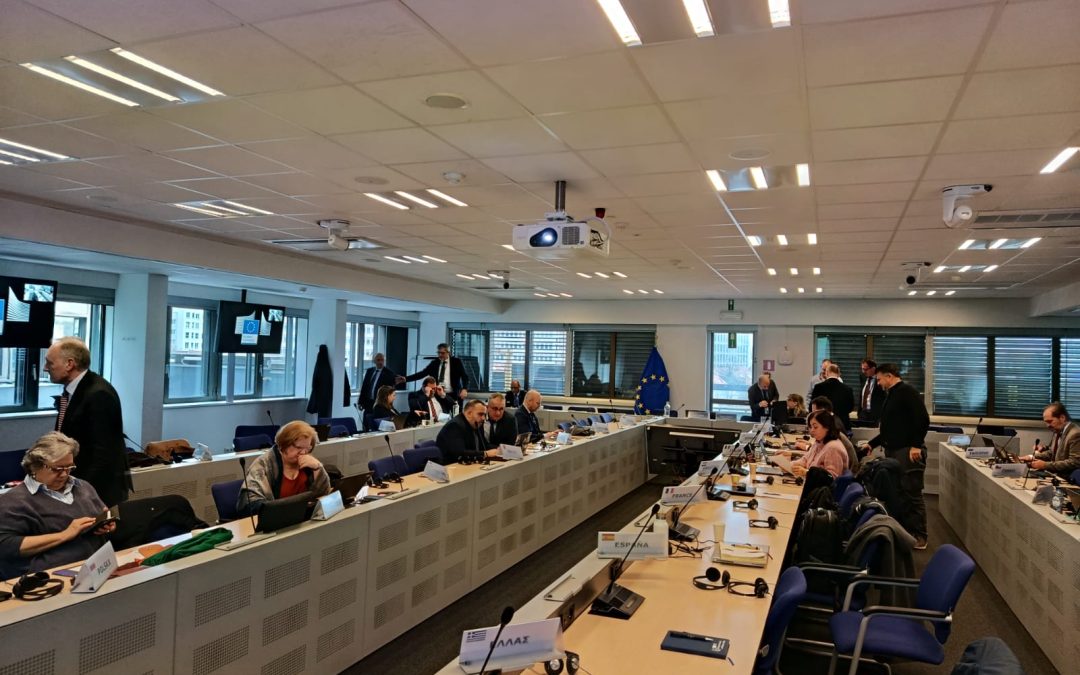
The Centre for European Perspective and the European Union Training Initiative took part in the European Security and Defence College’s Annual Training and Education Conference, held over two days at the historic Egmont Palace in Brussels.
This year’s conference focused on practical and innovative ways to enhance the effectiveness of the training cycle within the EU’s Common Security and Defence Policy. Participants worked through each key stage of the EU training loop — Training Needs, Standardisation & Adaptation, Innovation & Methodology, and Evaluation & Uptake — through a series of appetiser discussions and targeted breakout groups.

Representatives of the Centre for European Perspective and the European Union Training Initiative contributed to the appetiser discussion on Standardisation & Adaptation and led one of the breakout groups within this segment. Their session explored the crucial balance between standardised curricula and the necessary flexibility or adjustability of training formats. The discussion highlighted the importance of aligning training with real operational contexts while maintaining coherence across the broader EU framework.
Beyond the working sessions, the conference served as an excellent platform to exchange best practices, discuss emerging needs, and strengthen cooperation with partners from across Europe. The atmosphere encouraged open dialogue and the sharing of forward-looking ideas that will contribute to further improving training standards at the EU level.

The Centre for European Perspective and the European Union Training Initiative extend their appreciation to the European Security and Defence College for organising a well-structured and engaging conference, and for fostering a community dedicated to enhancing the quality and impact of EU training.