EUTI training: Team & Conflict Management in Peace Operations – Working in and Leading Multicultural Teams

EUTI training: Team & Conflict Management in Peace Operations – Working in and Leading Multicultural Teams

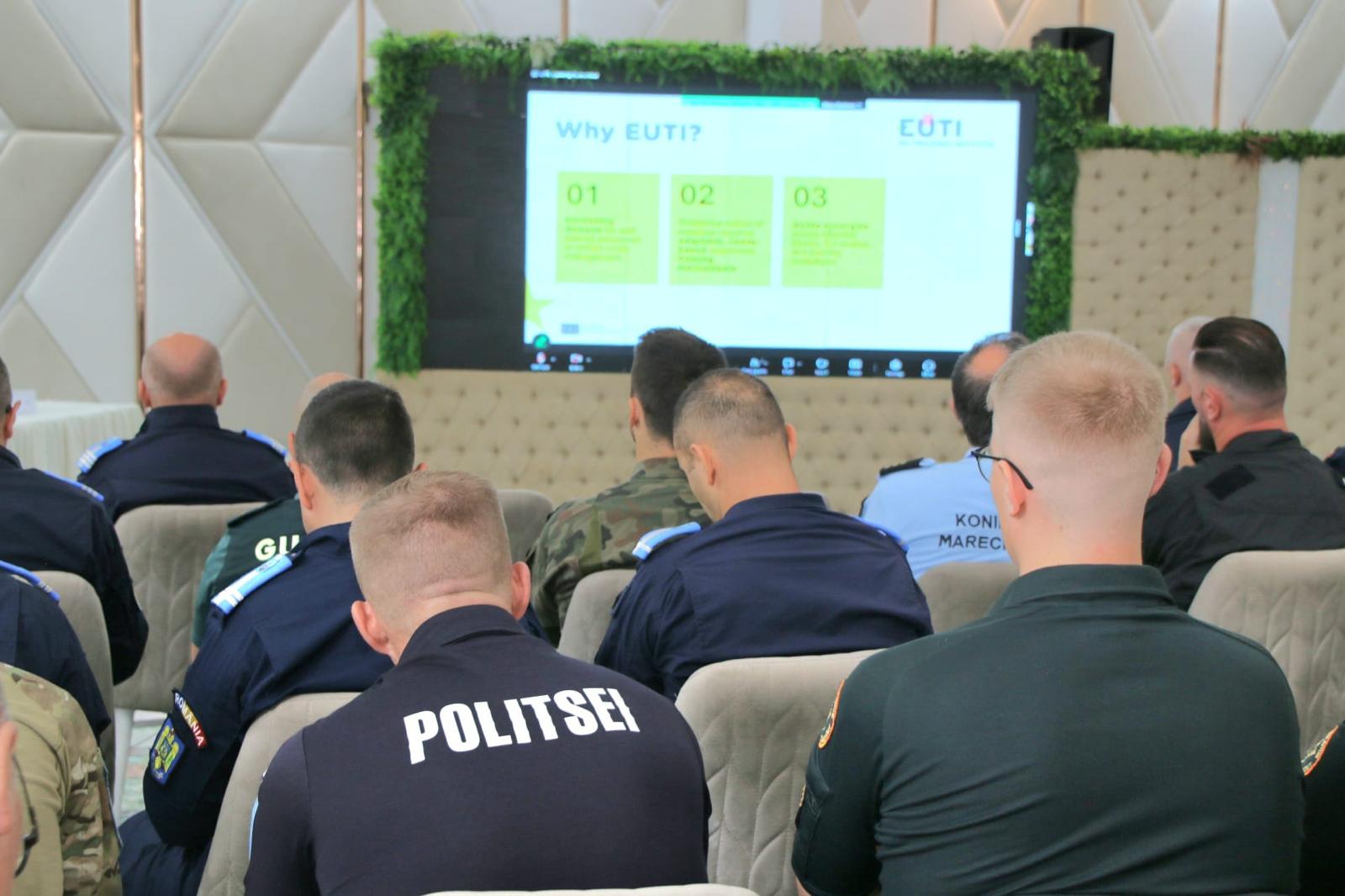
From 19 to 22 May 2026 in Pristina, Kosovo, the Center for International Peace Operations (ZIF), under the auspices of EUTI – European Union Training Initiative, successfully conducted “Team & Conflict Management in Peace Operations – Working in and Leading Multicultural Teams” training for select members of EULEX Mission in Pristina, Kosovo. The intensive program was designed to strengthen internal collaboration and leadership within civilian crisis management.

Training dates: 19–22 May 2026

Training location: EULEX Mission in Pristina, Kosovo

Participants: 11 mid-level managers and team leaders with supervisory or coordination responsibilities within EULEX Kosovo.

Background and core objectives

A mission’s working performance and ability to deliver on its mandate depends entirely on the ability of its members to collaborate trustfully and effectively. Civilian crisis management missions, such as EULEX Kosovo, operate within complex environments characterized by high workloads, stress, diverse multidisciplinary teams, complex reporting structures, and time pressure. Within this high-pressure context, interpersonal tensions and conflicts are inevitable, and if left unaddressed, they can negatively affect trust, team performance, and overall mission outcomes.

To address these challenges, this course actively developed effective teamwork by enabling mission staff—especially at the mid-management level—to constructively manage interpersonal conflicts, strengthen trust, and build cohesive, motivated teams. The program focused on the following core premises and objectives:


  • Navigating Team Dynamics: Equiping mid-level managers to play a key role in shaping team dynamics, establishing psychological safety, and building trust.
  • Harnessing Conflict Productively: Treating conflict as an inherent, potentially constructive aspect of teamwork that can be resolved timely to leverage diverse perspectives and individual strengths.
  • Adaptive Leadership: Developing adaptive, culturally sensitive, and emotionally intelligent leadership approaches to successfully guide highly diverse, multicultural teams.
  • Practical Application: Combining conceptual inputs with an experiential learning approach directly tailored to the operational realities of EULEX.

EUTI Training – Call for Applications: EU Human Rights and Due Diligence Policy (HRDDP) Training

EUTI Training – Call for Applications: EU Human Rights and Due Diligence Policy (HRDDP) Training

The Egmont Institute, under the auspices of EUTI – European Union Training Initiative, will hold EU Human Rights and Due Diligence Policy (HRDDP) Training.

The call for applications is now open.

This course supports the European Union’s commitment to ensuring compliance with international human rights and humanitarian law in crisis management. It is designed to help participants operationalize the 2024 EU HRDDP and the 2025 HRDDP Implementation Handbook through practical capacity-building and realistic scenarios. As such is closely related to the recently held Training of Trainers for Human Right Advisors (HRA): Mainstreaming Human Rights into Civilian Crisis Management Missions’ Internal and External Activities: using a HRBA approach.

Training dates: 8–10 June 2026

Training location: Hotel Barsey by Warwick, Brussels, Belgium

Target Group: Primarily personnel from CFSP/CSDP civilian and military missions and European Peace Facility (EPF) staff.

Capacity: Approximately 20 participants.

Priority: Given to Human Rights and Gender Advisors/Focal Points, though legal advisors and operations department colleagues are welcome.

The aim of the training is to strengthen participants’ ability to operationalize the EU HRDDP by applying Human Rights due diligence in realistic scenarios, thereby supporting more effective, conflict-sensitive, and accountable EU crisis management interventions while reducing the risk of human rights and IHL violations.

More information—including details on the participant mix, course modules, key learning outcomes, and logistical arrangements—is available in the call for applications.

Application

Interested candidates must apply by Friday, 24 April 2026.


Conclusion of EUTI ToT for Human Rights Advisors: Mainstreaming Human Rights into Civilian Crisis Management Missions

Conclusion of EUTI ToT for Human Rights Advisors: Mainstreaming Human Rights into Civilian Crisis Management Missions

From 23 to 25 March 2026 in Pisa, the Scuola Superiore Sant’Anna, under the auspices of EUTI – European Union Training Initiative, held the Training of Trainers (ToT) for Human Rights Advisors (HRA): Mainstreaming Human Rights into Civilian Crisis Management Missions’ Internal and External Activities: using a HRBA approach.

The program brought together nine Human Rights Advisors (HRAs) from civilian CSDP missions, along with one Brussels-based capacity. The initiative directly addressed a critical need: bridging the gap between high-level policy and the practical application of human rights standards on the ground. The primary goal of the training was to equip HRAs to act as the primary trainers within their respective missions.

While substantial progress has been made in policy development of human right standards, a significant gap remains in the practical application of these standards.To bridge this gap, the course enhanced participants’ competencies in presenting complex human rights concepts, facilitating learning, and guiding mission members in applying a human rights-based approach to programming. The curriculum moved beyond theoretical definitions, focusing on the HOW of human rights mainstreaming through practical exercises, including situational analysis, elaborating Theories of Change, and designing monitoring frameworks.

As a result of the training, Human Rights Advisors can now more effectively design and deliver mission‑specific activities that strengthen the integration of human rights across all operational areas. The “agile package” they received—containing tailored tools and documents based on the course materials—enhances their ability to translate human rights guidelines into practical actions and train other mission members.

This improved capacity enables HRAs to more confidently implement the 2021 Civilian Operations Commander Operational Guidelines on Human Rights Mainstreaming and Human Rights Due Diligence, ensuring that mission personnel are better equipped to identify, prevent, and address human rights risks. Ultimately, this elevates the mission’s overall performance by embedding consistent, informed, and proactive human rights practices in daily operations.


EUTI Partners Meeting at Jable Castle

EUTI Partners Meeting at Jable Castle

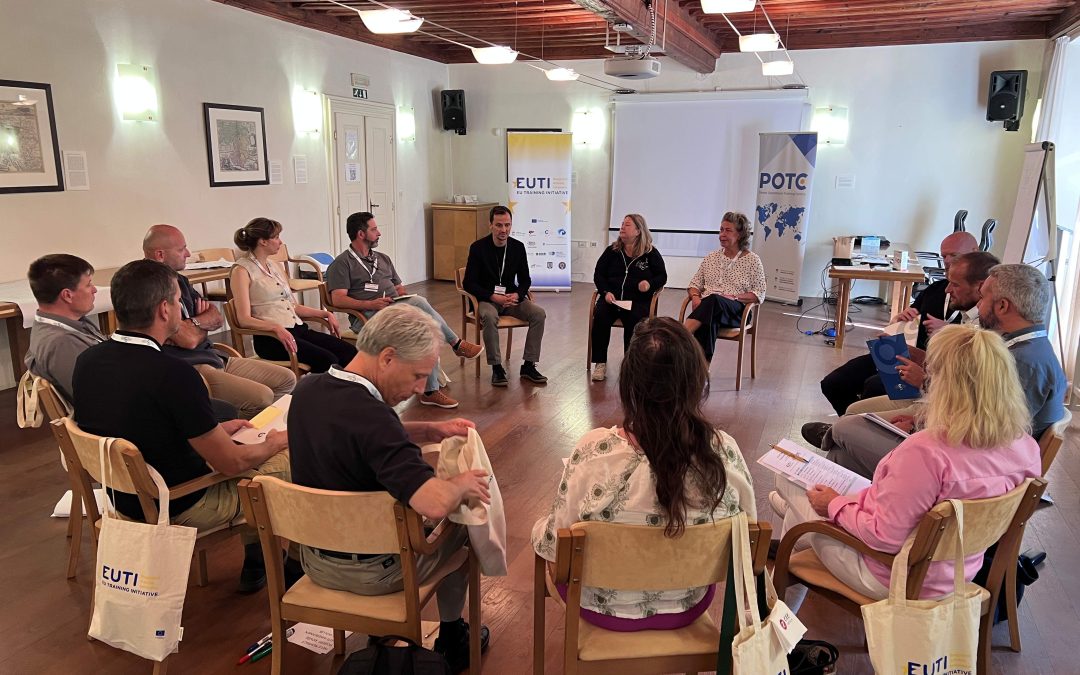
Over the last two days (3 and 4 March 2026), the EUTI (European Union Training Initiative) consortium held its partner meeting at Jable Castle in Slovenia. The event brought together 32 representatives from 14 partner organizations to map out the best possible path forward for the project.

The primary goal of the gathering was to ensure the consortium can fulfill its mission as effectively as possible: equipping civilian experts with the skills to navigate complex environments and strengthening the EU’s role as a proactive leader in global peace and security.

The meeting served as a vital space for Europe’s top training institutions to pool their knowledge. Key discussions focused on analyzing the current training requirements of civilian missions on the ground, exploring the benefits of new technologies and how to effectively integrate AI into the training sector as well as reaffirming that specialized training is not just a “bonus” for mission members, but a fundamental requirement for the success and safety of international missions.

The EUTI consortium is walking away with a clear roadmap of ideas that will be implemented throughout the next phases of the project, ensuring we continue to deliver high-quality, standardized training across Europe.

EUTI Secretariat at EAB Meeting in Brussels

EUTI Secretariat at EAB Meeting in Brussels

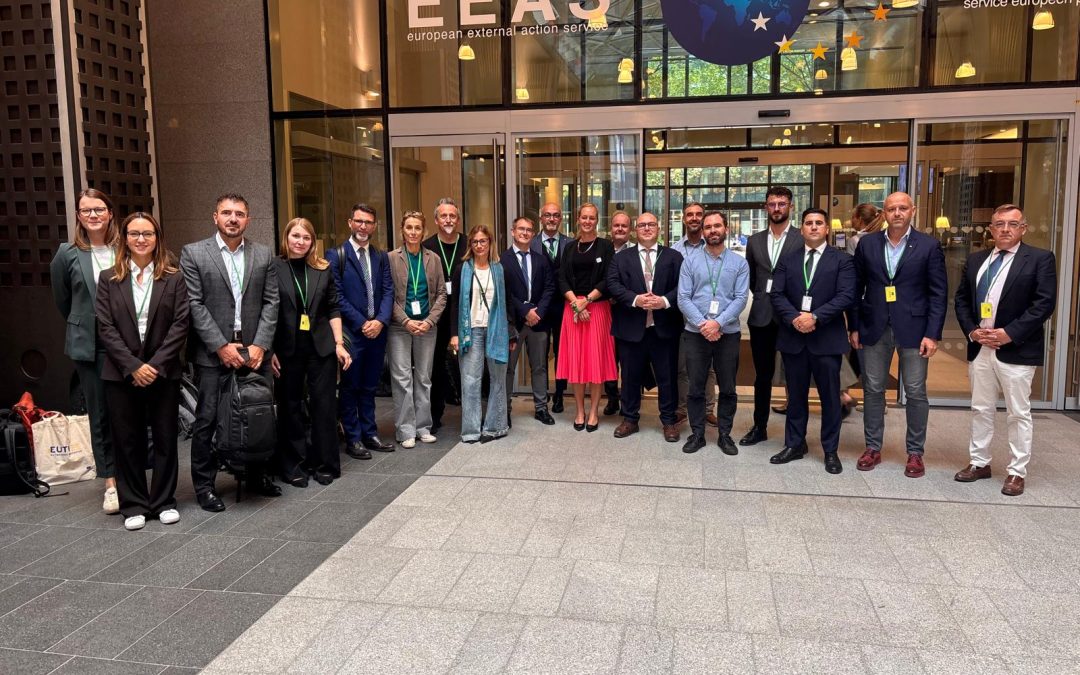
BRUSSELS – Nina Čepon and Urban Jakša are wrapping up their work visit to Brussels, where they represented the EUTI consortium at the Executive Academic Board (EAB) meeting that took place on 11 and 12 January 2026.

During the sessions, Nina and Urban collaborated with partners to update the HEAT (Hostile Environment Awareness Training) curriculum to include new modules that reflect the evolving realities of CSDP missions, such as threats from drones and doxing. They also gave an overview of the past and future EUTI plans to the participants of the meeting, ensuring continued alignment with European training standards.

One of the outcomes of EAB was the confirmation of several pilot trainings, including Environmental Management and AI Leadership. The ESDC network also expanded during this session with the inclusion of three new members, such as Democritus University.

In Working Groups 1 and 2, the focus remained on refining training for Project Management and mission orientation. Furthermore, new trainings to be carried out under the auspices of the ESDC were introduced, focusing heavily on psychological support and medical care in the field.

One of the highlights of the visit was a meeting at DG DEFIS (Directorate-General for Defence Industry and Space). This session highlighted the growing intersection of space, the defense industry, and evolving training needs—ranging from specialized space programs like Copernicus and Galileo to vital administrative, HR, and procurement skills.

Furthermore, while in Brussels, the Urban held a meeting with representatives of the European Commission responsible for monitoring the EUTI project. He presented key milestones and innovations, highlighting how EUTI’s nature as a smaller consortium allows for agile testing of new tools and approaches. The goal remains ensuring the sustainability of these practices by successfully transferring knowledge and expertise to the ESDC.


A bit more on EAB: The Executive Academic Board (EAB) is a central body of the European Security and Defence College (ESDC). Its role is to ensure the quality and consistency of training activities provided under the EU’s Common Security and Defence Policy. More information on their work is available here.


EUTI Training – Call for Applications: ToT for Human Rights Advisors

EUTI Training – Call for Applications: ToT for Human Rights Advisors

The Scuola Superiore Sant’Anna, under the auspices of EUTI – European Union Training Initiative, will hold Training of Trainers for Human Right Advisors (HRA): Mainstreaming Human Rights into Civilian Crisis Management Missions’ Internal and External Activities: using a HRBA approach.

The call for applications is now open.

Training dates: 23–25 March 2026

Training location: Scuola Superiore Sant’Anna, Pisa, Italy

Target Group: Human Rights Advisors of civilian CSDP crisis missions and human rights support elements at HQs

This training initiative directly supports the implementation of the 2021 Civilian Operations Commander Operational Guidelines on Human Rights Mainstreaming and Human Rights Due Diligence. While substantial progress has been made in policy development, a significant gap remains in the practical application of these standards within Common Security and Defence Policy (CSDP) civilian missions. To bridge this gap, this course equips Human Rights Advisors (HRAs) with the didactical and methodological skills necessary to train their colleagues and foster a Human Rights-Based Approach (HRBA) across all mission mandates.

The key objective of this course is thus to contribute to building in-mission capacities for training purposes in the field of human rights mainstreaming. It will also enhance the ability of missions to adapt to the steadily changing capacity-building requirements and strengthen in-mission capability to deliver high quality trainings in the area of HRBA and human rights mainstreaming.

The curriculum of the training will move beyond theoretical definitions, focusing on the HOW of human rights mainstreaming. Participants will engage in practical exercises—including situational analysis, elaborating Theories of Change, and designing monitoring frameworks—all viewed through a human rights lens.

The training of trainers course will be targeted at human rights Advisors working in civilian CSDP missions – who, inter alia, conduct trainings and coaching sessions on issues related to human rights as subject matter experts or trainers and are called upon, in the Operational Guidelines on Human Rights Mainstreaming and Human Rights Due Diligence, to play a catalyst role to ensure internal and external human rights mainstreaming within the mission of assignment.

 Applications for the Training of Trainers for Human Rights Advisors are now open. Deadline is 22 February 2026.