Youth Shaping the Danube Region: Reflections from Our Interactive Workshop at the 14th EUSDR Annual Forum

Youth Shaping the Danube Region: Reflections from Our Interactive Workshop at the 14th EUSDR Annual Forum

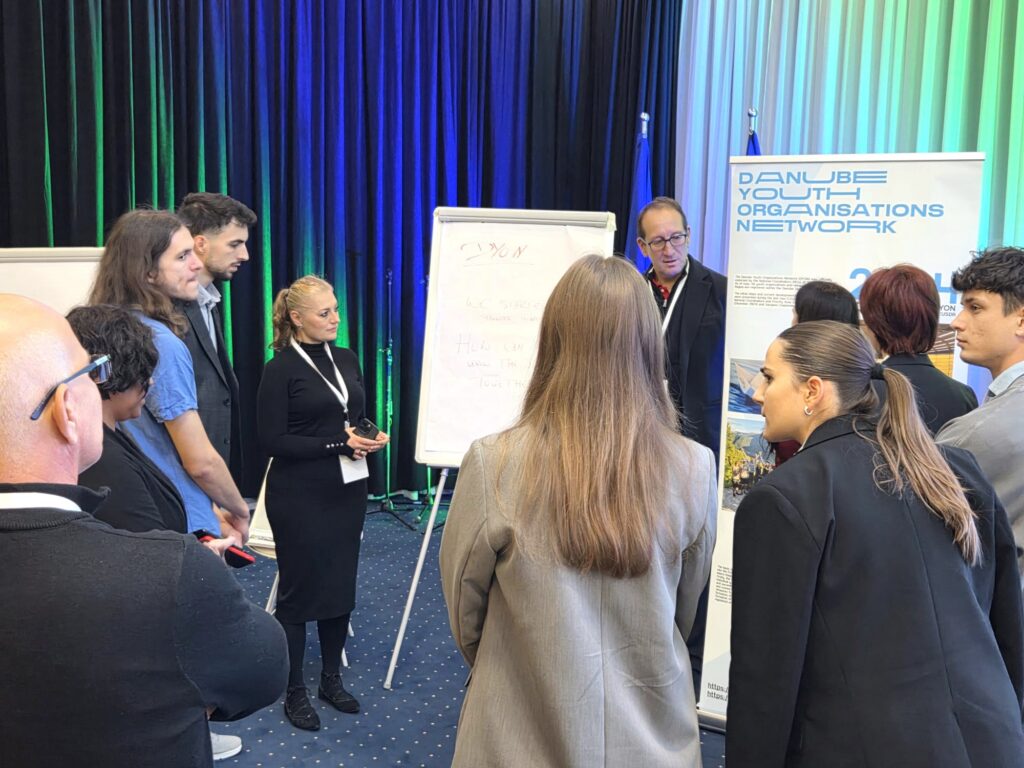
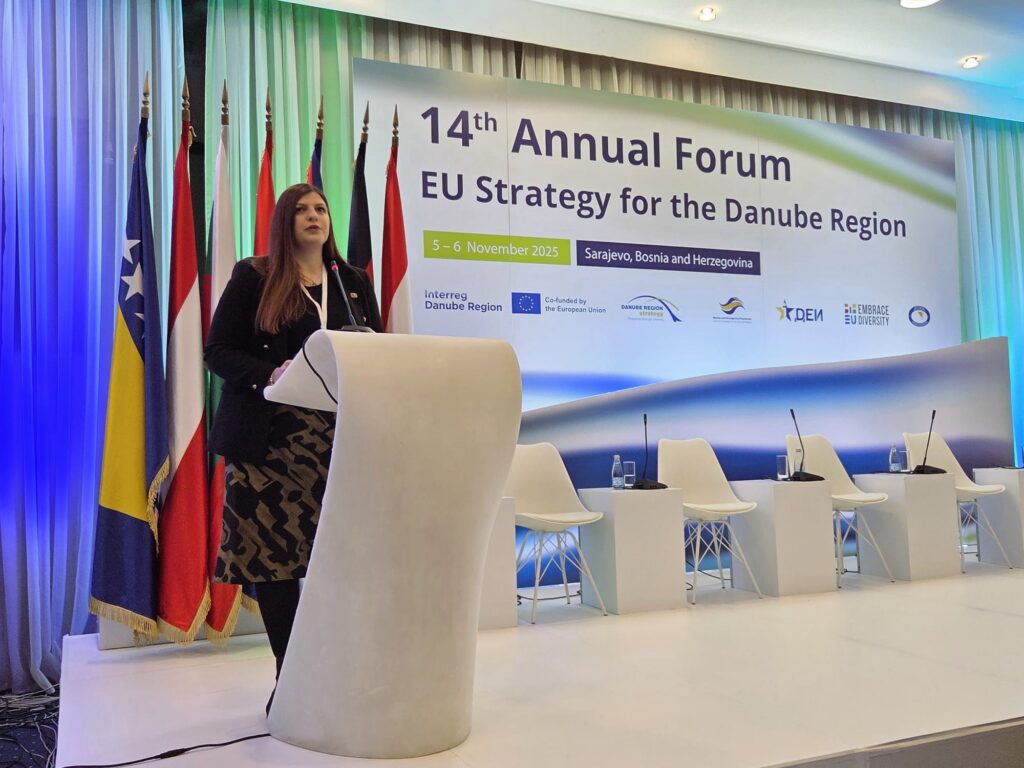
Young people across the Danube Region are stepping forward with ideas, motivation, and a strong desire to shape the future. This spirit was at the heart of our interactive workshop Youth Engagement and Active Citizenship in the Danube Region, held on 6 November 2025 during the 14th EUSDR Annual Forum in Sarajevo. Bringing together representatives of the Danube Youth Council, the Danube Youth Organizations Network, and the Enter:Change initiative, the workshop created a vibrant space for honest dialogue, shared experiences, and forward-looking proposals. Designed as a World Café, the session encouraged participants to rotate among discussion tables, exchange perspectives, and collectively explore how youth can play a meaningful role in democratic governance and regional cooperation.  

Youth as Contributors Today — Not Only Tomorrow

 
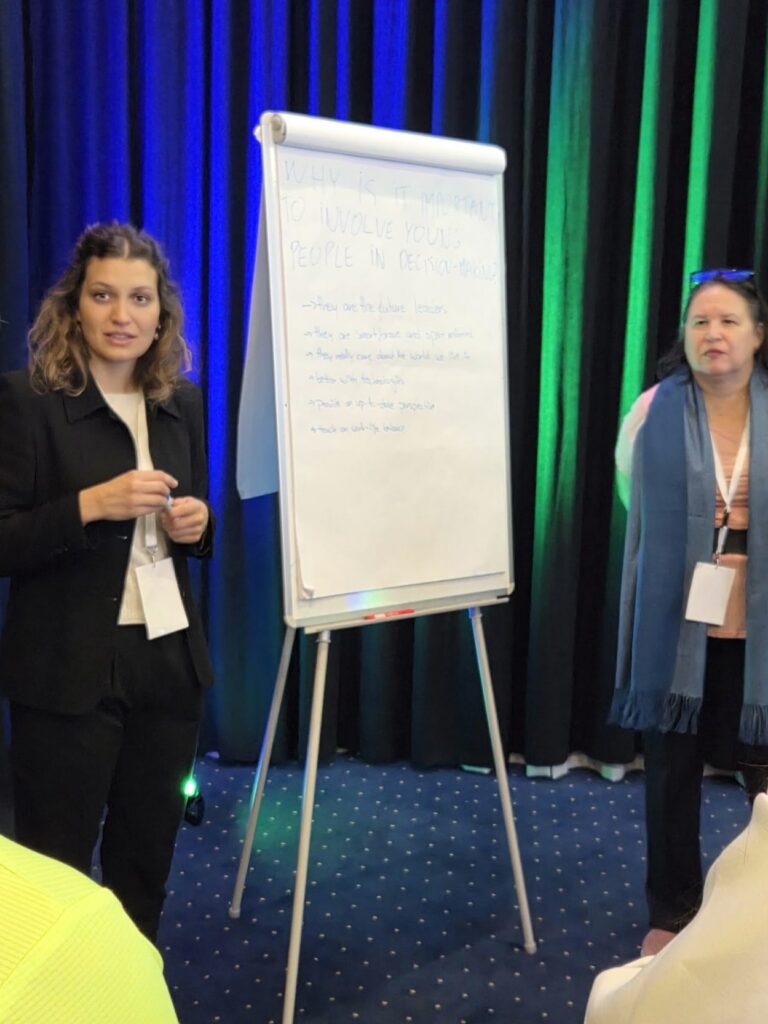
A strong message echoed throughout the room: young people are not passive observers. They are already contributing to shaping the Danube Region, and they want to be recognised as equal partners in decision-making. Participants highlighted why their involvement matters: they bring creativity, technological confidence, a long-term outlook, and the courage to challenge old patterns. They are open-minded, results-oriented, and motivated by a genuine sense of responsibility for the world around them. For many, meaningful participation is closely tied to trust in institutions and a belief that their voices can lead to real impact.  

Building Stronger Youth Networks Across the Region

 
Representatives from the Danube Youth Organizations Network reflected on the growth of youth-led initiatives and the importance of building stronger, more sustainable networks. They emphasised the value of improved visibility, alumni engagement, and new links between young people, local authorities, NGOs, and communities along the Danube. Better fundraising opportunities and shared purpose were also identified as essential elements for the network’s future development. The discussion reaffirmed the need for transnational cooperation — not only to connect young people, but also to create lasting partnerships and shared solutions to common challenges.  

A New Generation of Leaders in Bosnia and Herzegovina

The Enter:Change initiative shared insights from its work with young leaders in Bosnia and Herzegovina, focusing on leadership skills, democratic participation, anti-corruption, interethnic dialogue, and resilience to disinformation. Their central question — whether young leaders can pave a more cooperative political path — sparked reflections on the need for cultural change, institutional openness, and long-term support. Participants stressed that progress requires more accessible EU funding for emerging youth initiatives, stronger support for civil society, and wider opportunities that convince talented young people to remain engaged in their home communities rather than seeking prospects elsewhere.  

Key Takeaways: What Young People Need to Thrive

Across all discussions, several common themes emerged:
  • Meaningful involvement: Youth want more than symbolic participation; they want structured, long-term channels to influence decision-making.
  • Capacity-building: Leadership training, critical thinking, communication skills, and digital literacy are essential tools for empowered citizenship.
  • Cross-border cooperation: Mobility, exchange, and shared learning strengthen connections and help address regional challenges together.
  • Supportive ecosystems: Youth-led initiatives need sustained funding, mentorship, and visibility — not isolated, short-term projects.
The workshop’s outcomes reflect the priorities and aspirations of young people across the Danube Region  

Looking Ahead

The enthusiasm and maturity demonstrated by the workshop participants confirmed once again that youth are ready to contribute — not only to the future, but to the present of the Danube Region. Their perspectives are essential for building trust, strengthening governance, and enhancing cooperation across borders. As Priority Area 10, we remain committed to supporting youth engagement, creating opportunities for dialogue, and working together with our partners to ensure that young people continue to shape the direction of the Danube Region. More about Priority Area 10
WIN Academy – Youth Edition

WIN Academy – Youth Edition

The first OSCE WIN Academy – Youth Edition, co-organised by the Bled Strategic Forum (BSF), the OSCE, and the Faculty of Social Sciences, took place in Ljubljana from 3–6 November. The programme brought together 16 students from South-Eastern Europe for four days of workshops, discussions, and exchanges focused on gender equality and the Women, Peace and Security (WPS) Agenda.

The Youth Edition is part of the OSCE WIN (Women and Men Innovating and Networking for Gender Equality) project. The main objective of WIN is to advance gender equality as a prerequisite for achieving and maintaining stable, prosperous, and peaceful societies across the OSCE area. WIN regularly delivers capacity-building programmes, leadership trainings, and skills development opportunities for professionals and practitioners. This was the first time the Academy was organised specifically for young people, making it a new step in extending WIN’s tools and training approaches to the next generation of peace providers.

The programme

The programme opened with a public event titled “Looking Back in Order to Look Forward: Empowering Youth to Lead and Strengthen WPS.” Speakers underlined that the WPS Agenda is about ensuring full inclusion in peace and security efforts and highlighted the need to shift narratives away from seeing women only as victims.

The panel featured:

  • Ambassador Darja Bavdaž Kuret, MFA Slovenia
  • Prof. Dr. Ljubica Jelušič, University of Ljubljana
  • Dr. Lara Scarpitta, OSCE Gender Issues Programme

Moderated by Peter Grk, BSF Secretary General

The event was opened by Tanja Fajon, Deputy Prime Minister and Minister of Foreign and European Affairs, Dr. Scarpitta, and Prof. Dr. Andrej Kohont, Vice-Dean of the Faculty of Social Sciences.

Over the next few days, the participants then engaged in the participant-only programme, which included sessions on the OSCE’s work and its field operations in South-Eastern Europe, key international frameworks on gender equality, and the intersections of gender, youth, and peacebuilding.

Throughout the programme, they had the opportunity to learn from and engage with a range of OSCE experts and practitioners, including Anastasia Fusco (WIN Project Manager, OSCE Gender Issues Programme), Augusta Featherston (Head of Democratization Department, OSCE Mission to Serbia), and Elmaja Bavčić (Adviser on Gender Equality, OSCE), who led sessions on OSCE structures, gender frameworks, and practical approaches to equality in the security sector.

The programme also featured a conversation with Sonja Lokar, former Chair of the Stability Pact Gender Task Force, as well as a fireside chat with alumnae of the OSCE Young Women’s Dialogue Academy. In addition, participants took part in the workshop “Youth Voices for an Equal Future,” a feminist tour of Ljubljana, and a discussion with Ms. Lucija Tacer, Member of the National Assembly.


VABILO na razpravo: Slovenija v svetu prelomnic: prehranska varnost in strateška odpornost

VABILO na razpravo: Slovenija v svetu prelomnic: prehranska varnost in strateška odpornost

Slovenija v svetu prelomnic: prehranska varnost in strateška odpornost

Torek, 18. november 2025 ob 18.30

Dvorana A, Hotel City Maribor

Kaj pomeni varnost v svetu, kjer se globalni konflikti poglabljajo, kjer so dobavne verige vse bolj krhke, cene hrane pa vse manj predvidljive?

Kako se lahko Slovenija pripravi na prihodnost, v kateri bo odpornost ključna – ne le vojaška, ampak tudi prehranska, energetska in ekonomska?

Vabimo vas, da se nam pridružite na aktualni in poglobljeni okrogli mizi z naslovom Slovenija v svetu prelomnic: prehranska varnost in strateška odpornost, kjer bomo razpravljali o tem, kako lahko Slovenija postane bolj odporna in samozadostna v času globalnih prelomnic.

Teme razprave bodo med drugim:

  • Kako se naša varnost spreminja v tem novem geopolitičnem okolju?
  • Kako se Slovenija sooča z varnostnimi izzivi v času globalnih prelomnic?
  • Ali znamo kot majhna država dovolj hitro prepoznati tveganja in strateško ukrepati?
  • Kako pomembni so strateške zaloge, lokalna proizvodnja in prehranska samooskrba?
  • Zakaj moramo širše razumeti pojem varnosti – kot preplet fizične, digitalne, institucionalne, ekonomske in prehranske odpornosti?
  • Ali lahko krepitev državne odpornosti prispeva k gospodarskemu razvoju?

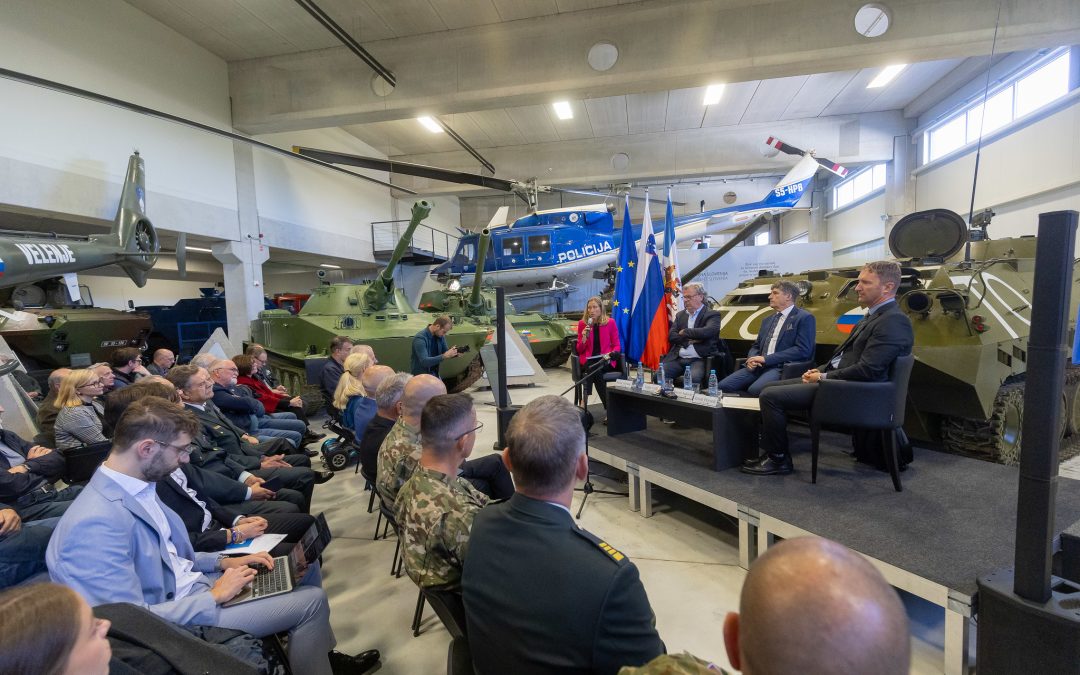
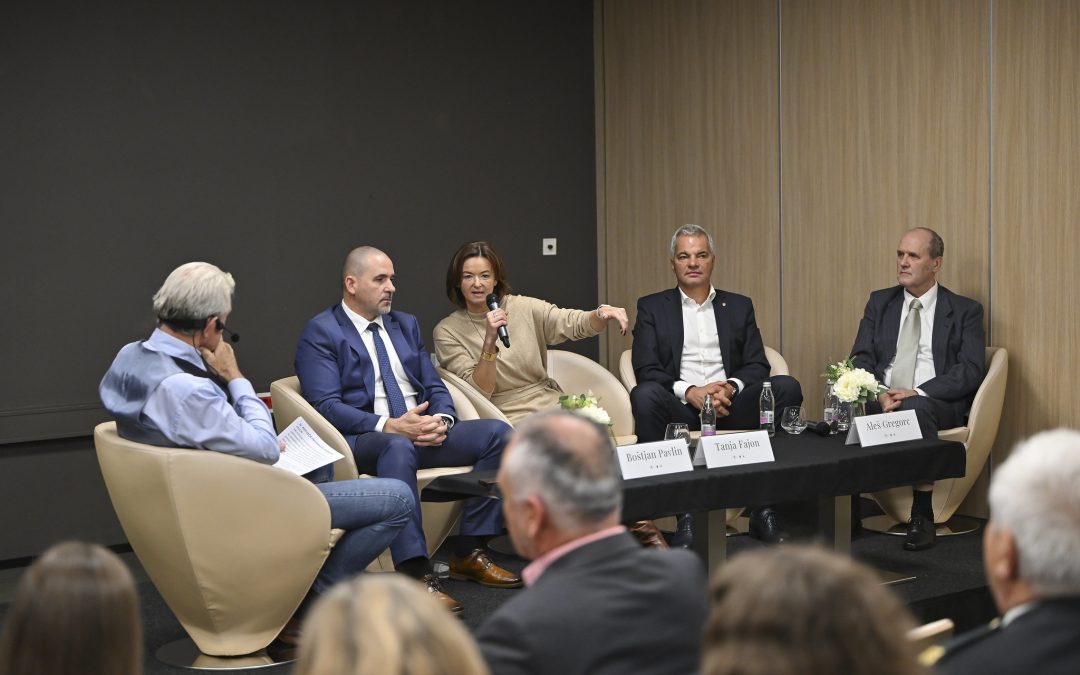
    Okroglo mizo organizirata Center za evropsko prihodnost in Zveza slovenskih častnikov. V razpravi bodo sodelovali ugledni strokovnjaki s področij geopolitike, obrambe, prehranske varnosti in trajnostnega razvoja:

    • Tanja Fajon, podpredsednica vlade RS in ministrica za zunanje in evropske zadeve RS
    • Boštjan Pavlin, državni sekretar na Ministrstvu za obrambo RS
    • Peter Polanič, predsednik uprave Skupine Panvita
    • Aleš Gregorc, dekan Fakultete za kmetijstvo in biosistemske vede UM

    Moderator: Slavko Bobovnik

    Okrogla miza bo potekala v slovenskem jeziku.

    Po končani razpravi sledi pogostitev in prijetno druženje.

    Vstop je prost do zapolnitve mest. Prosimo za potrditev udeležbe do 15. novembra 2025 prek povezave.

    Na voljo je brezplačno parkirišče v sklopu garaže Hotela City.

    EUTI Training Call for Applications: Foundation of Project Management in Civilian Crisis Management

    EUTI Training Call for Applications: Foundation of Project Management in Civilian Crisis Management

    The Centre for European Perspective (CEP), under the auspices of EUTI – European Union Training Initiative, is proud to announce the first EUTI training and the start of the project’s main activities!

    This pre-mission specialised training on the Foundations of Project Management in Civilian Crisis Management Missions addresses a key challenge faced by experts deployed in EU Common Security and Defence Policy (CSDP) missions: turning strategic objectives into concrete, measurable results in complex, multicultural environments.

    Projects in CSDP missions often take the form of capacity-building programmes, local partnership initiatives, training schemes, or community security projects. Yet, many deployed experts are not professional project managers. They must learn to define clear objectives, navigate diverse institutional frameworks, coordinate with multiple stakeholders, and adapt to rapidly changing conditions on the ground.

    This course on the foundations of project management in civilian crisis management addresses the need by equipping soon-to-be-deployed professionals with a practical project management mindset, rather than a rigid theoretical and methodological approach. It introduces participants to the core principles, tools, and habits that enable successful project initiation, planning, and delivery in dynamic operational settings. By grounding learning in realistic mission scenarios and emphasising collaboration across functional silos, the training enhances participants’ ability to manage limited resources, anticipate risks, and communicate effectively within mission structures and the broader multicultural environment to which they professionally belong.

    Ultimately, the course contributes to strengthening the effectiveness, accountability, and sustainability of EU civilian crisis management operations—key priorities under the EU Civilian CSDP Compact and the Strategic Compass.

    Training date: 3 & 4 December 2025
    Training location: Jable Castle, Mengeš, Slovenia

    Find the full call for applications here: EUTI Call for Applications – Foundations of Project Management_December 2025

    Applications for the Foundations of Project Management in Civilian Crisis Management Missions are open until 9 November 2025.
    Interested applicants can register through an online application form, accessible here.

    EU Training Initiative (EUTI) Officially Launched in Brussels

    EU Training Initiative (EUTI) Officially Launched in Brussels

    On 8–9 September 2025, the EU Training Initiative (EUTI) was officially launched at the Permanent Representation of Slovenia to the EU in Brussels. The two-day kick-off and partner meeting was led by the EUTI Secretariat, together with the EUTI Consortium, comprising 15 civilian, police, and gendarmerie organisations throughout the EU. The event brought together representatives from the European Commission, the European External Action Service (EEAS), the European Security and Defence College (ESDC), and Civilian Operations HQ (CivOpsHQ) to discuss the initiative’s objectives, main activities, and next steps.

    The EUTI initiative aims to strengthen the European Union’s capacity to respond to global challenges by providing specialised, demand-driven, and tailor-made training to civilian, police, and gendarmerie experts already deployed or soon to be deployed to international crisis management and peace support missions. It focuses on three main pillars: addressing training needs, advising on training harmonisation, standardisation and certification, and introducing innovative training methodologies and strategies to meet emerging challenges.

    During the partner meeting, participants reviewed the EUTI Manual and Standard Operating Procedures (SOPs), ensuring alignment with EU priorities, Common Security and Defence Policy (CSDP) training policies and operational requirements. Working groups explored strategies for implementing training modules, fostering cooperation among EU institutions, and enhancing knowledge exchange across member states, their training and academic institutions, and seconding agencies. The Consortium partners charted the EUTI Training Catalogue, a living and non-exhaustive document listing all the training capacities and capabilities of project partners, building on their more than a decade-long experience in providing training in the civilian crisis management context.

    EUTI Kickoff and high-level panel discussion

    A highlight of the event was a high-level panel discussion featuring representatives from the European Commission, EEAS, ESDC, and the CivOpsHQ. Panellists emphasised the value of coordinated training efforts and innovative approaches to civilian crisis management training.

    “Training must be innovative, collaborative and adaptable — because the needs of missions are changing faster than ever.”

    The event also featured informal networking sessions, allowing participants to strengthen partnerships and exchange experiences, laying the groundwork for the next steps of EUTI’s implementation.

    Through EUTI, the EU is enhancing professional development, promoting best practices, and building sustainable capacities for its crisis management and peace support missions.