22. 10. 2025 | EUTI, PR
The Centre for European Perspective (CEP), under the auspices of EUTI – European Union Training Initiative, is proud to announce the first EUTI training and the start of the project’s main activities!
This pre-mission specialised training on the Foundations of Project Management in Civilian Crisis Management Missions addresses a key challenge faced by experts deployed in EU Common Security and Defence Policy (CSDP) missions: turning strategic objectives into concrete, measurable results in complex, multicultural environments.
Projects in CSDP missions often take the form of capacity-building programmes, local partnership initiatives, training schemes, or community security projects. Yet, many deployed experts are not professional project managers. They must learn to define clear objectives, navigate diverse institutional frameworks, coordinate with multiple stakeholders, and adapt to rapidly changing conditions on the ground.
This course on the foundations of project management in civilian crisis management addresses the need by equipping soon-to-be-deployed professionals with a practical project management mindset, rather than a rigid theoretical and methodological approach. It introduces participants to the core principles, tools, and habits that enable successful project initiation, planning, and delivery in dynamic operational settings. By grounding learning in realistic mission scenarios and emphasising collaboration across functional silos, the training enhances participants’ ability to manage limited resources, anticipate risks, and communicate effectively within mission structures and the broader multicultural environment to which they professionally belong.
Ultimately, the course contributes to strengthening the effectiveness, accountability, and sustainability of EU civilian crisis management operations—key priorities under the EU Civilian CSDP Compact and the Strategic Compass.
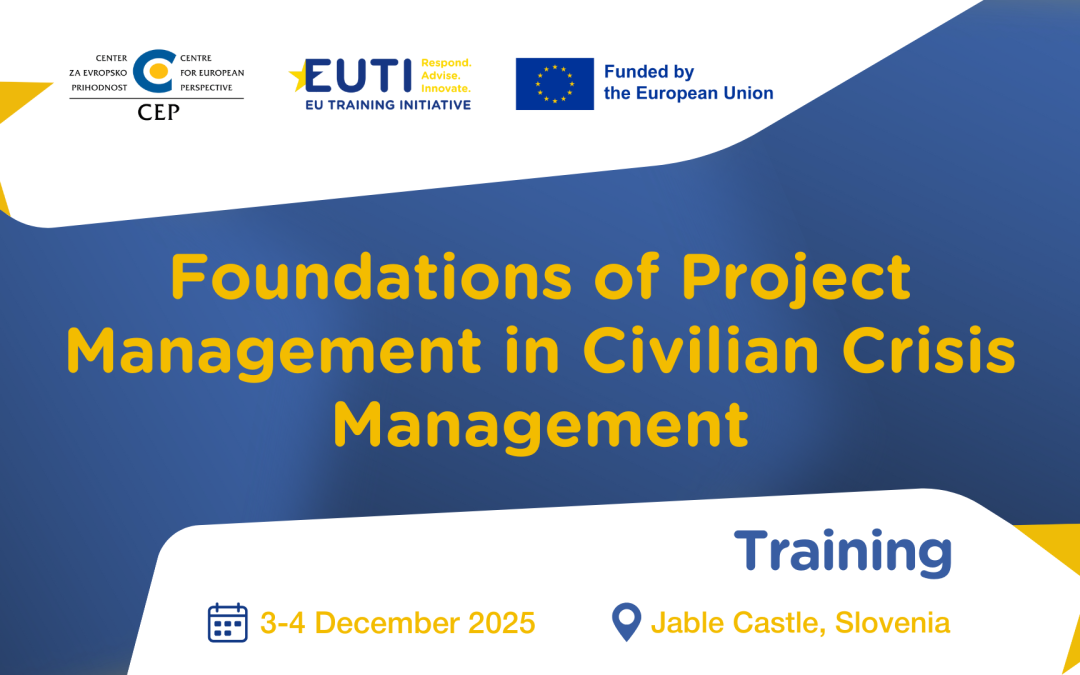
Training date: 3 & 4 December 2025
Training location: Jable Castle, Mengeš, Slovenia
Find the full call for applications here: EUTI Call for Applications – Foundations of Project Management_December 2025
Applications for the Foundations of Project Management in Civilian Crisis Management Missions are open until 9 November 2025.
Interested applicants can register through an online application form, accessible here.

11. 9. 2025 | EUTI, PR
On 8–9 September 2025, the EU Training Initiative (EUTI) was officially launched at the Permanent Representation of Slovenia to the EU in Brussels. The two-day kick-off and partner meeting was led by the EUTI Secretariat, together with the EUTI Consortium, comprising 15 civilian, police, and gendarmerie organisations throughout the EU. The event brought together representatives from the European Commission, the European External Action Service (EEAS), the European Security and Defence College (ESDC), and Civilian Operations HQ (CivOpsHQ) to discuss the initiative’s objectives, main activities, and next steps.
The EUTI initiative aims to strengthen the European Union’s capacity to respond to global challenges by providing specialised, demand-driven, and tailor-made training to civilian, police, and gendarmerie experts already deployed or soon to be deployed to international crisis management and peace support missions. It focuses on three main pillars: addressing training needs, advising on training harmonisation, standardisation and certification, and introducing innovative training methodologies and strategies to meet emerging challenges.

During the partner meeting, participants reviewed the EUTI Manual and Standard Operating Procedures (SOPs), ensuring alignment with EU priorities, Common Security and Defence Policy (CSDP) training policies and operational requirements. Working groups explored strategies for implementing training modules, fostering cooperation among EU institutions, and enhancing knowledge exchange across member states, their training and academic institutions, and seconding agencies. The Consortium partners charted the EUTI Training Catalogue, a living and non-exhaustive document listing all the training capacities and capabilities of project partners, building on their more than a decade-long experience in providing training in the civilian crisis management context.

EUTI Kickoff and high-level panel discussion
A highlight of the event was a high-level panel discussion featuring representatives from the European Commission, EEAS, ESDC, and the CivOpsHQ. Panellists emphasised the value of coordinated training efforts and innovative approaches to civilian crisis management training.
“Training must be innovative, collaborative and adaptable — because the needs of missions are changing faster than ever.”
The event also featured informal networking sessions, allowing participants to strengthen partnerships and exchange experiences, laying the groundwork for the next steps of EUTI’s implementation.
Through EUTI, the EU is enhancing professional development, promoting best practices, and building sustainable capacities for its crisis management and peace support missions.

11. 9. 2025 | Bled Strategic Forum, PR
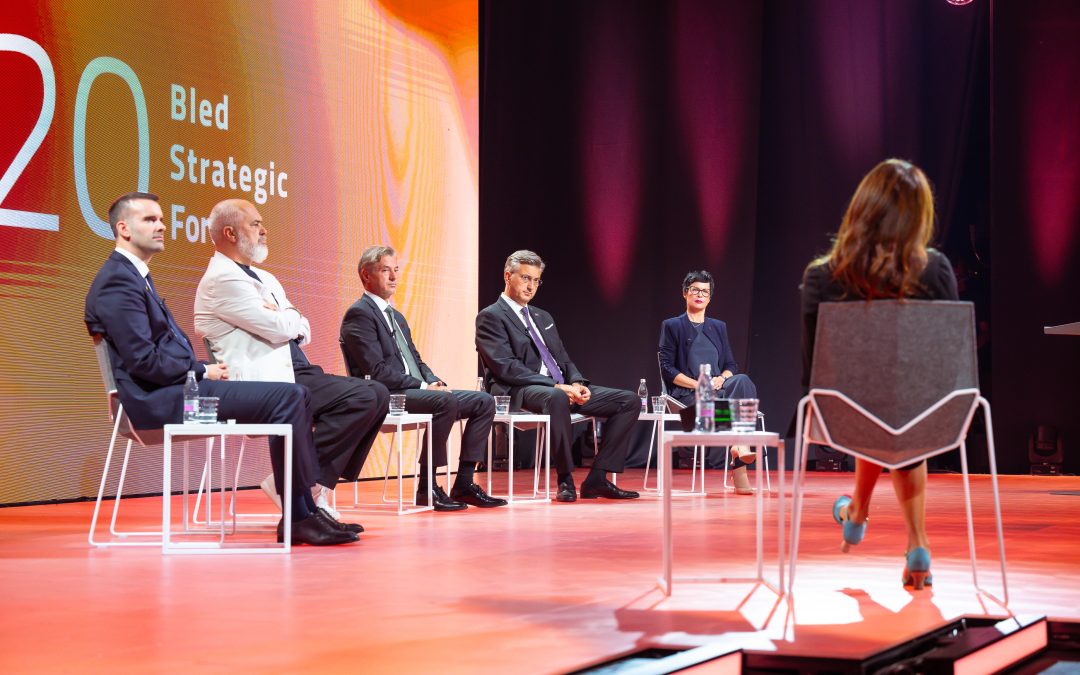
The Bled Strategic Forum celebrated its 20th edition on 1–2 September 2025 under the title A Runaway World, gathering over 2,300 participants from 94 countries. Once a modest regional meeting, the Forum is now widely recognised as Central and South-Eastern Europe’s leading platform for dialogue among statesmen, diplomats, academics, youth and civil society.
Organised jointly by the Government of the Republic of Slovenia — through the Ministry of Foreign and European Affairs — and the Centre for European Perspective (CEP), the Forum has thrived thanks to this close partnership from its inception. While the Ministry ensures the political and diplomatic vision, the Centre for European Perspective plays a vital role in the logistical organisation, supporting every detail that allows the Forum to function smoothly and to welcome thousands of participants and high-level guests year after year. The synergy of these two institutions has been essential in shaping the Bled Strategic Forum into a flagship event for Slovenia’s diplomacy.
This year’s edition featured 32 debates and over 180 speakers, including presidents, prime ministers, and foreign ministers. A recurring theme was the state of the global order, strained by persistent crises, space for cooperation shrinking, and international law under pressure. Among the most emphatic messages was a call for leaders to assume responsibility, act with integrity, and defend the fundamental values that underpin democratic and cooperative societies.

Dialogue featured not just between nations but across generations. Young leaders engaged in the Young Bled Strategic Forum programme and specialised Deep Dive sessions to address issues such as climate apathy, rising geopolitical tensions, and the ethical dilemmas posed by European rearmament. Their participation highlighted the Forum’s commitment to ensuring that the voices shaping tomorrow’s policies are heard today.
In one especially symbolic moment, the Deputy Foreign Ministers of Armenia and Azerbaijan each took part in separate panels on European partnerships. Although they were not co-panelists, both listened attentively to one another’s contributions. This simple act conveyed a powerful message: after the signing of a peace agreement, the region is entering a new chapter of stability and cooperation. It captured the essence of what the Bled Strategic Forum — and the Centre for European Perspective as its long-standing co-organiser — strive for: not just discussion, but trust, mutual recognition, and constructive engagement.
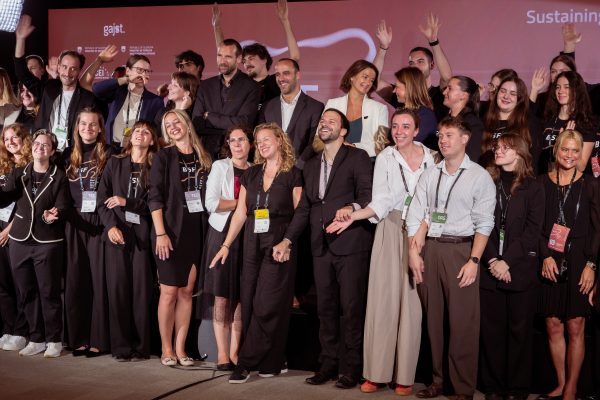
As the Bled Strategic Forum turned twenty, its continuing strength lies not only in what is said on its stages, but also in how ideas are shared, relationships formed, and future paths explored. With the Centre for European Perspective’s dedicated work from the very beginning, the Forum continues to serve as a bridge — between states, between generations, and between ambition and action.
The 21st edition of the Bled Strategic Forum will be held on 31 August and 1 September 2026.