
Three-Day Strategic Communication Training Successfully Concluded
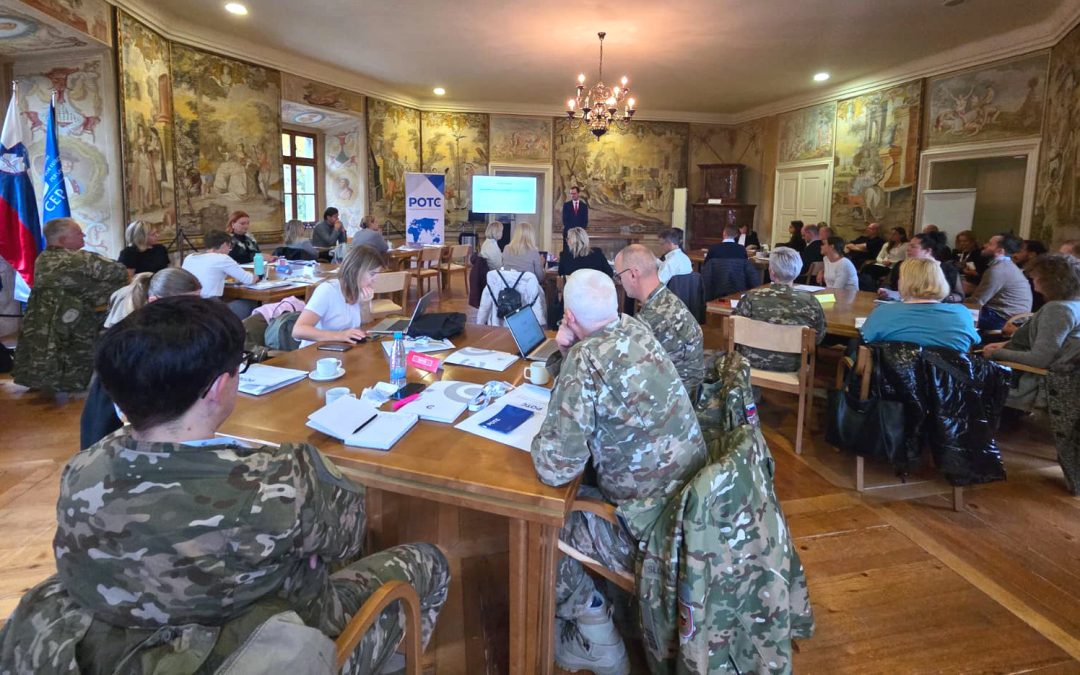
From 3 to 5 November 2026, Jable Castle hosted a three-day training course titled “Strategic Communication (StratCom): From Strategy to Strategic Effect”, organised by the Peace Operations Training Centre (POTC). The training brought together 30 participants from different institutions to strengthen their knowledge and practical skills in strategic communication, understanding the information environment, responding to information threats, and crisis communication through expert presentations and hands-on exercises.
The programme combined expert presentations, discussions, and a series of practical exercises, enabling participants to explore how to translate institutional objectives into communication activities designed to achieve strategic effects.
The first day introduced the foundations of strategic communication, its role in government, and the importance of interinstitutional cooperation. Participants explored information environment monitoring and analysis, audience understanding and segmentation, and developing strategic communication approaches. Initial practical exercises allowed them to apply these concepts through information environment analysis, audience mapping, and strategic planning.
The second day focused on strategic narratives, framing, effective messaging, and selecting appropriate communication channels. The session also highlighted the growing role of artificial intelligence in strategic communication. Participants explored how AI can support analysis, planning, and content development, while also examining the importance of responsible, transparent, and secure use of these tools within public institutions.
The final day addressed information threats, disinformation, information manipulation, and crisis communication. Participants examined approaches to responding to information incidents, the importance of timely decision-making, and the challenges of maintaining coordinated communication under uncertainty.
A central feature of the training was its strong practical orientation, allowing participants to apply their knowledge to realistic scenarios. Through group exercises, they analysed complex situations, made strategic decisions, developed communication approaches, and addressed the challenges of interinstitutional coordination. The training culminated in a comprehensive simulation, during which participants were required to adapt their decisions and coordinate communication responses as new developments emerged and pressure increased.
The three-day programme provided a valuable opportunity to exchange experiences and build practical capabilities for effective strategic communication in an increasingly complex and rapidly evolving information environment. It also reinforced the understanding that strategic communication goes beyond delivering messages: it is a deliberate and coordinated process that aligns institutional objectives, actions, and communication to achieve strategic effects.
Follow us on social media for more POTC news and content:
LinkedIn • X • Facebook • Bluesky

