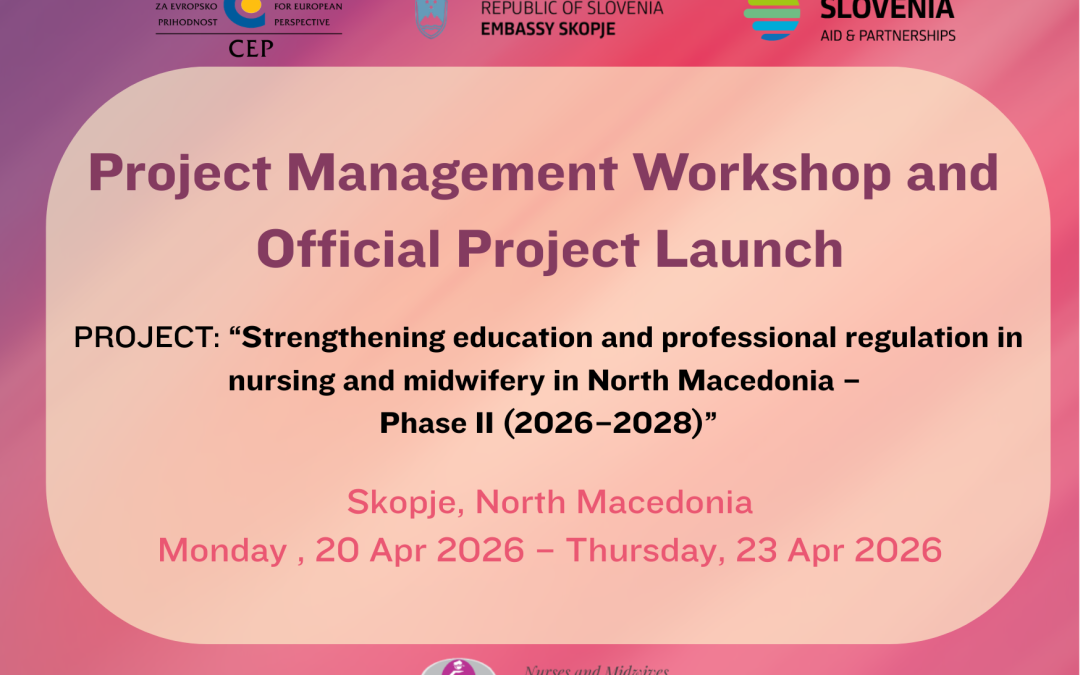
CEP and North Macedonia’s Ministry of Health Discuss Next Phase of Nursing and Midwifery Reform project

CEP and North Macedonia’s Ministry of Health Discuss Next Phase of Nursing and Midwifery Reform project

We are proud to launch a new consecutive project that builds on Slovenian good practice and experience as a vital element in driving successful European-style reforms in North Macedonia’s healthcare, with a focus on nursing and midwifery.  

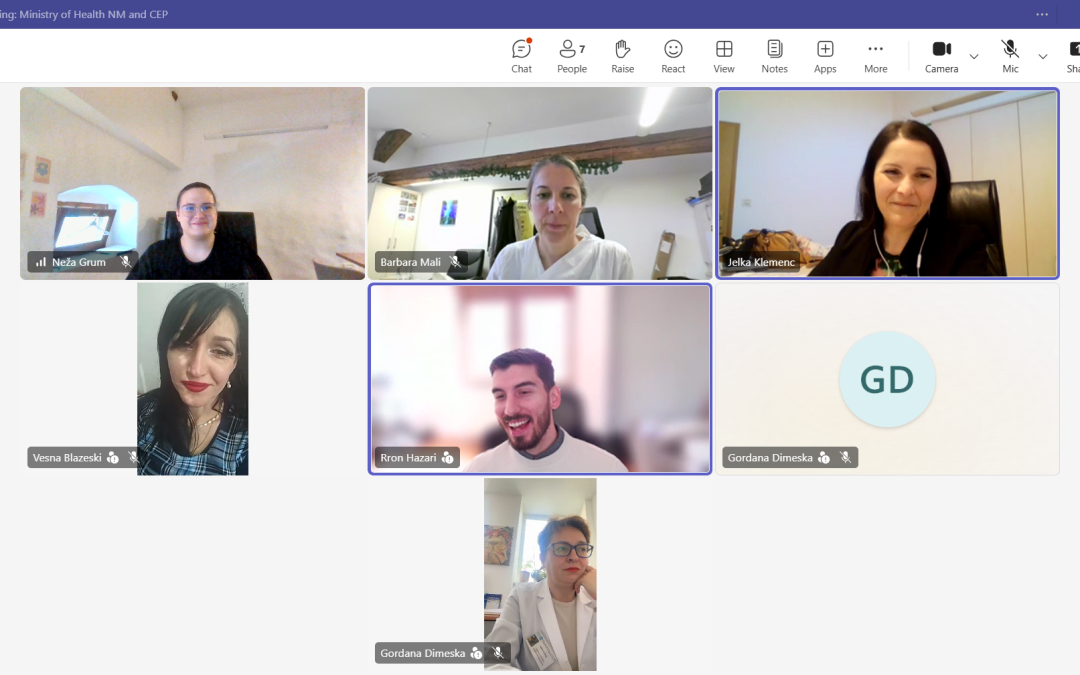
 On 4 March 2026, representatives of the Centre for European Perspective (CEP) and the Ministry of Health of North Macedonia held an online meeting to discuss the continuation of their cooperation within a development project focused on strengthening nursing and midwifery education, professional regulation and workforce development in North Macedonia 

 During the meeting, participants reviewed the key results achieved during the first phase of the project. Among the most important outcomes were the preparation of a proposal for a modernised and unified undergraduate nursing curriculum and the development of a proposal for establishing a regulatory body for the nursing profession within the Ministry of Health. The project also supported knowledge exchange and study visits aimed at sharing Slovenian good practices, particularly regarding the role of graduate nurses in primary healthcare.  

 Building on these results, the partners discussed priorities for the new three-year project period (2026–2028). The next phase will focus primarily on implementing the reforms prepared in the first phase. Planned efforts include supporting the national adoption of the unified nursing curriculum, exploring the possibilities for developing a master’s level nursing programme, advancing the establishment of a professional regulatory framework, and strengthening the roles of nurses and midwives through targeted pilot programmes.  

 The Ministry of Health of North Macedonia will remain the project’s main institutional partner, with the involvement of other relevant institutions and professional stakeholders, including Slovenian experts.   

 The meeting confirmed the strong commitment of both partners to continue working together on reforms aimed at strengthening the nursing and midwifery professions and supporting the development of the healthcare system in North Macedonia. 

Conclusion of the nursing and midwifery project in North Macedonia

Conclusion of the nursing and midwifery project in North Macedonia

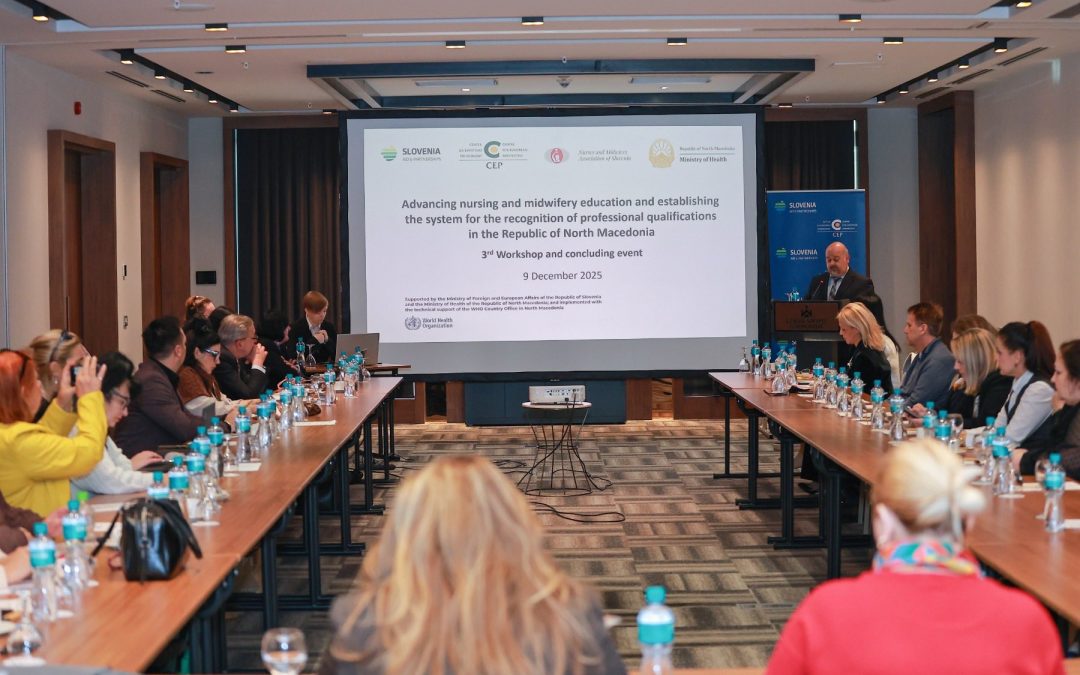
10 December 2025, Skopje, North Macedonia – Yesterday, we concluded the project “Advancing Nursing and Midwifery Education and Establishing the System for the Recognition of Professional Qualifications in the Republic of North Macedonia (2024–2025)”. The final event brought together representatives of the Ministries of Health and Education, higher education institutions, professional associations, and Slovenian experts to reflect on progress and outline the path ahead.

The event opened with an address by Mr Jovica Andovski, Deputy Minister of Health, who emphasised the significance of the reforms initiated through the project. He highlighted that the collaborative work has already supported the beginning of necessary legislative processes and strengthened the foundations for long-term development of the professions. In his speech, he underlined: “These results are not merely formal documents – they are an investment in future generations of nurses and midwives.” He also recognised the project’s role in making long-standing challenges visible to the wider public and institutions, noting that sustainable change will require continued commitment from all sides.

This was followed by remarks from Mrs Nika Rotar, Minister Plenipotentiary and Deputy Ambassador of Slovenia in Skopje, who reaffirmed Slovenia’s strong support in aligning North Macedonia’s nursing and midwifery systems with EU standards.

During the workshop sessions, members of the Macedonian working groups presented their achievements, including analyses of the education system, regulatory gaps, and legislative needs, as well as the development of the national curriculum proposal for nursing and midwifery. These insights were complemented by contributions from Slovenian experts, Mrs Monika Ažman (Nurses and Midwives Association of Slovenia) and Prof. dr Brigita Skela Savič (Angela Boškin Faculty of Health Care), who provided guidance on regulatory models, professional autonomy, and curriculum modernisation aligned with the EU Directive.

The discussions reaffirmed the project’s two core achievements:
• supporting the development of a national regulatory and institutional framework for nursing and midwifery; and
• preparing a harmonised national curriculum aligned with European standards and ready for further consideration by the Ministry of Education and Science.

With the completion of this first phase, the partners agreed that the foundations for reform are now well established. Continued cooperation will be essential to sustain the momentum—particularly in updating legislation, enhancing professional autonomy, and ensuring consistent implementation across educational and clinical environments.

The project was implemented with the support of the Slovenian Ministry of Foreign and European Affairs, the Ministry of Health of North Macedonia, and with technical support from the WHO Office North Macedonia.

image00036

Concluding event of the nursing and midwifery project taking place tomorrow in Skopje

Concluding event of the nursing and midwifery project taking place tomorrow in Skopje

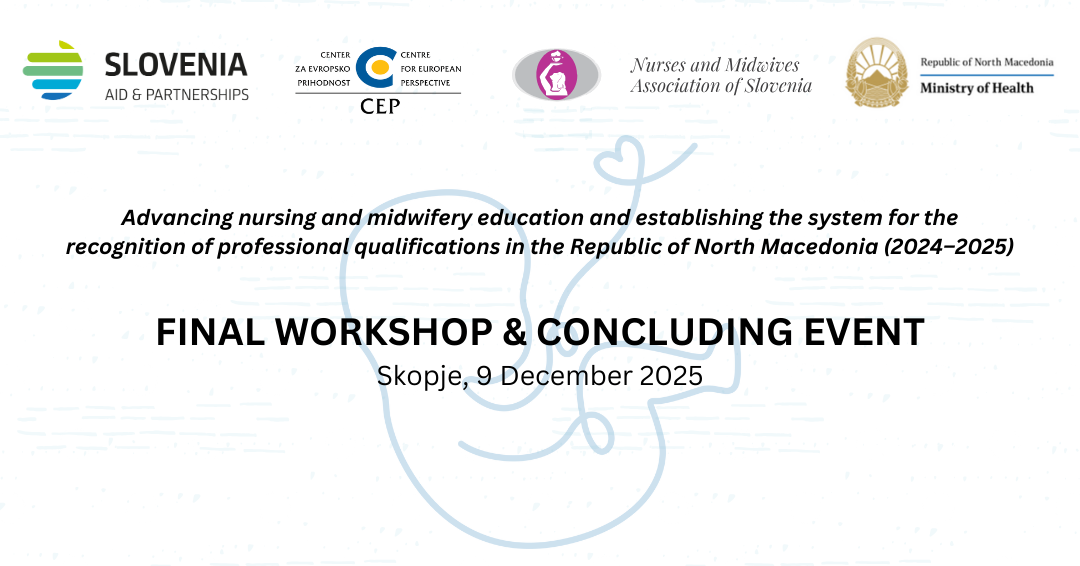
Tomorrow, 9 December, the project Advancing Nursing and Midwifery Education and Establishing the System for the Recognition of Professional Qualifications in the Republic of North Macedonia will conclude with a final workshop and closing event in Skopje. The gathering will bring together representatives of the Ministries of Health and Education, higher education institutions, and professional nursing and midwifery associations to review progress over the past two years and outline next steps to sustain reforms.

The concluding workshop will focus on two core pillars of the project:
• Operationalising the regulatory framework for nursing and midwifery professions, including institutional responsibilities, future processes, and sustainability requirements.
• Implementing the reformed undergraduate curricula in higher education institutions, bringing together decision-makers to discuss practical steps for roll-out and alignment with EU standards.

These discussions build on extensive work carried out throughout 2024–2025, including the analysis of existing study programmes, the development of proposed national curricula, technical workshops on regulation, and training sessions dedicated to strengthening nursing roles in primary care.

Joining the concluding event from the Slovenian side are Slovenian experts from the Nurses and Midwives Association of Slovenia (Zbornica – Zveza) and the Angela Boškin Faculty of Health Care, as well as representatives of the Slovenian Embassy in Skopje.

The project is implemented with the support of the Ministry of Foreign and European Affairs of the Republic of Slovenia [through the International Development Cooperation and Humanitarian Aid Programme] and the Ministry of Health of the Republic of North Macedonia, with technical support from the WHO Office in North Macedonia.

Second workshop for strengthening Nursing and Midwifery in North Macedonia

Second workshop for strengthening Nursing and Midwifery in North Macedonia

From 27–28 May 2025, the second set of workshops under the project “Advancing Nursing and Midwifery Education and Establishing the System for the Recognition of Professional Qualifications in the Republic of North Macedonia” took place at the NLB Gallery in Skopje.

The workshops were opened by H.E. Mr Gregor Presker, Ambassador of the Republic of Slovenia to North Macedonia, who expressed Slovenia’s strong commitment to supporting the country’s health system reform efforts. His remarks were followed by Dr Pia Vračko, Health Policy Advisor at the WHO Country Office in North Macedonia, who emphasised the importance of international collaboration in strengthening health professions.

Over two days, the workshops gathered 35 participants from medical and healthcare faculties, healthcare professionals, and representatives from the Ministries of Health and Education to discuss essential reforms in nursing and midwifery education. The programme focused on:

  • Reviewing the proposed national curriculum for nursing and midwifery;

  • Planning faculty-level implementation of curriculum reforms;

  • Enhancing the role of nurses in family medicine and integrated primary care.

A dedicated training session on day two targeted family doctors and head nurses, highlighting best practices in the Slovenian primary care system, skill-mix innovation, and patient-centred care.

On 28 May, a meeting was also held with the Minister of Education, Dr Janevska, to present recommendations for transforming undergraduate nursing and midwifery education.

We thank the Ministries of Health and Education of North Macedonia, our Slovenian experts, the Nurses and Midwives Association of Slovenia, the Angela Boškin Faculty of Health Care, the WHO Office in North Macedonia, and the Slovenian Embassy in Skopje for their continued support. We are also grateful to NLB Banka Skopje for hosting the workshops.

Workshops in Skopje: Advancing Nursing and Midwifery Education in North Macedonia

Workshops in Skopje: Advancing Nursing and Midwifery Education in North Macedonia

The second set of workshops within the project “Advancing nursing and midwifery education and establishing the system for the recognition of professional qualifications in the Republic of North Macedonia (2024–2025)” will take place from 27 to 28 May in Skopje. The workshops will bring together representatives from six faculties, healthcare professionals, and international experts to discuss the proposed national curriculum for nursing and midwifery, regulatory reforms, and the future of integrated primary healthcare.

Joining the workshops will be Slovenian experts from the Nurses and Midwives Association of Slovenia (Zbornica – Zveza) and the Angela Boškin Faculty of Health Care, who will share insights into curriculum development, the establishment of regulatory bodies, and the role of nurses in family medicine clinics.

The project is implemented with the support of the Ministry of Foreign and European Affairs of the Republic of Slovenia [through the International Development Cooperation and Humanitarian Aid Programme] and the Ministry of Health of the Republic of North Macedonia, with technical support from WHO Office North Macedonia.

Pripravljena analiza izobraževalnega sistema za medicinske sestre in babice v Republiki Severni Makedoniji

V okviru projekta “Spodbujanje izobraževanja in poklicev v zdravstveni negi in babištvu v Republiki Severni Makedoniji” je nastal dokument z naslovom Analysis of the existing higher education programs for nurses and midwives in North Macedonia according to the requirements of the European Directive for regulated profession. Dokument analizira izobraževalne sisteme za medicinske sestre in babice v Republiki Severni Makedoniji, pri čemer se osredotoča na primerljivost znanja, veščin in izobraževalnih vsebin študijskih programov v skladu z Direktivo 2005/36/EC in njenimi spremembami iz leta 2013 in 2024.

Analiza vključuje primerjavo izobraževalnih programov ter prepoznavanje razlik med izobraževalnimi ustanovami v državi. Cilj dokumenta je zagotoviti, da so izobraževalne vsebine usklajene in omogočajo kakovostno ter primerljivo izobraževanje, ki ustreza evropskim smernicam.

Avtorica dokumenta je prof. dr. Brigita Skela Savič, raziskovalna svetnica in strokovnjakinja za izobraževanje medicinskih sester na Fakulteti za zdravstvo Angela Boškina v Sloveniji.

Projekt je del Slovenskega mednarodnega razvojnega sodelovanja, financiran s strani Ministrstva za zunanje in evropske zadeve in podprt s strani Ministrstva za zdravje Severne Makedonije.

Celoten dokument je na voljo spodaj: