Strengthening Financial Investigations in Practice: Study Visit of a Montenegrin Delegation to Slovenia

Strengthening Financial Investigations in Practice: Study Visit of a Montenegrin Delegation to Slovenia

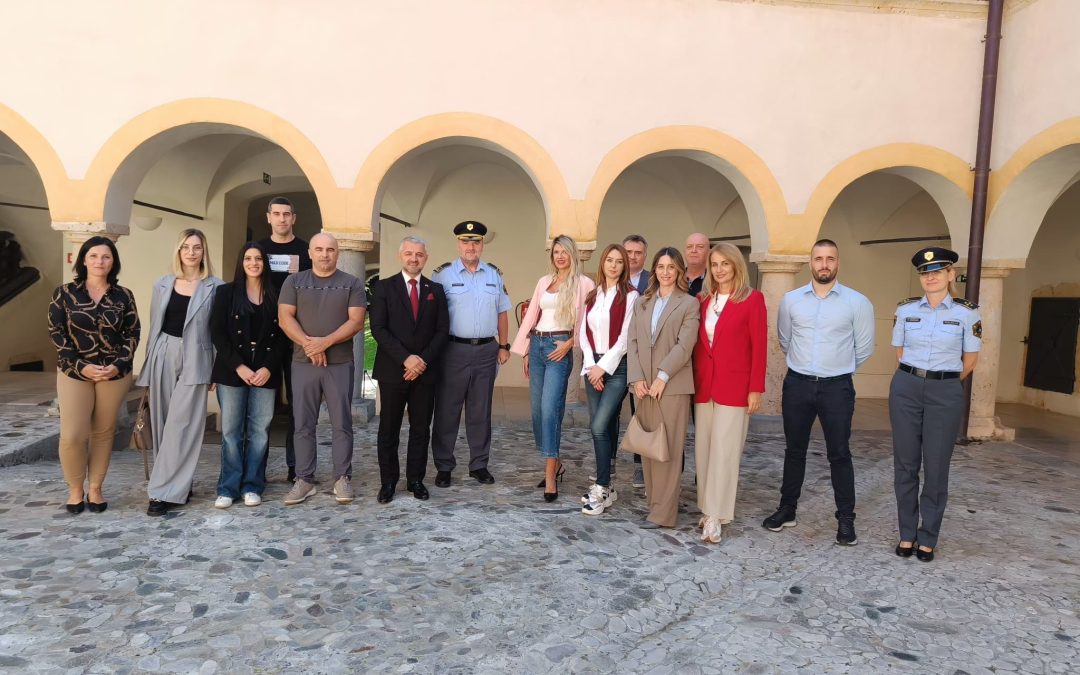
From 28 to 30 September 2026, the Centre for European Perspective (CEP) will host representatives of Montenegrin institutions working on financial investigations for a study visit to Slovenia. The visit is part of the project “Strengthening the Capacities for Financial Investigations in Montenegro (2025–2026)”.  

The visit aims to strengthen operational and institutional capacities and facilitate the exchange of knowledge and good practices between Slovenian and Montenegrin experts. During visits to the Maribor and Celje Police Directorates, participants will explore how financial investigations are conducted and coordinated, discuss operational challenges and internal guidelines, and examine anonymised cases.  

The programme will give participants a first-hand insight into Slovenian practices and an opportunity to openly exchange experiences concerning procedures, challenges and possible solutions. 


The project “Strengthening capacities in the field of financial investigations in Montenegro (2025/2026)” is implemented with the support of the Slovenian Ministry of Foreign and European Affairs through the Slovenian Aid and Partnerships Programme, in cooperation with the Slovenian Police and the Slovenian Ministry of Interior.

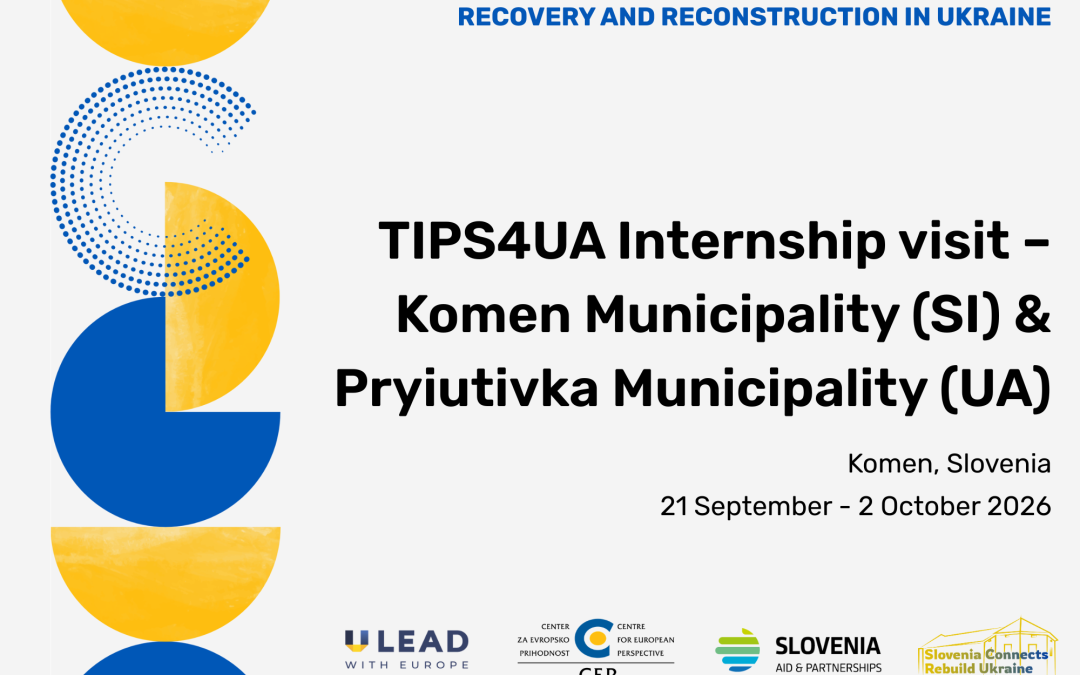
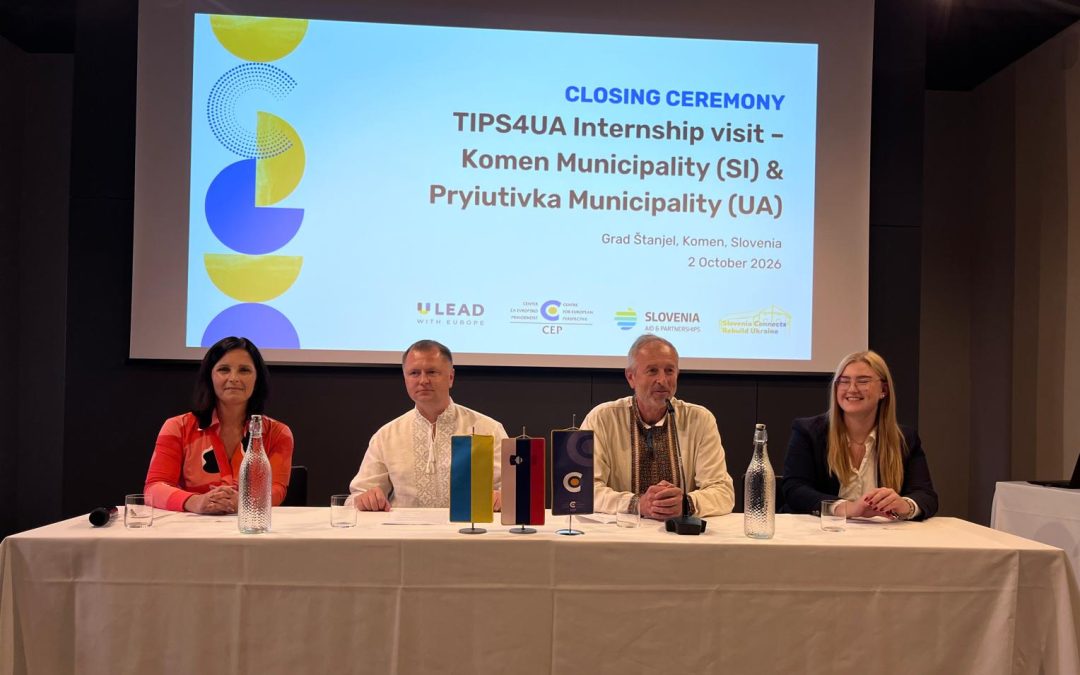
Upcoming TIPS4UA Internship visit of the Pryiutivka Municipality to the Komen Municipality

Upcoming TIPS4UA Internship visit of the Pryiutivka Municipality to the Komen Municipality

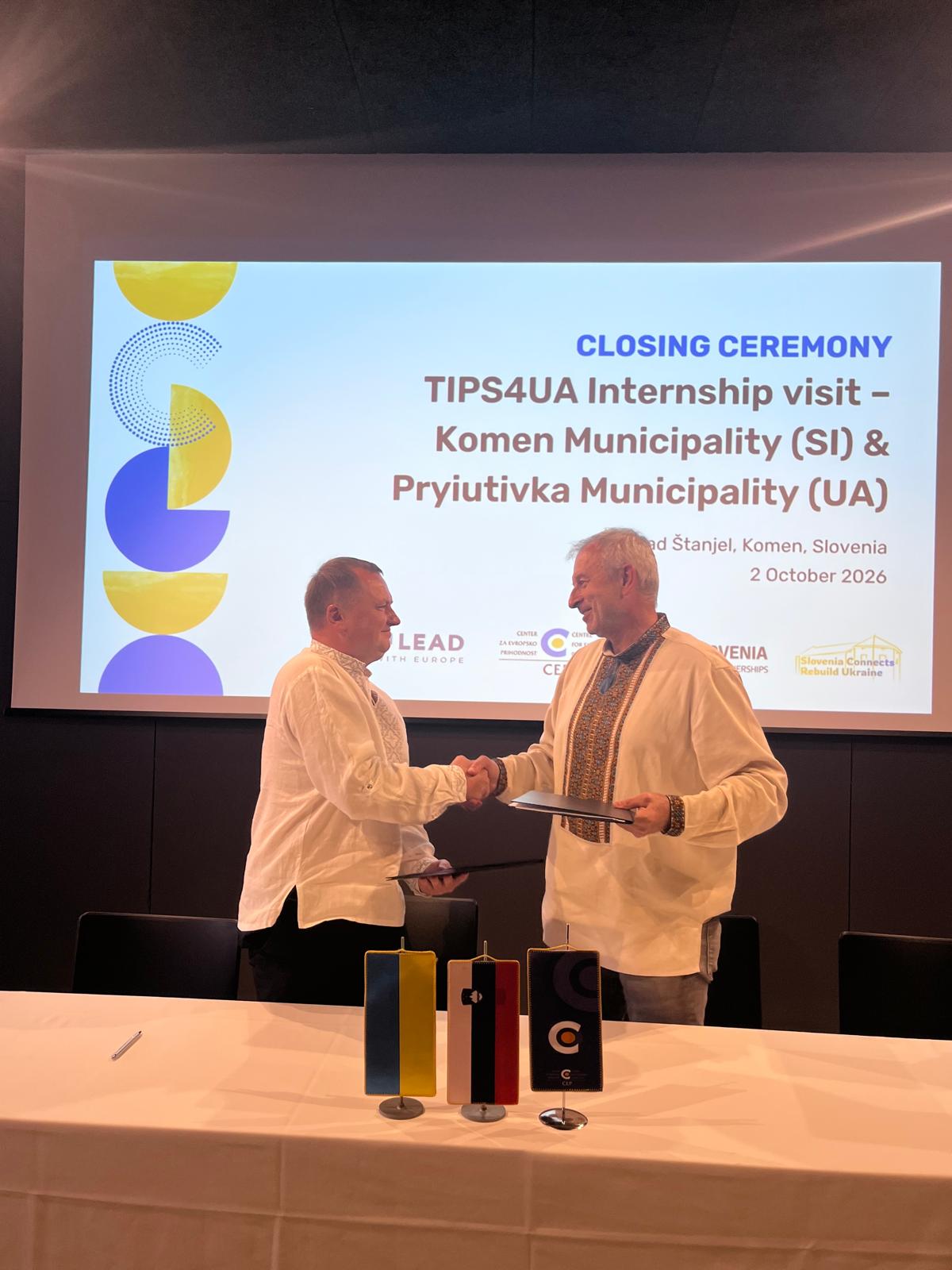
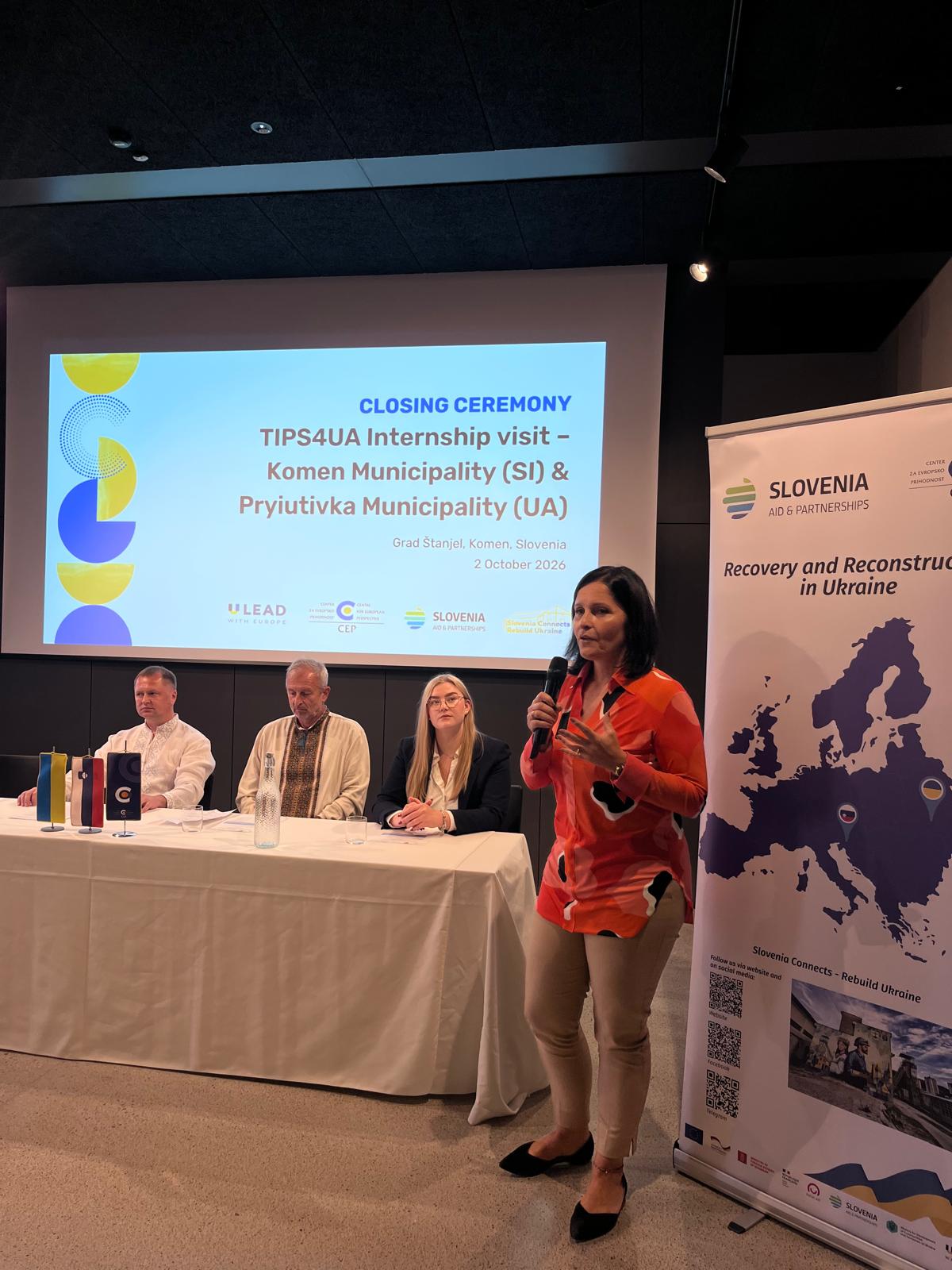
21 September–2 October 2026, Komen – The Municipality of Komen is preparing to welcome representatives of the Pryiutivka Territorial Community from Ukraine for a two-week internship visit within the Recovery and Reconstruction in Ukraine under the TIPS4UA programme. The visit will provide an opportunity to exchange knowledge and experience on project development, funding and international cooperation, while showcasing Komen’s good practices in sustainable local development. The programme will include practical insights into waste and water management, social care, civil protection, sustainable tourism, local self-government and intermunicipal cooperation. The visit will also support the development of concrete project ideas and proposals for future cooperation between the two communities, concluding with a presentation of results and a concluding ceremony in Štanjel. 

The Recovery and Reconstruction in Ukraine programme is funded by the Slovenian Ministry of Foreign and European Affairs through the Slovenian Aid and Partnerships and implemented in partnership with U-LEAD with Europe.

ENTER: CHANGE Forum BiH’s Visionary Voices: Leading the Change Wraps Up

ENTER: CHANGE Forum BiH’s Visionary Voices: Leading the Change Wraps Up

From 27 August to 1 September 2026, the first ENTER: CHANGE Forum – “BiH’s Visionary Voices: Leading the Change” brought together the second generation of young aspiring leaders from Bosnia and Herzegovina in Slovenia for six days of learning, dialogue and exchange. 

Held in Kranjska Gora and Bled, the Forum focused on leadership, democratic governance, European integration, communication, disinformation, corruption and the rule of law, as well as the role of young people in shaping the future of Bosnia and Herzegovina. 

Through interactive workshops and discussions, participants explored different dimensions of leadership, from leading oneself and others to taking responsibility for wider societal change. They also discussed the political challenges facing Bosnia and Herzegovina after the 2026 elections and towards 2030, including political cooperation and compromise, accountable governance, corruption and the rule of law, and the country’s path towards the European Union. 

A strong focus was placed on communication and democratic resilience. Participants developed their media and public speaking skills and explored how emerging technologies and disinformation can influence democratic societies and political decision-making. 

European integration was another central theme of the programme. Through a session on EU institutions and policies for accession countries, participants gained a deeper understanding of the EU enlargement process and its relevance for Bosnia and Herzegovina. 

The programme further connected the participants with their peers through joint activities with the Young Bled Strategic Forum, including discussions on the role of young leaders in driving policy change in a fragmented world. 

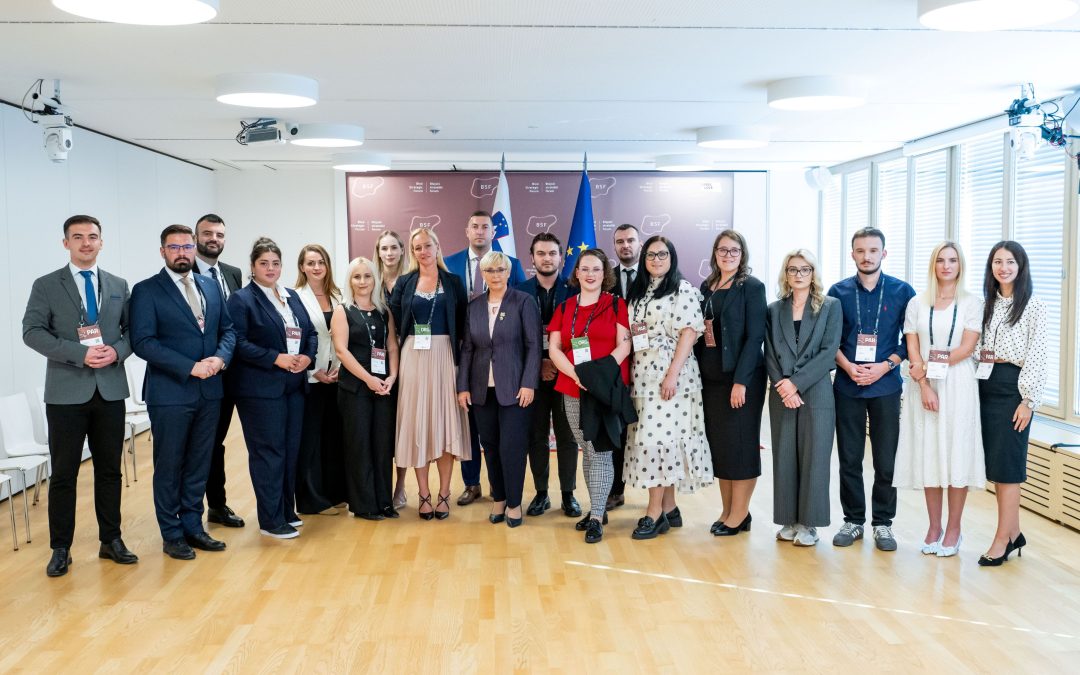
Within the ENTER: CHANGE forum, the participants also had the opportunity to attend the 21st Bled Strategic Forum. As part of the Forum, participants met with Marta Kos, European Commissioner for Enlargement, who emphasised the need for leaders in Bosnia and Herzegovina to overcome political divisions and put the interests of all its people first. They were also welcomed by Dr Nataša Pirc Musar, President of the Republic of Slovenia, who highlighted the importance of dialogue and mutual understanding in political leadership. 

Additionally, the Forum provided numerous opportunities for direct dialogue with political decision-makers and prominent figures from Slovenia and tahe Western Balkans. Participants met with H.E. Mr Damijan Sedar, Ambassador of the Republic of Slovenia to Bosnia and Herzegovina; Mr Gordan Grlić Radman, Minister of Foreign and European Affairs of the Republic of Croatia; Mr Nemanja Starović, Minister for European Integration of the Republic of Serbia; and Mr Elmedin Konaković, Minister of Foreign Affairs of Bosnia and Herzegovina. 

Through ENTER: CHANGE, young aspiring leaders from Bosnia and Herzegovina were given a space to strengthen their leadership skills, exchange perspectives with experts and political decision-makers, and reflect on their role in building a more democratic, inclusive and European future for Bosnia and Herzegovina. 

The activities within the ENTER: CHANGE project are supported by the Ministry of Foreign and European Affairs of the Republic of Slovenia within the Slovenian Aid and Partnerships programme. 

Upcoming ENTER: CHANGE Forum “BiH’s Visionary Voices: Leading the Change”

Upcoming ENTER: CHANGE Forum “BiH’s Visionary Voices: Leading the Change”

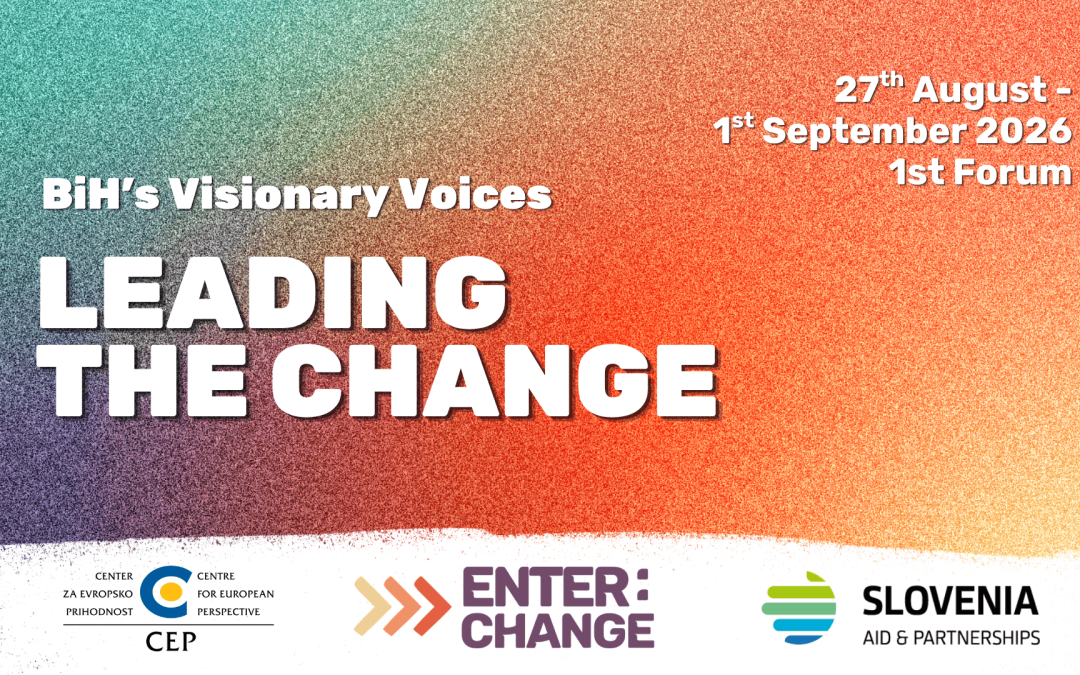
From 27 August to 1 September 2026, the first ENTER: CHANGE Forum, “BiH’s Visionary Voices: Leading the Change,” will take place in Kranjska Gora and Bled, Slovenia.

The Forum will bring together a group of young aspiring future leaders from Bosnia and Herzegovina for a programme focused on leadership, democratic governance, European integration and the role of young people in shaping the country’s future.

Through interactive workshops, expert discussions and lectures, participants will explore key issues including political leadership and good governance, disinformation, corruption and the rule of law, communication and media, gender equality, and Bosnia and Herzegovina’s path towards the European Union. The programme will also feature joint activities with the Young Bled Strategic Forum, as well as participation in the Bled Strategic Forum on 31 August and 1 September.

The Forum will provide a space for participants to exchange perspectives, engage with experts and peers, and develop ideas for addressing the challenges facing Bosnia and Herzegovina. It will also encourage participants to reflect on their own potential and responsibility as young people in contributing to the country’s future.

The activities within the ENTER: CHANGE project are supported by the Ministry of Foreign and European Affairs of the Republic of Slovenia within the Slovenian Aid and Partnerships programme.

Sustainable Housing Solutions: Ukrainian Municipalities Learn from Slovenian Good Practices

Sustainable Housing Solutions: Ukrainian Municipalities Learn from Slovenian Good Practices

A five-day thematic cluster visit to Slovenia brought together representatives of nine Ukrainian hromadas and the Lviv Regional Military Administration with Slovenian housing experts, public institutions and municipalities to exchange knowledge, strengthen partnerships and develop practical strategies for addressing sustainable housing for communities and internally displaced persons (IDPs) in Ukraine.

From 6 to 10 July, the delegation participated in an intensive programme of workshops, policy discussions, study visits and strategy sessions as part of the Recovery and Reconstruction in Ukraine programme. The visit aimed to transform knowledge into concrete action by equipping Ukrainian local authorities with practical tools and policy approaches that can support long-term, resilient housing development.

The cluster visit was organised around the idea that today’s solutions can become tomorrow’s homes. Throughout the week, participants explored Slovenian experiences in housing policy, affordable housing provision, urban regeneration and participatory planning while discussing how these models could be adapted to the Ukrainian context.

Building a Strong Foundation for Housing Recovery

The programme began with introductory workshops where participants identified the main housing challenges facing their municipalities and exchanged experiences from previous cooperation activities. Particular attention was given to the housing situation in the Lviv region, the needs of internally displaced persons and the development of local housing strategies that respond to both immediate and long-term reconstruction priorities.

A key contribution came from the Ukrainian think tank CEDOS, which presented research on Ukraine’s rental housing market and the challenges surrounding rent subsidies for internally displaced persons. The discussion provided participants with valuable evidence for understanding existing policy gaps and identifying opportunities for future reforms.

Participants also learned about alternative housing models presented by the Institute for Studies of Housing and Space (IŠSP), including non-profit housing cooperatives and approaches that diversify housing providers while strengthening community resilience. Experts from MOBA Housing introduced innovative financing mechanisms for community-led and cooperative housing initiatives, demonstrating how long-term financial instruments can support affordable housing development beyond traditional banking systems.

Learning from Slovenia’s Housing System

During the visit, the Ukrainian delegation met with representatives of Slovenia’s key housing institutions and explored how national and local policies have evolved to increase the supply of affordable housing.

Sessions included presentations by representatives of the Ministry of environment and spatial planning of Slovenia, responsible for housing policy, the Housing Fund of the Republic of Slovenia and the Public Housing Fund of the City of Ljubljana. Discussions focused on recent reforms, financing mechanisms, public rental housing, strategic planning and the challenges of expanding non-profit housing in response to growing demand.

The delegation also visited Novo Brdo in Ljubljana, one of Slovenia’s flagship non-profit housing developments, where participants examined how quality architecture, community planning and social inclusion contribute to successful affordable housing projects.

The programme continued in Celje, where local officials presented the municipality’s housing strategy and showcased examples of non-profit housing development, assisted living facilities and neighbourhood regeneration. Site visits and workshops demonstrated how municipalities can play an active role in improving housing conditions while creating more sustainable and inclusive urban environments.

From Knowledge Exchange to Strategic Action

Beyond expert presentations and field visits, participants took part in a full-day Strategy Lab led by Professor dr. Nenad Filipović of IEDC – Bled School of Management. The workshop focused on translating ideas into practical strategies, helping participants understand how to design, implement and monitor effective housing interventions capable of delivering measurable results.

Another important component of the programme was participatory urban design, where the Ukrainian delegation learned how involving residents and local stakeholders in planning processes can improve public spaces and strengthen communities alongside housing development.

Strengthening Slovenian–Ukrainian Partnerships

The thematic cluster visit created valuable opportunities for cooperation between Ukrainian municipalities and Slovenian research institutions, municipalities, housing organisations and civil society partners. Discussions extended beyond knowledge sharing to explore future joint projects, financing opportunities, pilot initiatives, capacity building and continued institutional collaboration.

The visit also established a strong foundation for the thematic housing cluster to continue supporting Ukrainian communities as they work towards sustainable, affordable and resilient housing solutions in line with Ukraine’s reconstruction priorities and evolving housing legislation.

The cluster visit brought together expertise from the Institute for Studies of Housing and Space (IŠSP), CEDOS, MOBA Housing, IPoP – Institute for Spatial Policies, Prostorož, IEDC – Bled School of Management, the Housing Fund of the Republic of Slovenia, the Public Housing Fund of the City of Ljubljana, the Municipality of Celje and other Slovenian partners, creating a comprehensive platform for policy dialogue and practical learning.


The activities were implemented by the Centre for European Perspective (CEP) in cooperation with U-LEAD with Europe and supported by the Ministry of Foreign and European Affairs of the Republic of Slovenia through the Slovenian Aid and Partnerships Programme.


Upcoming Cluster visit – Slovenian Models for Sustainable Housing: Practical Solutions for Ukrainian Regions and IDP Response

Upcoming Cluster visit – Slovenian Models for Sustainable Housing: Practical Solutions for Ukrainian Regions and IDP Response

Slovenian Models for Sustainable Housing: Practical Solutions for Ukrainian Regions and IDP Response will take place from 6 to 10 July 2026 in Ljubljana, Bled and Celje, Slovenia.

CEP is hosting a thematic visit for Ukrainian representatives of municipalities, regional authorities and housing professionals working on housing policy, urban development and the response to the needs of internally displaced persons (IDPs).

The programme will present Slovenian approaches to sustainable housing development, combining policy discussions with practical examples of non-profit housing, municipal housing strategies, innovative financing models and participatory urban planning. Through expert presentations, workshops and site visits, participants will exchange experiences, discuss common challenges and explore solutions that could support housing reconstruction and long-term resilience in Ukraine.

The visit will also provide an opportunity to connect Slovenian and Ukrainian experts, strengthen institutional cooperation and identify good practices that can be adapted to the Ukrainian context. Particular attention will be given to affordable housing, community-led approaches and strategic planning for post-war recovery.

The initiative contributes to CEP’s broader support for Ukraine by strengthening local capacities, fostering knowledge exchange and promoting sustainable regional development as part of Ukraine’s European integration process.

The Recovery and Reconstruction in Ukraine programme is supported by the Ministry of Foreign and European Affairs of the Republic of Slovenia through the Slovenian Aid & Partnerships programme.