2. 6. 2026 | POTC, PR
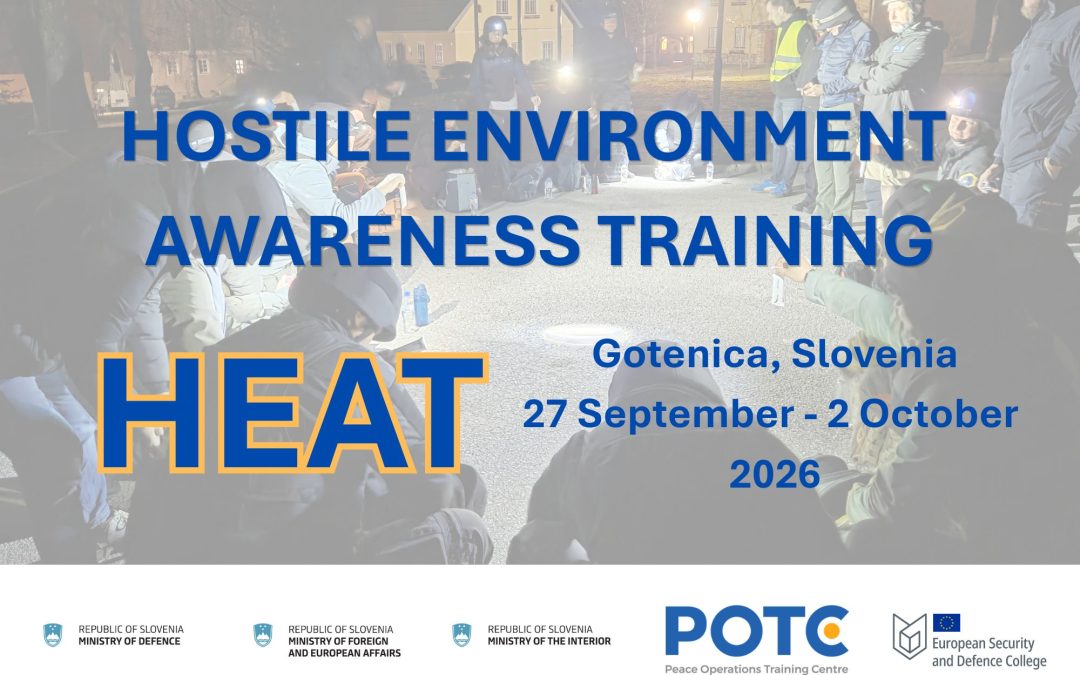
The Peace Operations Training Centre (POTC) of Slovenia and the European Security and Defence College (ESDC) are co-organising the “Hostile Environment Awareness Training (HEAT)” training activity. The training will take place at the Gotenica Police Training Centre in Slovenia from Sunday, 27 September to Friday, 2 October 2026. Deadline: 10 August
Kliknite tukaj za branje članka v slovenskem jeziku.
This training activity contributes to security and situational awareness, reinforces a safety and security awareness mindset, and develops confidence in hostile situations. In addition, the training provides guidance on individual and team behaviour to help deter, detect and react during and after threatening events, thus increasing the overall personal safety and security of the training participants while serving in hostile environments.
Up to 20 professionals with different backgrounds, working or aiming to work with national or international (non-)governmental organisations, academic or private sector, are eligible to apply for participation in the training.
The participants will join an experienced group of Slovenian and foreign trainers for a five-day intensive course in southwestern Slovenia. The training is designed to:
- improve participants’ knowledge about multiple threats present in hostile field environments and learn how to deal with them in an effective manner,
- rehearse and practice safety and security procedures according to specific threats,
- develop skills and behaviours to deal with different stressful situations.
Activities of the Hostile Environment Awareness Training include e-learning prior to the in-person training, lectures, guided discussions, role-playing, simulations, and a complex field training exercise. Trainees will address deployment in hostile environments (threat awareness, management of various threats, etc.), medical care, orientation, communications, mobility, etc.
Applications must be submitted via the ESDC’s secure online system, ENLIST, by designated nominators at https://esdc.europa.eu/enlist/login. To apply, a national nominator must first add you to the system, so please contact your nominator as the first step. A list of ENLIST nominators is available on the ESDC website at https://www.esdc.europa.eu/training-and-education/list-nominators_en.
The deadline for submitting the application is 10 August 2026. The selection of participants is done by POTC and ESDC after the deadline, and both selected and unselected applicants will be notified.
You can find all the information regarding the registration process and the training delivery here.
Follow us on social media for more POTC news and content:
LinkedIn • X • Facebook • Bluesky



1. 6. 2026 | European Digital Diplomacy Exchange, PR, Slovenian Development Assistance, Strategic Communication
The Centre for European Perspective is launching a new four-day European Digital Diplomacy Exchange workshop that will convene officials from 16 different countries to determine how public sector adoption of emerging digital technologies can center citizens in democratic processes that bolster social productivity and resilience. Our training, “Centering Citizens in a Secure Digital Society,” will bring together mid- and high-level government communications officials, private technology sector representatives, security experts, media figures, and academic thought leaders from across Europe and the United States to discuss and determine how governments can best empower their citizens with the critical political, social, and cultural information necessary to protect national information sovereignty and counter foreign propaganda – all of which is critical to promoting the information economies necessary to ensure citizens have a productive role in shaping their nation’s future.
Participants will engage in a number of lectures, structured discussions, and hand-on activities that bridge the theory and practice of critical strategic communications capacities necessary to ensure that governments are fulfilling their role as strong stewards and facilitators of public information and public discourse.
By convening practitioners from across sectors and across national borders, EDDE continues to bolster a vital platform for cooperation and collaboration that is integral to ensuring that governments, industry, media, and academia are collectively engaged in addressing challenges in the information space that continue to pose a threat to national sovereignty, national security, and national social resilience. EDDE’s approach ensures that all citizens’, and all nations’, interests are protected. It ensures we build a future when each nation can thrive individually and in partnership.
The Centre for European Perspective is overseeing and implementing the European Digital Diplomacy Exchange project. Activities are supported and funded by the U.S. Department of State and the Ministry of Foreign and European Affairs, in the scope of the Development Cooperation and Aid program.
29. 5. 2026 | PR, Ukraine
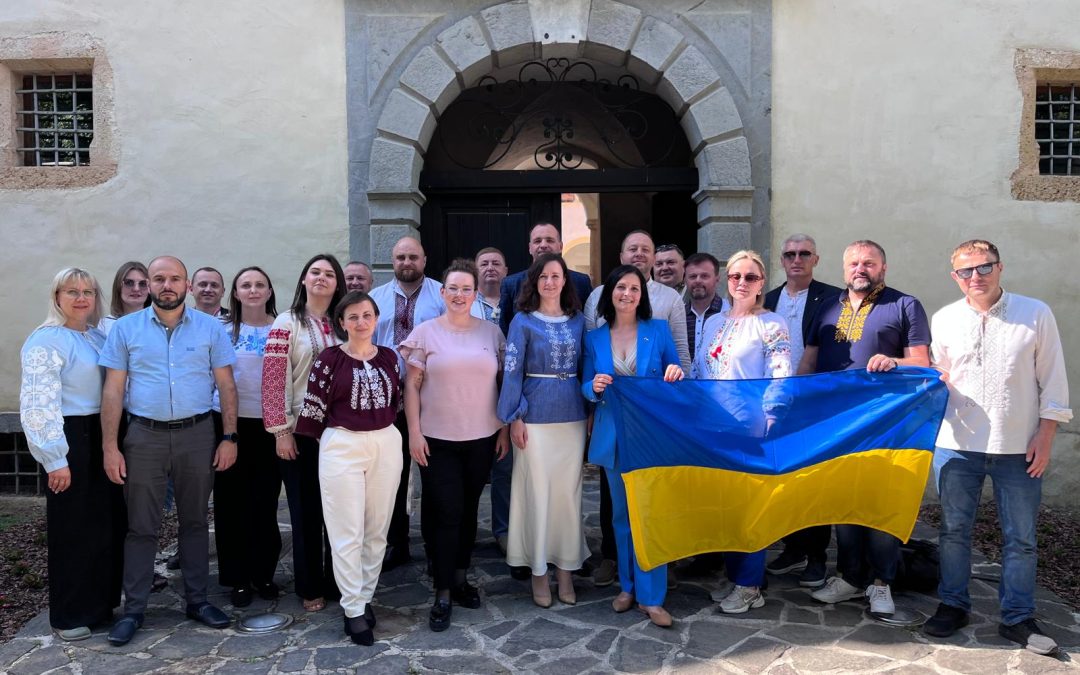
Representatives of Ukrainian municipalities and regional authorities have officially begun their cluster mentorship visit to Slovenia, dedicated to economic development, investment promotion, and support for local entrepreneurship.
The visit brings together mayors and senior representatives from 13 Ukrainian oblasts and marks the beginning of a thematic process designed to support Ukrainian authorities in areas related to EU accession Chapter 22.
The opening discussions took place at Jable Castle in Mengeš, where participants were welcomed by representatives of CEP, the Embassy of Ukraine in Slovenia, the Ministry for Cohesion and Regional Development, and Ministry of the Economy, Tourism and Sport. The first day of the programme focused on Slovenia’s governance model for regional development, cohesion policy, entrepreneurship support, and institutional cooperation.
Experts from Slovenian ministries and development institutions presented Slovenia’s national framework for regional development and business support, while also sharing practical experiences related to entrepreneurship promotion, development funds, and project support mechanisms.
The delegation was joined by:
- Ms Alenka Marovt and Mr Jan Sitar from the Ministry of the Economy, Tourism and Sport,
- Ms Ivana Štrkalj and Mr Tin Kampl from the Ministry for Cohesion and Regional Development,
- Ms Natalia Markevych-Pritsa, First Secretary at the Embassy of Ukraine in the Republic of Slovenia.
Throughout the visit, participants will explore Slovenia’s economic development ecosystem and institutional support environment through meetings, workshops, and field visits across Ljubljana and its surroundings, as well as the Koroška and Štajerska regions.
The mentorship process aims to strengthen the capacities of Ukrainian local and regional authorities in the fields of regional development, investment attraction, and sustainable local economic growth while contributing to Ukraine’s broader EU integration efforts.
The programme is organised by the Centre for European Perspective (CEP) in partnership with the Ministry for Communities and Territories Development of Ukraine and the Ministry for Cohesion and Regional Development of the Republic of Slovenia.
The Recovery and Reconstruction in Ukraine programme is supported by Ministry of Foreign and European Affairs of Slovenia through the Slovenian Aid and Partnership programme.
29. 5. 2026 | Danube, Regional cooperation
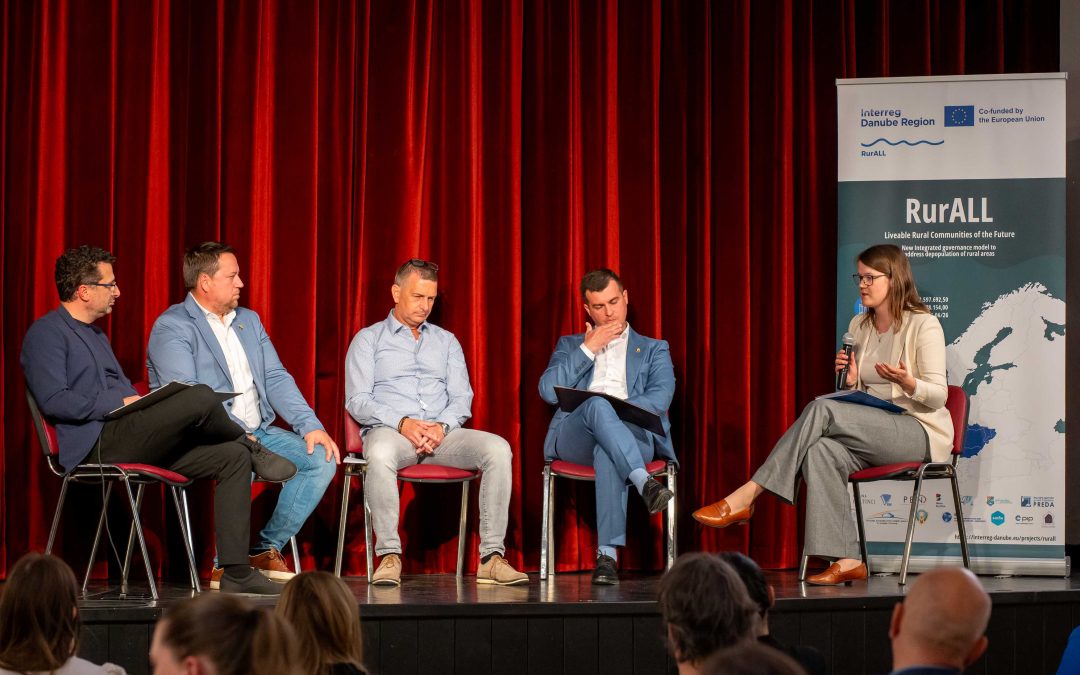
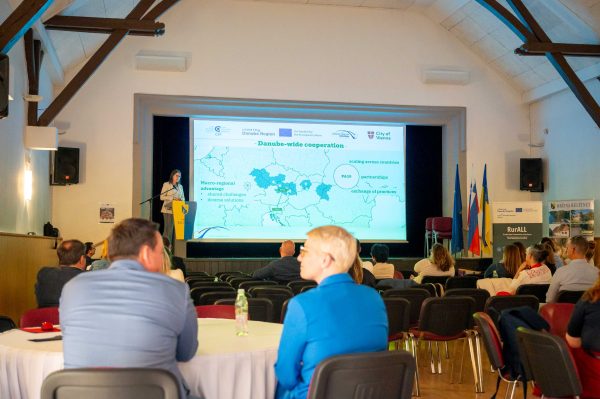
At the Final Event of the Project RurALL, CEP contributed in its role as coordinator of Priority Area 10 of the EU Strategy for the Danube Region, presenting how local initiatives can achieve broader impact through macroregional cooperation and multilevel governance.
The presentation focused on the importance of participatory governance, stakeholder engagement, and institutional capacity-building in strengthening resilient rural communities. It explored how successful local initiatives and project results can move beyond pilot areas through stronger coordination, cooperation, and exchange across the Danube Region.
At the same time, the event also reflected CEP’s broader work in supporting municipalities and local stakeholders through practical capacity-building initiatives. By connecting macroregional policy coordination with hands-on mentorship and cooperation at the local level, CEP demonstrated how different projects and activities can complement one another: one helping create strategic frameworks and networks, the other translating these approaches into concrete support for municipalities and rural communities.
In the following roundtable, the event provided the opportunity to exchange experiences with local and regional representatives on practical approaches to rural development, cooperation, and inclusive governance across the Danube Region.
28. 5. 2026 | POTC, PR
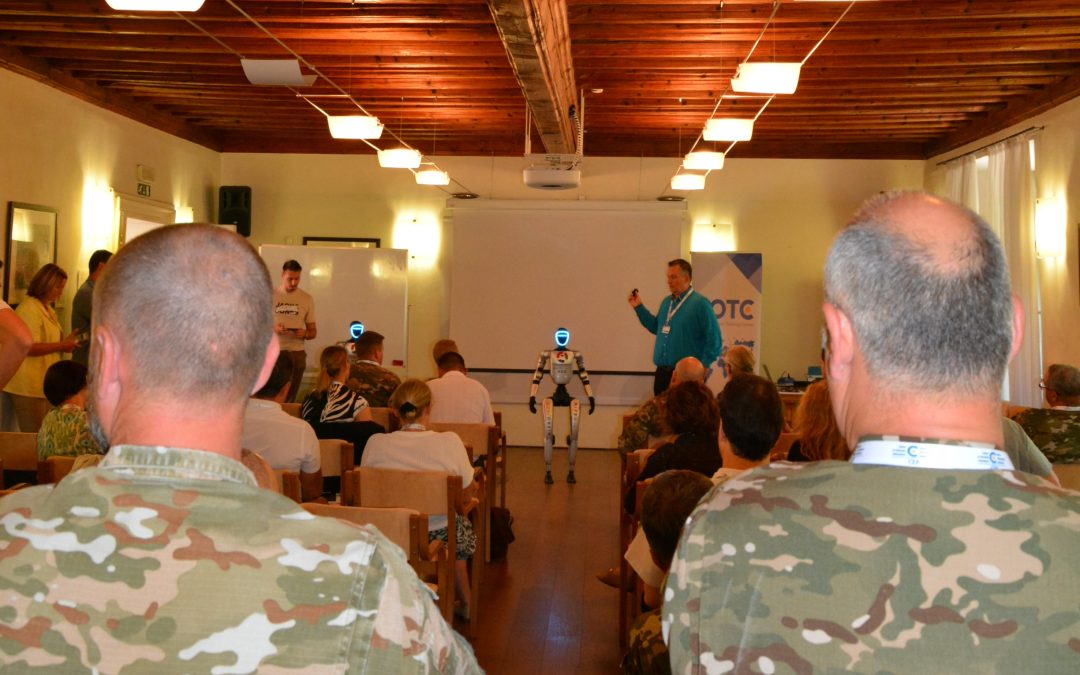
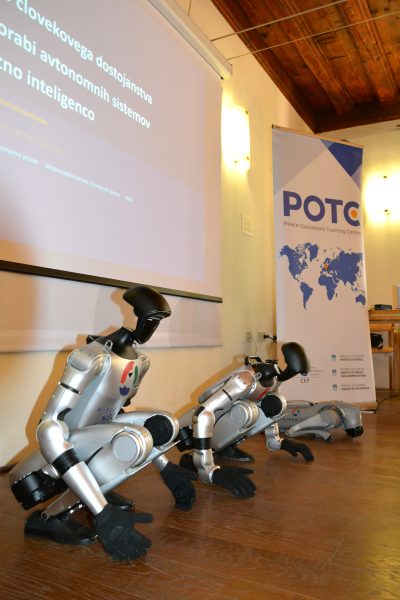
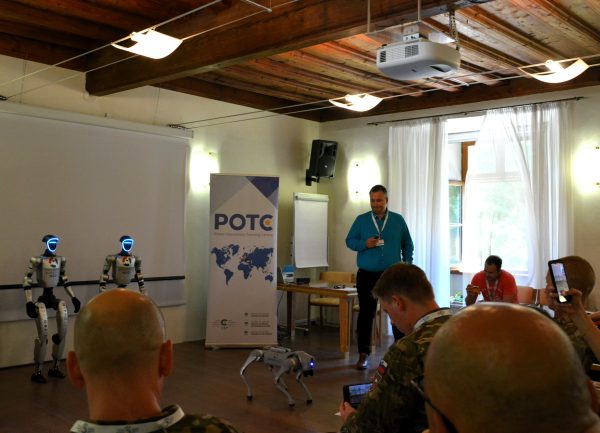
The fifth seminar on Disruptive Military Technologies and Practices was held at Jable Castle on May 26th. This year, the focus was on humanoid robots in the armed forces.
Klikni tukaj za branje članka v slovenščini
The seminar on the use of humanoid robots in the armed forces provided insight into the current state of development of such systems worldwide and explored their possible roles in the armed forces of the future.
The rapid development of humanoid robots, a specific segment of autonomous systems, poses new challenges to society at large and, consequently, to armed forces worldwide. As part of the seminar, experts presented the current state of humanoid robot development, highlighted the reasons for their potential use in military environments, addressed the technical challenges of their development, and touched on the ethical and legal issues related to their future use.
The seminar, which was organised in close cooperation with the Department of Military Technology, Research and Development of the Ministry of Defence, was attended by representatives of the Ministry of Defence and the Slovenian Armed Forces.
For more information about the training and more about our work, you can follow us on social media:
LinkedIn • X • Facebook • Bluesky