Sustainable Housing Solutions: Ukrainian Municipalities Learn from Slovenian Good Practices

Sustainable Housing Solutions: Ukrainian Municipalities Learn from Slovenian Good Practices

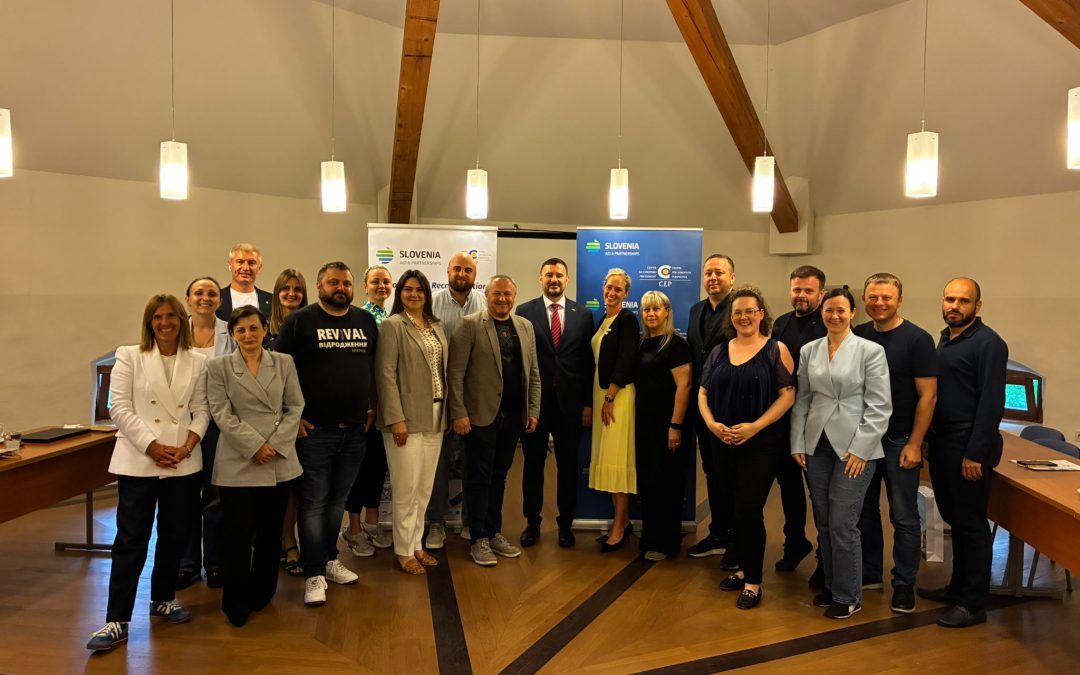
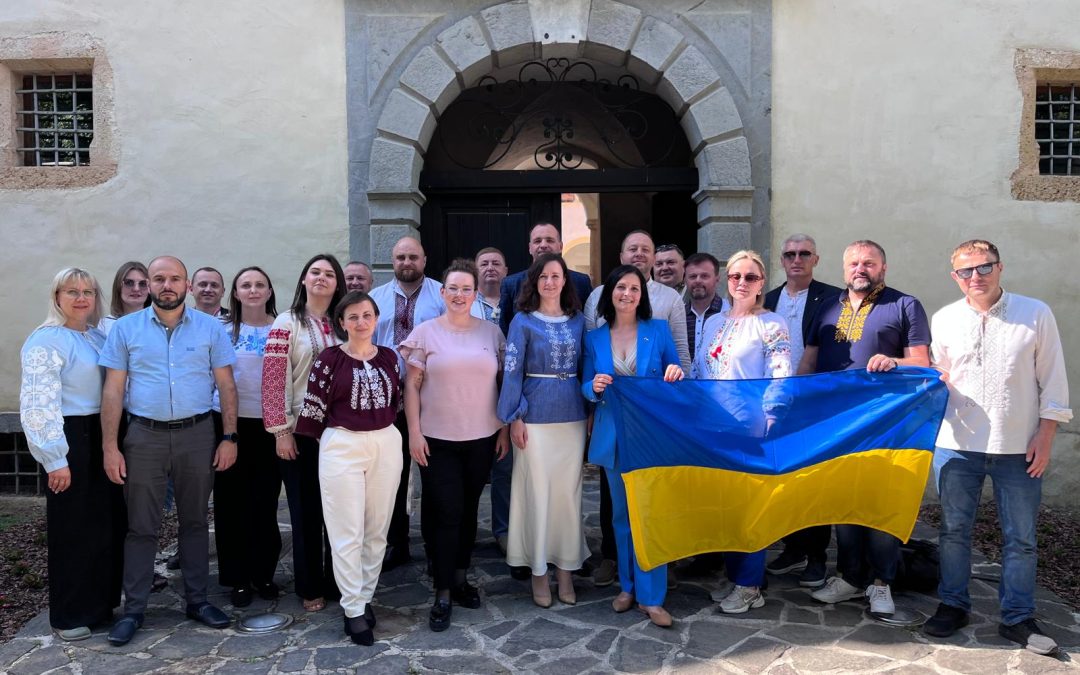
A five-day thematic cluster visit to Slovenia brought together representatives of nine Ukrainian hromadas and the Lviv Regional Military Administration with Slovenian housing experts, public institutions and municipalities to exchange knowledge, strengthen partnerships and develop practical strategies for addressing sustainable housing for communities and internally displaced persons (IDPs) in Ukraine.

From 6 to 10 July, the delegation participated in an intensive programme of workshops, policy discussions, study visits and strategy sessions as part of the Recovery and Reconstruction in Ukraine programme. The visit aimed to transform knowledge into concrete action by equipping Ukrainian local authorities with practical tools and policy approaches that can support long-term, resilient housing development.

The cluster visit was organised around the idea that today’s solutions can become tomorrow’s homes. Throughout the week, participants explored Slovenian experiences in housing policy, affordable housing provision, urban regeneration and participatory planning while discussing how these models could be adapted to the Ukrainian context.

Building a Strong Foundation for Housing Recovery

The programme began with introductory workshops where participants identified the main housing challenges facing their municipalities and exchanged experiences from previous cooperation activities. Particular attention was given to the housing situation in the Lviv region, the needs of internally displaced persons and the development of local housing strategies that respond to both immediate and long-term reconstruction priorities.

A key contribution came from the Ukrainian think tank CEDOS, which presented research on Ukraine’s rental housing market and the challenges surrounding rent subsidies for internally displaced persons. The discussion provided participants with valuable evidence for understanding existing policy gaps and identifying opportunities for future reforms.

Participants also learned about alternative housing models presented by the Institute for Studies of Housing and Space (IŠSP), including non-profit housing cooperatives and approaches that diversify housing providers while strengthening community resilience. Experts from MOBA Housing introduced innovative financing mechanisms for community-led and cooperative housing initiatives, demonstrating how long-term financial instruments can support affordable housing development beyond traditional banking systems.

Learning from Slovenia’s Housing System

During the visit, the Ukrainian delegation met with representatives of Slovenia’s key housing institutions and explored how national and local policies have evolved to increase the supply of affordable housing.

Sessions included presentations by representatives of the Ministry of environment and spatial planning of Slovenia, responsible for housing policy, the Housing Fund of the Republic of Slovenia and the Public Housing Fund of the City of Ljubljana. Discussions focused on recent reforms, financing mechanisms, public rental housing, strategic planning and the challenges of expanding non-profit housing in response to growing demand.

The delegation also visited Novo Brdo in Ljubljana, one of Slovenia’s flagship non-profit housing developments, where participants examined how quality architecture, community planning and social inclusion contribute to successful affordable housing projects.

The programme continued in Celje, where local officials presented the municipality’s housing strategy and showcased examples of non-profit housing development, assisted living facilities and neighbourhood regeneration. Site visits and workshops demonstrated how municipalities can play an active role in improving housing conditions while creating more sustainable and inclusive urban environments.

From Knowledge Exchange to Strategic Action

Beyond expert presentations and field visits, participants took part in a full-day Strategy Lab led by Professor dr. Nenad Filipović of IEDC – Bled School of Management. The workshop focused on translating ideas into practical strategies, helping participants understand how to design, implement and monitor effective housing interventions capable of delivering measurable results.

Another important component of the programme was participatory urban design, where the Ukrainian delegation learned how involving residents and local stakeholders in planning processes can improve public spaces and strengthen communities alongside housing development.

Strengthening Slovenian–Ukrainian Partnerships

The thematic cluster visit created valuable opportunities for cooperation between Ukrainian municipalities and Slovenian research institutions, municipalities, housing organisations and civil society partners. Discussions extended beyond knowledge sharing to explore future joint projects, financing opportunities, pilot initiatives, capacity building and continued institutional collaboration.

The visit also established a strong foundation for the thematic housing cluster to continue supporting Ukrainian communities as they work towards sustainable, affordable and resilient housing solutions in line with Ukraine’s reconstruction priorities and evolving housing legislation.

The cluster visit brought together expertise from the Institute for Studies of Housing and Space (IŠSP), CEDOS, MOBA Housing, IPoP – Institute for Spatial Policies, Prostorož, IEDC – Bled School of Management, the Housing Fund of the Republic of Slovenia, the Public Housing Fund of the City of Ljubljana, the Municipality of Celje and other Slovenian partners, creating a comprehensive platform for policy dialogue and practical learning.


The activities were implemented by the Centre for European Perspective (CEP) in cooperation with U-LEAD with Europe and supported by the Ministry of Foreign and European Affairs of the Republic of Slovenia through the Slovenian Aid and Partnerships Programme.


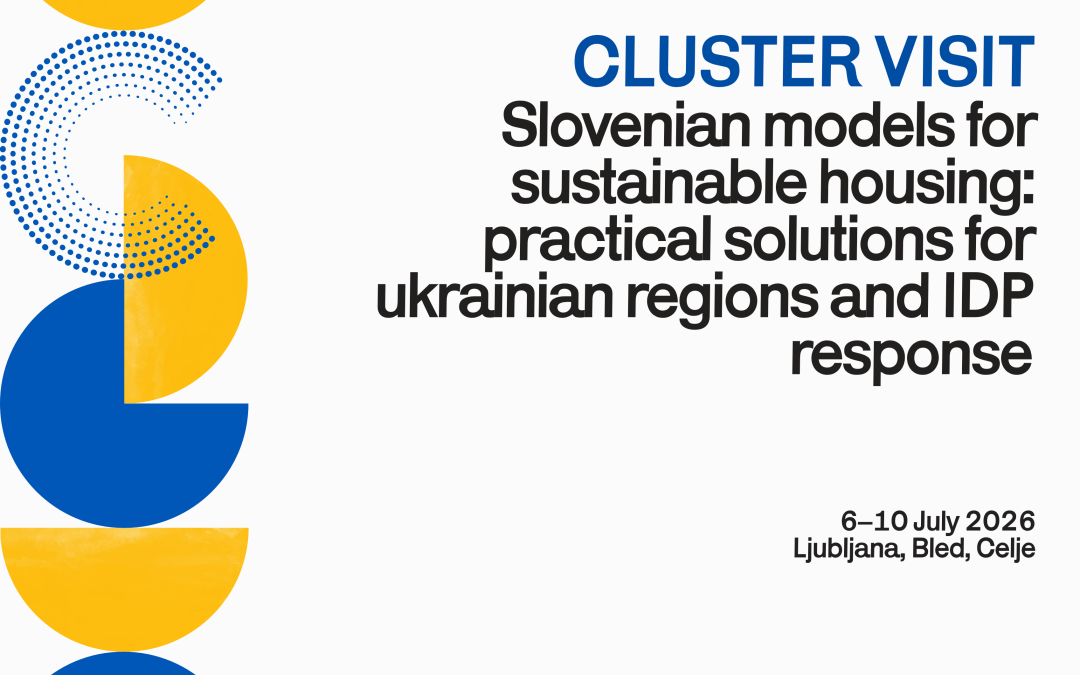
Upcoming Cluster visit – Slovenian Models for Sustainable Housing: Practical Solutions for Ukrainian Regions and IDP Response

Upcoming Cluster visit – Slovenian Models for Sustainable Housing: Practical Solutions for Ukrainian Regions and IDP Response

Slovenian Models for Sustainable Housing: Practical Solutions for Ukrainian Regions and IDP Response will take place from 6 to 10 July 2026 in Ljubljana, Bled and Celje, Slovenia.

CEP is hosting a thematic visit for Ukrainian representatives of municipalities, regional authorities and housing professionals working on housing policy, urban development and the response to the needs of internally displaced persons (IDPs).

The programme will present Slovenian approaches to sustainable housing development, combining policy discussions with practical examples of non-profit housing, municipal housing strategies, innovative financing models and participatory urban planning. Through expert presentations, workshops and site visits, participants will exchange experiences, discuss common challenges and explore solutions that could support housing reconstruction and long-term resilience in Ukraine.

The visit will also provide an opportunity to connect Slovenian and Ukrainian experts, strengthen institutional cooperation and identify good practices that can be adapted to the Ukrainian context. Particular attention will be given to affordable housing, community-led approaches and strategic planning for post-war recovery.

The initiative contributes to CEP’s broader support for Ukraine by strengthening local capacities, fostering knowledge exchange and promoting sustainable regional development as part of Ukraine’s European integration process.

The Recovery and Reconstruction in Ukraine programme is supported by the Ministry of Foreign and European Affairs of the Republic of Slovenia through the Slovenian Aid & Partnerships programme.

Conclusion of the Cluster visit on Local Economic Development

Conclusion of the Cluster visit on Local Economic Development

The Cluster Visit – Strengthening Municipal Capacity for Local Economic Development in Slovenia has come to a close on Friday, 5 June 2026.

From entrepreneurship support and regional development to municipal cooperation and innovation ecosystems, the past nine days have demonstrated the power of knowledge exchange in shaping stronger local communities.

Representatives of Ukrainian municipalities and regional development institutions have successfully completed a study visit across Slovenia, exploring practical approaches to local economic development, regional growth, and municipal capacity building.

Throughout the programme, participants gained first-hand insight into Slovenia’s approach to regional development, business support systems, municipal cooperation, and the implementation of national development policies at the local level. The delegation engaged with representatives of ministries, regional development agencies, municipalities, business support organisations, and development experts from across the country.

The programme included visits to the Ljubljana University Incubator, SPIRIT Slovenia, the Slovenian Regional Development Fund, the Regional Development Agency of Koroška, the UNESCO Global Geopark Karavanke, the Slovenian Enterprise Fund, the Regional Development Agency Podravje, Venture Factory, and the Regional Development Agency of the Ljubljana Urban Region.

Participants also met with mayors and municipal representatives from several Slovenian regions, gaining valuable insights into local governance, intermunicipal cooperation, investment promotion, and community-led development.

Through workshops, field visits, and discussions, participants explored topics such as entrepreneurship support infrastructure, project preparation and management, EU cohesion policy, cross-border cooperation, circular economy initiatives, SME support mechanisms, innovation ecosystems, and tools for strengthening local resilience.

The programme also provided a platform for Ukrainian participants to present their own experiences, challenges, and development priorities, fostering meaningful peer-to-peer exchange and identifying opportunities for future cooperation.

The concluding session focused on reflecting on lessons learned, identifying Slovenian practices that could be adapted to the Ukrainian context, and discussing practical next steps for strengthening local and regional development capacities.

The programme concluded with closing remarks by His Excellency Petro Beshta, Ambassador of Ukraine to the Republic of Slovenia, who highlighted the importance of international partnerships, knowledge exchange, and continued support for Ukrainian municipalities and regions as they work towards sustainable development, resilience, and recovery.

A sincere thank you to all institutions, experts, speakers, municipal representatives, and participants whose engagement and contributions made this programme possible. Together, they helped strengthen the foundations for future cooperation between Slovenia and Ukraine and demonstrated the value of learning from one another’s experiences.


This programme was prepared in cooperation with U-LEAD with Europe and implemented in partnership between Ministry of Local Self-Government, Cohesion and Regional Development of Republic of Slovenia and Ministry for Development of Communities and Territories of Ukraine.

This programme is supported by Ministry of Foreign and European Affairs of the Republic of Slovenia through the Slovenian Aid and Partneships programme.

Ukrainian Municipal and Regional Representatives Begin Cluster Visit to Slovenia Focused on Economic Development

Ukrainian Municipal and Regional Representatives Begin Cluster Visit to Slovenia Focused on Economic Development

Representatives of Ukrainian municipalities and regional authorities have officially begun their cluster mentorship visit to Slovenia, dedicated to economic development, investment promotion, and support for local entrepreneurship.

The visit brings together mayors and senior representatives from 13 Ukrainian oblasts and marks the beginning of a thematic process designed to support Ukrainian authorities in areas related to EU accession Chapter 22.

The opening discussions took place at Jable Castle in Mengeš, where participants were welcomed by representatives of CEP, the Embassy of Ukraine in Slovenia, the Ministry for Cohesion and Regional Development, and Ministry of the Economy, Tourism and Sport. The first day of the programme focused on Slovenia’s governance model for regional development, cohesion policy, entrepreneurship support, and institutional cooperation.

Experts from Slovenian ministries and development institutions presented Slovenia’s national framework for regional development and business support, while also sharing practical experiences related to entrepreneurship promotion, development funds, and project support mechanisms.

The delegation was joined by:

  • Ms Alenka Marovt and Mr Jan Sitar from the Ministry of the Economy, Tourism and Sport,
  • Ms Ivana Štrkalj and Mr Tin Kampl from the Ministry for Cohesion and Regional Development,
  • Ms Natalia Markevych-Pritsa, First Secretary at the Embassy of Ukraine in the Republic of Slovenia.

Throughout the visit, participants will explore Slovenia’s economic development ecosystem and institutional support environment through meetings, workshops, and field visits across Ljubljana and its surroundings, as well as the Koroška and Štajerska regions.

The mentorship process aims to strengthen the capacities of Ukrainian local and regional authorities in the fields of regional development, investment attraction, and sustainable local economic growth while contributing to Ukraine’s broader EU integration efforts.

The programme is organised by the Centre for European Perspective (CEP) in partnership with the Ministry for Communities and Territories Development of Ukraine and the Ministry for Cohesion and Regional Development of the Republic of Slovenia.

The Recovery and Reconstruction in Ukraine programme is supported by Ministry of Foreign and European Affairs of Slovenia through the Slovenian Aid and Partnership programme.

Mentorship Visit of Horodenka Municipality to Beltinci Concludes

Mentorship Visit of Horodenka Municipality to Beltinci Concludes

As part of the “Rebuild Ukraine” programme a mentorship visit of representatives from the Ukrainian municipality of Horodenka took place in the Municipality of Beltinci between 13 and 27 May. The programme was designed to support Ukrainian local communities in project development, knowledge exchange, and strengthening international cooperation.

Representatives of Horodenka municipality, Ms Mariia Zdrila and Ms Tetiana Hamula, worked together with CEP experts and their mentor Dejan Bogdan from the Municipality of Beltinci on developing project proposals in the fields of waste management and veterans’ rehabilitation. Both topics represent important priorities for the municipality as Ukraine continues to face the consequences of war and reconstruction challenges.

The mentorship programme provided participants with insight into Slovenian good practices in local development, project management, and the functioning of local self-government. During their stay, they attended presentations of projects implemented by the Municipality of Beltinci and the Institute for Tourism, Culture and Sport Beltinci, visited CEROP, Saubermacher-Komunala, Komuna Beltinci and the wastewater treatment plant, learned about the work of the social enterprise ZRIRAP Beltinci, and participated in the final conference of the RurALL project.

In the final stage of the visit, the delegation was joined by the Mayor of Horodenka Municipality, Mr Bohdan Kobyliansky, who was welcomed by the Mayor of Beltinci Municipality, Mr Marko Virag. Their meeting focused on exchanging experiences regarding local governance, the preparation and management of EU-funded projects, and the challenges faced by rural communities in both Slovenia and Ukraine.

The mentorship visit concluded at the scenic Island of Love in Ižakovci, where the mayors signed a Memorandum of Cooperation between the municipalities of Beltinci and Horodenka, laying the foundation for future collaboration and joint initiatives.

On this occasion, the Municipality of Beltinci also donated solar panels to Horodenka, a gesture of solidarity and support that will help the local community during these difficult times.

“Many communities have good ideas, but you also need the required skills. We tried to give you an insight into our own journey,” said Mr Marko Virag, Mayor of the Municipality of Beltinci, during the closing event.

The mentorship visit stands as an important example of cooperation between Slovenian and Ukrainian local communities and represents concrete support for Ukraine’s recovery and long-term local development.

The Recovery and Reconstruction in Ukraine programme is supported by Ministry of Foreign and European Affairs of Slovenia through the Slovenian Aid and Partnership programme.

Foto: Jure Kljajić

Media articles

Global starts Local: Workshops about raising awareness on international development cooperation

Global starts Local: Workshops about raising awareness on international development cooperation

CEP, in cooperation with Zavod Povod, is organising interactive workshops for 9th-grade primary school students aimed at raising awareness about the importance of international development cooperation, global solidarity, and the Sustainable Development Goals (SDGs).

The first workshops will take place:

  • on 3 June in Spodnja Idrija Primary School
  • on 12 June in Lenart Primary School

The 90-minute workshops are designed to introduce young people to Slovenia’s role in international development cooperation while encouraging reflection on active citizenship, solidarity, and shared responsibility in addressing global challenges.

Through interactive learning, group discussions, quizzes, and creative activities, participants will explore:

  • the role of Slovenia and the Centre for European Perspective in international cooperation,
  • the importance of the Sustainable Development Goals (SDGs) for people, society, and the environment,
  • the contribution of Slovenian NGOs to international solidarity and sustainable development,
  • concrete examples of Slovenia’s support for Ukraine and other international projects.

Special attention will be given to connecting young people’s personal values with the Sustainable Development Goals and understanding how international projects contribute to a more inclusive, sustainable, and resilient society.

The workshops are based on a participatory approach and encourage critical thinking, collaboration, and active engagement in understanding global challenges and their local impact.

The Recovery and Reconstruction in Ukraine programme is supported by Ministry of Foreign and European Affairs of Slovenia through the Slovenian Aid and Partnership programme.