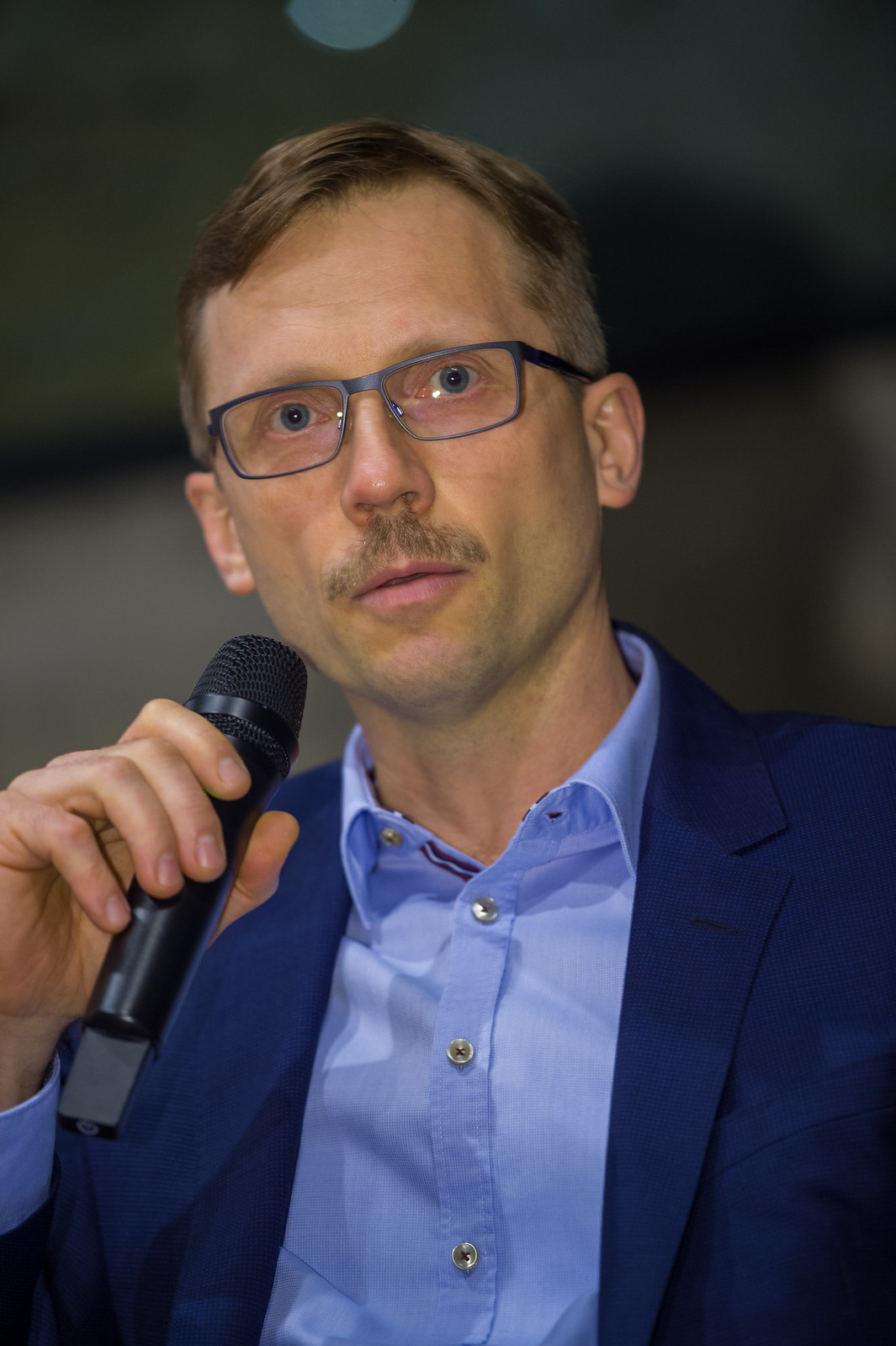
Centre for European Perspective’s Executive Director dr. Gorazd Justinek participated in the China-CEEC Think Tanks Network conference entitled “The Achievements of 16+1 Cooperation in the Latest Five Years” on Monday, 20 November 2017, hosted in Budapest, Hungary. The conference has been jointly sponsored by the Institute of European Studies, Chinese Academy of Social Sciences, and the China-CEEC Think Tanks Network, by the Hungarian Ministry of Foreign Affairs and Trade and by the Hungarian Institute of Foreign Affairs and Trade.
CEP has recently been involved in an ongoing research of China’s involvement in the Western Balkans in the light of the One Belt, One Road initiative, infrastructure investments and projects, and digital cooperation in the framework of the 16+1 Platform.
“Five years have passed and together we have made great achievements in policy consultation, economic cooperation, cultural exchanges, and many other fields,” Chinese Ambassador to Hungary Duan Jielong said in his opening remarks. He said the bilateral relationships today between China and CEE countries are “at their best in history.” “We expanded our infrastructure and industrial partnerships,” he said.
Istvan Ijgyarto, Hungarian State Secretary for Cultural and Science Diplomacy, praised the importance of think tanks in the “16+1 cooperation”. Hungary upholds the view that China-CEEC cooperation constitutes an important part of cooperation between the European Union and China in the framework of their comprehensive strategic partnership, Ijgyarto said.
Huang Ping, director-general of the Institute of European Studies, Chinese Academy of Social Sciences, said, “We are here to implement the great ideas and suggestions and to use this forum as a platform to improve the bilateral relations of all the sixteen countries with China.”
High on the agenda of the conference were the evaluation and discussion on the progress of the investment of China in CEEC, on the local collaboration in the 16+1 cooperation, and on the progress of transportation and communication.
The future is digital and it is of great importance for the public institutions, governments, ministries, embassies to get on board and embrace the potentials of the new technologies. Unlike the traditional diplomacy, digital diplomacy allows anyone, everyone, anywhere, anytime to have a voice. Individuals are no longer just passive receivers of information, they can respond, influence and contribute. This is the way to engage the public in the broadest sense into the decision-making processes, but also to engage into a multi-channel communication flow.
In order to build the knowledge base in the field of digital diplomacy in the Western Balkans and Eastern Europe, Centre for European Perspective is working together with the Ministry of Foreign Affairs of the Republic of Slovenia and the United States Department of State. New development cooperation project »Enhancing Digital Diplomacy Activities in the Western Balkan and Eastern European Countries” is kicking-off next week, addressing and bringing together the public institutions PR and digital services.
An advanced public relations training, focused on digital diplomacy, taking place in Bled, Slovenia, from 28 to 30 November 2017, will offer in-depth knowledge about the importance of the digital presence, European digital media landscape, audience identification, story-telling, ecosystem and strategy creation, digital campaigns, visual contents and digital media (such as Twitter, Facebook, YouTube).
Over 70 participants from Albania, Bosnia and Herzegovina, Georgia, Kosovo, Macedonia, Moldova, Montenegro, Serbia, Ukraine and Slovenia will get a chance to work with the digital engagement experts from the U.S. Department of State, academic or private sector as well as experts of the Ministry of Foreign Affairs of Slovenia. The programme aims to strengthen the capacities of the public institutions to plan, coordinate and prepare digital campaigns through various digital communication tools.
The project is part of the CEP program activities financed by the Ministry of Foreign Affairs in the scope of international development cooperation, this time in cooperation with the US Department of State.
A round table discussion “The Evolving and Ever-present Cyber Security” attracted a large crowd of participants from various fields interested in cyber security, ranging from academics, IT specialists, companies to embassy and ministry representatives, who discussed the evolving challenges on Friday, 17 November, in Ljubljana. The event was organized in the framework of the Bled Strategic Forum international conference in cooperation with the Ministry of Foreign Affairs of the Republic of Slovenia, Centre for European Perspective and Club Alpbach Senza Confini.
The event was open by Meliha Muherina, Project Manager at CEP, who briefly introduced the idea and organizers behind the event. The opening remarks were delivered by Miriam Možgan, cyber security coordinator at the Slovenian ministry of foreign affairs, who presented the recent engagements of Slovenia in its foreign policy in relation to the topic of cyber security; Domen Božeglav, adviser for digitalization in the office of the Slovenian minister of public administration, who continued with the internal aspect of Slovenian preparations and reactions to the cyber security developments; and Vesna Kuralt, president of Club Alpbach Senza Confini, who presented Forum Alpbach Network, its work and future plans for cooperation.
The panelists, Daniel Cohen, Head of the Strategy program at the Institute for International Diplomacy and a researcher at Blavatnik Interdisciplinary Cyber Research Institute, Dobran Božič, Director of the Government Office for the Protection of Classified Information, Gorazd Božič, Slovenian Computer Emergency Response Team, and Peter Geršak, International Business Machines Corporation, Slovenia, addressed various aspects of cyber security, starting with the question of the ownership of the infrastructure relevant to the cyber space. The dilemma of the agreement between the society, state and private companies on the ownership and regulation of the cyber space was discussed as one of the crucial questions in the times when the public demands protection from the state, emphasized Dobran Božič.
In contrast to the past perception of cyber-attacks as something that is in the domain of young hackers from the science fiction movies and books, the issue is considered as an act of organized crime today. The trends show that they are usually motivated by financial profits, said Gorazd Božič. Peter Geršak approached the discussion from the perspective of businesses, exposing the challenges of the protection of the devices that the employees use, lack of skills of employees in this field and the provision of advising services for the mitigation of the effects of cyber threats on businesses.
While a number of potential scenarios was discussed as the emerging trends in cyber-attacks, the worst-case scenarios would involve an attack on critical infrastructure, including energy sector, telecommunications and banking. Dobran Božič explained Slovenia’s and wider European preparations for such cases, also in the light of the recent EU Directive on Security of Network and Information System. Gorazd Božič exposed a number of already functioning response systems and expressed his positive view on the existing capabilities.
Daniel Cohen, specializing in cyber terrorism, elaborated on the challenges of the web and social media use in terrorist recruitment, especially in the case of ISIS, discussed fake news, elections meddling and information leaks, but also touched upon the rather unproductive cooperation between the public institutions and the private enterprises.
Internet of Things (IoT) was approached from the perspective of privacy protection of the citizens and the evolving public perception of private data sharing with the private corporations such as big international corporations and with the state, who on the other hand is expected to protect the citizens in case of a security breach. The round table discussion, moderated by Sabina Carli of CEP, also engaged into a vivid exchange of views relating to the challenges that are brought to both software developers and the authorities when it comes to encrypted communications, crypto, blockchain, internet voting and artificial intelligence.
Danube University Krems and the Institute for the Danube Region and Central Europe are hosting a conference “The EUSDR – Common Approach, Shared Competences” addressing the challenges for policies, economics, science, culture and education in the Danube Region.
European as well as international developments reveal numerous challenges for the EU Strategy for the Dabube Region (EUSDR) and the EU itself. Participants discussed the role of the institutions at local, regional, national and global levels implementing the EUSDR’s objectives, prerequisites for a stronger European idea in the Danube Region and throughout Europe, against growing right-wing populisms, extremisms and radicalization processes, and potentials for creations of new perspectives for the Danube Region.
CEP’s executive director Dr Gorazd Justinek spoke at the panel discussion “Necessary Concepts, Planning Horizons and Perspectives for a European Togetherness” together with Dr Mathias Czaika, Professor for Migration and Integration at the Danube University Krems, Mag Elisabeth Pacher, Consultant for European and International Culture Policy at the Federal Chancellery of Austria, Gyula Ribàr, Senior Expert Associate for EU Funds, Foundation Novi Sad 2021 – European Capital of Culture and Maria Schwarzmayr, Art Initiative „Divided Cities”. The panel was moderated by Mag Adelheid Wölfl, Correspondent South-Eastern Europe for Der Standard. Dr Justinek addressed the changing nature of the European integration project, touched upon the enlargement process and discussed the numerous crises the EU is facing today, but also the benefits the integration brings to the European population.
In the framework of the Bled Strategic Forum international conference, Centre for European Perspective fosters a partnership with UCLA and its Center for Middle East Development, that recently organized the 12th Annual Conference, Enriching the Middle East’s Economic Future, in Doha, Qatar. The annual conference, held under the auspices of the Foreign Ministry of the State of Qatar, is an internationally recognized forum for government officials, active business and financial practitioners, and politicians and academics dealing with current economic, financial, political, and diplomatic issues.
CEP’s executive director dr. Gorazd Justinek actively participated in the panel discussion entitled “New U.S.-European Relations: What Does it Mean for the MENA Region?”, moderated by dr. Ersin Kalaycioglu of Sabanci University. The panellists Mr Torgeir E. Fjaertoft of the Centre for Islamic and Middle Eastern Studies, Ms Robin Wright of the US Institute of Peace/ Woodrow Wilson Center and Dr Gorazd Justinek of CEP, exchanged their views on the Translatlantic relations and their implications in the Middle East and Northern Africa.