Read more about the application process here.



Mr Alexander Maier, member of the the State Parliament of Baden-Württemberg, with colleagues visited CEP on Monday, 30 July 2018. This was his first stop on four weeks long journey through Danube region.
Baden-Württemberg is one of the two German federal states (the other is Bavaria) that have recognized the need and benefit of addressing challenges regionally and joined the EU Strategy for Danube region (EUSDR). It is bringing together 14 states (5 of them are non-EU members) that are together facing contemporary issues on connectivity, protection of environment, employment and innovation as well as security and institutional cooperation.
Delegation was first welcomed by CEP Executive Director, Dr Gorazd Justinek, who explained how CEP was established, presented its mission and main projects, highlighting the upcoming Bled Strategic Forum as one of the opportunities for tighter cooperation between Baden-Württemberg and Slovenia. Baden-Württemberg is one of the most developed business areas in the world and their opinion on fast developing industries would be interesting to hear.
Centre is coordinator of the priority area 10 of the EUSDR – Institutional Capacity and Cooperation. Ms Nina Čepon presented the activities and projects implemented last year and in 2018, emphasizing the endeavors for inclusion of youth in policy processes. They have proven through various activities that they would like to shape the policies that are affecting their daily life and have impact on wider society.
After fruitful meeting, delegation visited Ljubljana Regional Waste Management Centre (RCERO Ljubljana), which is the biggest environmental project in Slovenia supported by the EU Cohesion Fund and the most modern facility for waste treatment in Europe, processing waste from a third of Slovenia. The EU’s Cohesion Fund contributed 77.5 million euros, which was 61% of the investment and helped to process the waste very efficiently – 95% of the waste gathered are re-used and re-cycled.
Mr Maier and his colleagues continued their journey towards Sofia, Bulgaria.


The Civil Society Forum of the Western Balkans in its conclusions on the issues of economic stability in the region emphasise: “The per capita income of the Western Balkan countries is just 27 percent of the EU15 average. Over 50% of youth population is unemployed, with one country reporting the youth unemployment rate of 63 percent, the Europe’s highest. Women participation in the active labour market starts at 30 percent.
The small and medium enterprises and social enterprises provide less than 30 % of total employment. The economic hardships, poverty or a lack of jobs, lack of opportunities and future prospects result in sizeable migration that drains the region of its most educated and skilled residents.
The governments of the Western Balkans have so far rather failed to find solutions for development of the human capital, mobilizing youth entrepreneurship and supporting SMEs for the new economy.
A new growth model is needed to reach the digital frontier. It should be based on innovation and entrepreneurial spirit of the new millennial generation. The process should begin with a serious policy discussion on (youth) entrepreneurship, the digital frontier, ecosystem and infrastructure, and conditions required to move key sectors towards a digital economy.”
In order to support the endeavour of the countries of the Western Balkans, the Centre for European Perspective has been engaged in the entrepreneurial programmes for the last five years, bringing together young entrepreneurs from Bosnia and Herzegovina, Kosovo in the first years of the programme, from the Danube macroregion in the past two years and from all the countries of the Western Balkans in this year.
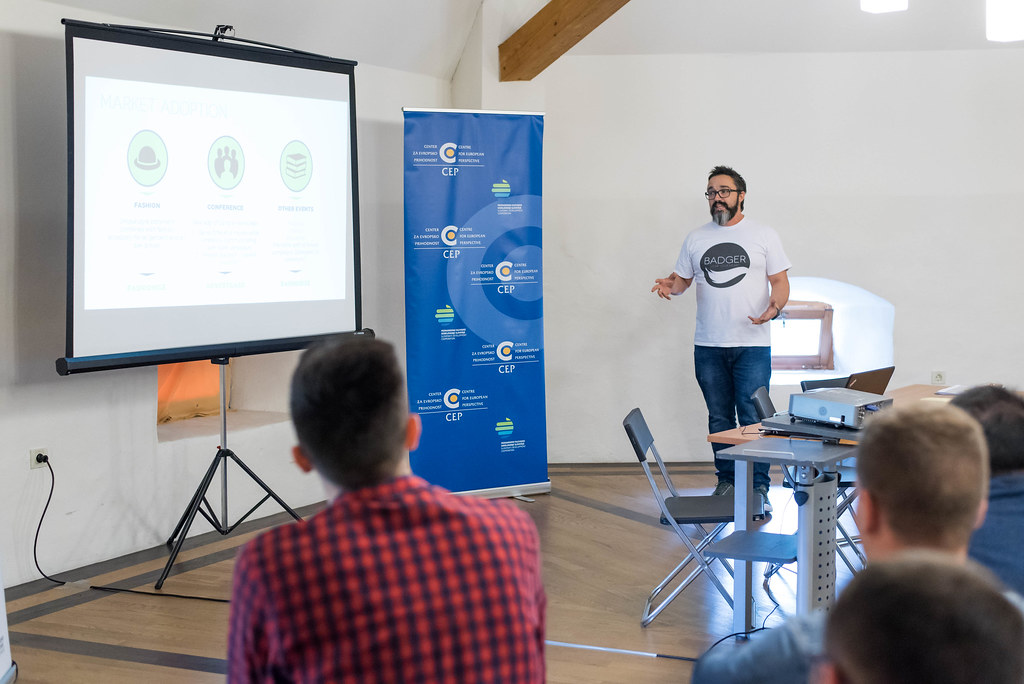
Over 50 participants are gathering at Jable Castle today for a breakfast with the Ambassadors of their countries in Ljubljana and for a short discussion with members of Slovene start-up environment, together with representatives of the Ministry of Foreign Affairs, responsible for the Western Balkan policies.
The event at Jable Castle started with a breakfast with Ambassadors and embassy representatives, attended by the representatives of Albania, Bosnia and Herzegovina, Kosovo, Macedonia, Montenegro and Serbia. Participants were also greeted by Ms Nataša Adlešič Barba of the Ministry of Foreign Affairs and Dr Gorazd Justinek, CEP’s Executive Director.
In the discussion with Technology Park Ljubljana’s representative Dr Jernej Pintar, Entrepreneurship Development Expert, illustrated the CEOs of the TOP10 start-ups at the park: “Modest, creative, smart and super hard-working. Just like you.” He emphasized funding opportunities, coworking spaces and investors. Yet Dr Pintar exposed the most important aspect of entrepreneurship in a country – the community. He gave a group three advises: “Firstly, sales – technology, development are only one leg. It’s story-telling, it’s talking to your customers, it’s selling. Secondly, develop your team. Seek for energy, intelligence and integrity. And finally, learn how to make mistakes.”
Dr Aleš Pustovrh, co-founder of the ABC Accelerator, presented the accelerator and their programmes but also discussed how to remove barriers to success with the entrepreneurs. Besides the finances, networking opportunities and know-how, he emphasized business skills.
Five start-ups – Solar Data Collector, Jamatu, blablaDev, Happy Feet and The Badger – pitched in front of a jury consisting of Dr Aleš Pustovrh, Dr Gorazd Justinek, Jose Antonio Morales, Lincoln Island Initiatives and Dr Jernej Pintar.
Mr Peter Grk and Ms Alenka Košir from the Ministry of Foreign Affairs presented the Positive Agenda for Youth and led a discussion with the participants on the topic of economic development of the Balkans, employment prospects, entrepreneurial policies, youth initiatives and the challenges of start-upers in the Western Balkans.
On 15 and 16 May 2018 the group of young and promising entrepreneurs moved to Maribor, Slovenia to participate in the biggest networking event for start-ups in the Alps-Adriatic Region, to take part in the PODIM Challenge pitching competition and to meet PODIM investors and blue-chip partners.
The programme in Maribor involved a number of intriguing lectures, panels and round-table discussions on business, business development, investments, artificial intelligence, virtual reality, block chain technology and ICOs and other topics that are of high interest to the young entrepreneurs. As part of the programme, PODIM Challenge TOP 20 took place in which the best 20 start-ups attending the conference pitched their ideas in front of an expert jury. Meerkiddo (BiH), Integromat (Czechia), Agremo (Serbia), Aeriu (Hungary) and Flawless App (Ukraine) were selected among our participants.
Centre for European Perspective also actively participated in one of the discussions, focusing on Europe’s tech Ecosystem. Dr Gorazd Justinek, CEP’s Executive Director presented our Start:up Balkan initiative and discussed business development with Mr Fabio Pianesi, EIT Digital, Mr Jure Mikuž, South Central Ventures, Dr Aleš Pustovrh, ABC Accelerator, Mr Matej Rus, Start:up Slovenia, Minister Boris Koprivnikar, Ministry of Public Administration, and Mr Jakob Gajšek, ABC Accelerator.
With the final ceremony in Maribor, Centre for European Perspective also concluded the Start:up Balkan tour and selected the winning start-up that will get a chance to travel to London for a business-boosting visit in a global start-up hub. The winner is Meerkiddo from Bosnia and Herzegovina, that created a parental control app that helps parents supervise their children using a mobile phone.
 Project is part of CEP’s program activities financed by the Ministry of Foreign Affairs of the Republic of Slovenia in the framework of Slovenia’s Development Cooperation.

We are thankful to EU Strategy for Danube Region, who is covering travel grants for young leaders coming from the Danube region countries: Austria, Bulgaria, Bosnia and Herzegovina, Croatia, Czech Republic, Germany, Hungary, Moldova, Montenegro, Romania, Serbia, Slovakia, Ukraine.
Successful applicants will have their accommodation and meals covered for the duration of the program.
Application are open until 27th of May 2018.
Read more about the application process here.

Entrepreneurial mindset and innovative thinking are the foundation of a healthy growth of the economy, which in turn ensures prosperity and an adequate level of development for all inhabitants. Young entrepreneurs are therefore indispensable and very resourceful part of each society. Active and creative minds are important for economic development, prosperity as well as for positive outlook.
This is why CEP for the second year in a row identified start-ups from the Danube region to participate in a fully funded entrepreneurial programme “Facilitating Enhanced Cooperation among Young Danube Experts” at the largest start-up conference in the region, PODIM Conference. PODIM conference is a leading start-up conference in Alps-Adriatic region that has been first time organized 38 years ago. In this time, it developed from a smaller entrepreneurial conference to leading gathering in the region. It shows how actors from various fields and levels can work together and reach much more than they ever could alone.
Having started by supporting the young entrepreneurs from Bosnia and Herzegovina and later on from Kosovo, the programme expanded to additional 9 countries participating this year: Bosnia and Herzegovina, Bulgaria, Croatia, Czechia, Hungary, Montenegro, Romania, Serbia, Slovakia and Ukraine.
CEP supports entrepreneurs and young people with entrepreneurial ideas who would like to develop and upgrade/advance their ideas, assists them to meet and connect, as together, with different approaches and broader pressures, they can influence the entrepreneurial climate in their own country.
Best entrepreneurial ideas were selected through a “PODIM Challenge” competition that we organized together with the PODIM Conference. Young entrepreneurs had to present their idea, team and business plan. The expert commission has reviewed a large number of very competitive applications and made the final selection.
CEP as the PA10 Coordinator will host them in Maribor, Slovenia during the PODIM Conference between 14 and 16 May 2018.
Selected start-ups from the Danube region are:


Trafficking in human beings (THB) is a complex phenomenon that is highly dependent on regional and local economic, social as well as cultural factors. Priority Area 10 is playing an active role in facilitating a discussion among experts, municipalities, cities and non-governmental organizations. Only common efforts can result in tangible steps for combating human trafficking and exploitation.
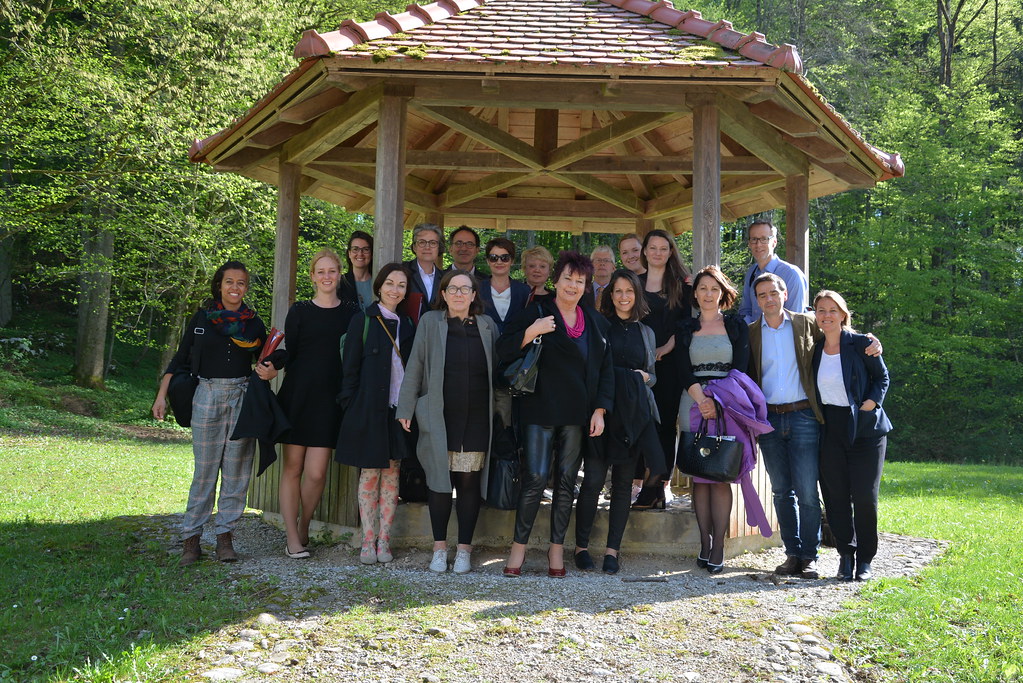
On April 18th 2018 around 30 experts, practitioners, academics, representatives of municipalities, civil society organizations, international organizations and others interested in the topic of combating human trafficking from nine countries from Danube Region and wider gathered in Slovenia.
They dedicated lively discussion and exchange of views on opportunities for strengthening the role of municipalities and cities in preventing and combating human trafficking and exploitation. They have touched upon various angles of this highly multifaced problem that has rarely only national effect – most often regional approach is bringing the most results. Round table was moderated by Ms Helga Konrad that is currently serving as a director of the Regional Implementation Initiative on preventing and combating human trafficking in Vienna. With her vast experiences on all policy levels she steered discussion towards practical and concrete answers, proposals and actions.
.JPG)
Slovene national coordinator for combating trafficking in human beings (THB) Mr Sandi Čurin expressed his satisfaction that discussion on combating THB moved from expert to political level. Within Brdo process regional ministers and national coordinators of the THB accepted joined declaration where they agreed that comprehensive and coordinated approach both at national level and within regional initiatives is crucial. This was similarly emphasized by Ms Tetiana Rudenko from OSCE Office of the Special Representative and Co-ordinator for Combating Trafficking in Human Beings. In their action plan they focus on prevention, prosecution, protection and co-ordination and partnerships.
For this reason, they have organized among others a training with extensive simulation on Combating Human Trafficking Along Migration Routes that brought many challenges in multi-level cooperation on the surface. Ms Alexandra Malangone shared some details from the simulation that is providing a safe environment for extensive learning for practitioners with various backgrounds that have to work together.
Mr Mike Dottridge presented his suggestions for improved and quicker identification of children being abused and/or exploited on the street and how municipalities could play more important role. One of the most effective preventive actions would surely be discouragement of the demand which is responsibility of us all not only public institutions. Mr Philipp Schwertmann completely agreed, as he is striving to inform migrants and others about their labor rights which are often crucially connected to countering the THB. One of his suggestion was to introduce a due diligence in supply chain, which could be efficiently used as well by municipalities in cities that are many times large investors. Mr Stefano Volpicelli shared his experiences from some Italian cities and Malta, where they proved that if there is political will than many barriers can be minimized. In shared cases municipality majors played an important coordinative role that was at the same time the main machine for designing the cooperation mechanism that was effective and well accepted by the local population.
Additionally, practices from cities of Barcelona, Vienna and Ljubljana were shared together with come concrete and valuable insights by the present civil society organizations and academics. Some of the final conclusions called for creative thinking (out of the box) when designing the anti-trafficking policies, great patience and understating when working with victims, better coordination of multi-level actors as well as for instant removal of various administrative barriers that prevent actors on the ground to be more efficient as well as victim-centered.
Comprehensive report will follow shortly.

Trafficking in human beings (THB) is a complex phenomenon that is highly dependent on regional and local economic, social as well as cultural factors. Priority Area 10 is playing an active role in facilitating a discussion among experts, municipalities, cities and non-governmental organizations. Only common efforts can result in tangible steps for combating human trafficking and exploitation.
We are inviting you to save the date for our round table on 18 April 2018 that will take place at Jable Castle, Ljubljana, Slovenia.
Focus of discussion will be on strengthening the role of municipalities and cities in preventing & combating human trafficking & exploitation: The Importance of a coordinated and integrated approach. Detailed programe with experts participating: DCAHT AGENDA.
For more information and confirmation of your attendance, please contact PAC Slovenia, Ms Nina Čepon at [email protected]
More about the seminar from last November can be read at goo.gl/KLakLY