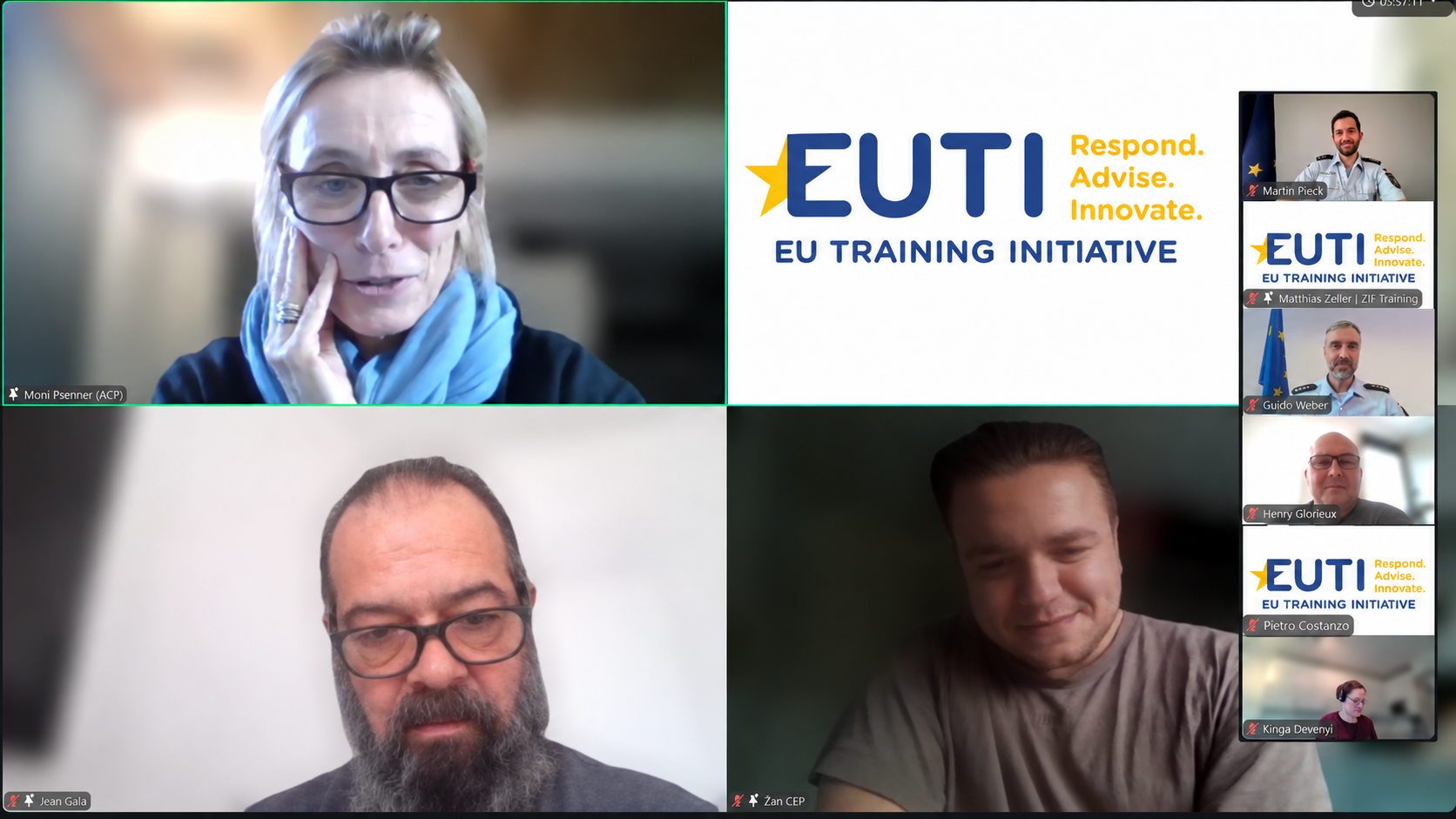
From 20 to 22 October 2026, Polizei Nordrhein-Westfalen (Polizei NRW), under the auspices of EUTI – European Union Training Initiative, successfully conducted an internal online pilot of the “Artificial Intelligence in CSDP Training and Education” course. The three-day training focused on the practical and responsible use of artificial intelligence (AI) in designing and delivering training within the Common Security and Defence Policy (CSDP) context.
Training dates: 20–22 October 2026
Training location: Online
Background and Core Objectives
As AI tools become increasingly integrated into everyday professional work, trainers and mission personnel often use them through trial and error, without clear guidance on their effective, safe and appropriate application. At the same time, the EU AI Act places increasing emphasis on AI literacy among staff working with these technologies.
The pilot addressed an identified gap in the EU training landscape by focusing specifically on the application of AI in CSDP training and education. Its central objective was to move participants from occasional, unguided use of AI towards a structured, critical and responsible approach.
The programme focused on the following core objectives:
- Practical AI Application: Exploring AI tools for training planning, developing learning materials, preparing presentations and creating images and videos.
- Responsible AI Use: Understanding the limitations of AI, recognising data protection and security risks, and maintaining human oversight.
- Learning-Centred Approach: Ensuring that AI tools are selected based on clearly defined learning objectives rather than allowing technology to determine the training methodology.
- Scenario-Based Learning: Applying acquired knowledge to realistic tasks within a fictional CSDP mission environment.
Through these practical exercises, participants strengthened their ability to prepare and deliver training more efficiently without compromising quality or control. The acquired skills are particularly relevant for mission personnel who undertake training responsibilities without necessarily being professional trainers.
The internal pilot received overwhelmingly positive feedback from participants, highlighting the relevance and practical applicability of the course. Building on these results, the training is now moving towards further development and standardisation, with the aim of future delivery under the European Security and Defence College (ESDC) framework.
The key takeaway of the pilot was that AI can significantly enhance training efficiency and quality when applied appropriately, but it remains a supporting tool rather than a substitute for trainers’ expertise and judgement.