3. 12. 2018 | Danube, PR
Centre for European Perspective is with City of Vienna coordinating one of 12 thematic priorities of the EU Strategy for the Danube region – priority 10: institutional capacity and cooperation.
One of the most important tasks of the priority area coordinators is to guide activities of the representatives of 14 Danube countries into similar direction. The Steering Group (SG) should meet at least twice a year and last week (28-29 November) the 15th SG meeting of PA10 in Prague, Czech Republic was organized.
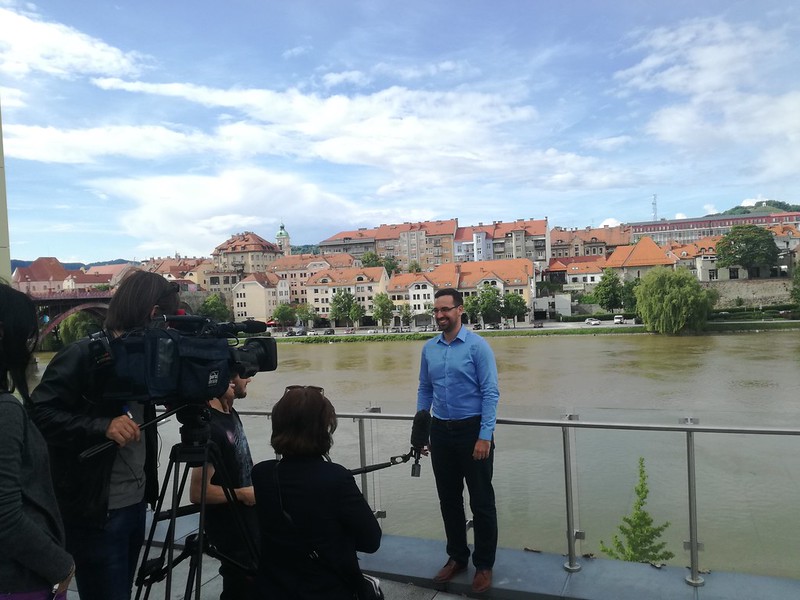
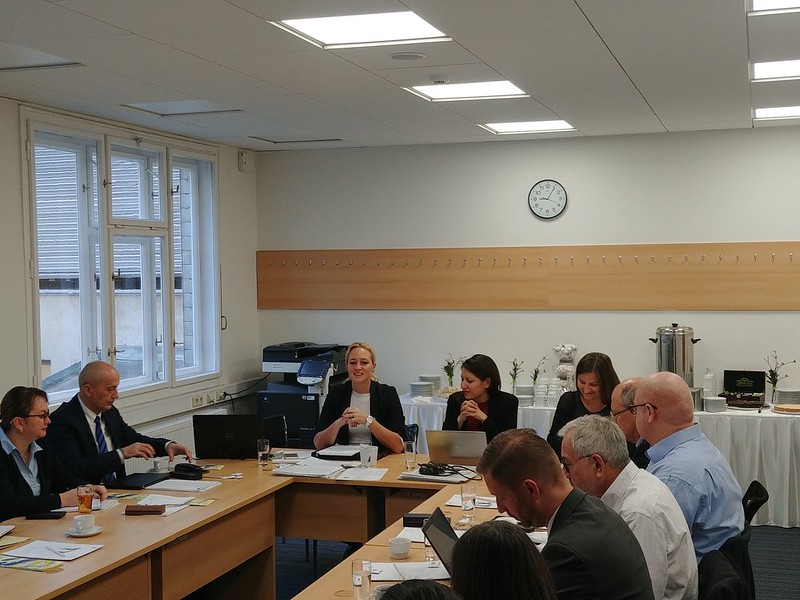
In summer idea of back-to-back meeting with priority area (PA) 11: Secruity was brought up as topics of PA10 and PA11 are joined under the pillar 4 of the Danube Transnational Programme. With joint meeting organizers wanted to attract all SG members as well as experts that are working on the fields related to the Danube Region in general. We have therefore invited newly established Danube Strategy Point (DSP), Danube Transnational Programme (DTP) and Romanian representatives, as Romania is chairing the Presidency of the EU Strategy for Danube Region. Long list of interesting topics attracted around 50 people from all 14 Danube countries that gathered at Ministry of Interior of Czech Republic. Firstly, they were all warmly greeted by Slovene Ambassador to the Czech Republic, H.E. Dr Leon Marc. Discussion than touched upon the upcoming call for proposals from the DTP, plans and activities of the Danube Strategy Point and priorities of the presidency that will at the end of June 2019 organize traditional annual forum in Bucharest. Towards the end of discussions, possible joint initiatives between PA10 and PA11 were screened, from joint forces on project to policy level.
The following day representatives of PA10 were hosted by the Ministry of Regional Development of Czech Republic and dedicated large portion of time to the upcoming revision of the Action Plan that is planned to be finalized by the next summer. In the afternoon part participants presented the main activities they have been working on since last meeting, heard presentations of the projects working on PA10 related topics and defined the steps of cooperation until next meeting. Three suggestions for next meeting location were put forward – the coordinators advocate meetings in various Danube cities to support and promote national discussion on EUSDR across the region.

16. 11. 2018 | Danube, PR
FIRST NATIONAL DANUBE PARTICIPATION DAY IN SLOVENIA
The Danube region brings together 14 countries and some of them are very close to Slovenia (geographically, also culturally and historically) and some of the most important economically important ones, as well as some more remote countries, which makes the macroregions a good tool to get to know them more closely. These are – besides Slovenia – Austria, Bulgaria, Bosnia and Herzegovina, Croatia, Czech Republic, Hungary, (part) of Germany, (part) of Moldova, Montenegro, Romania, Serbia, Slovakia, and (part) of Ukraine.
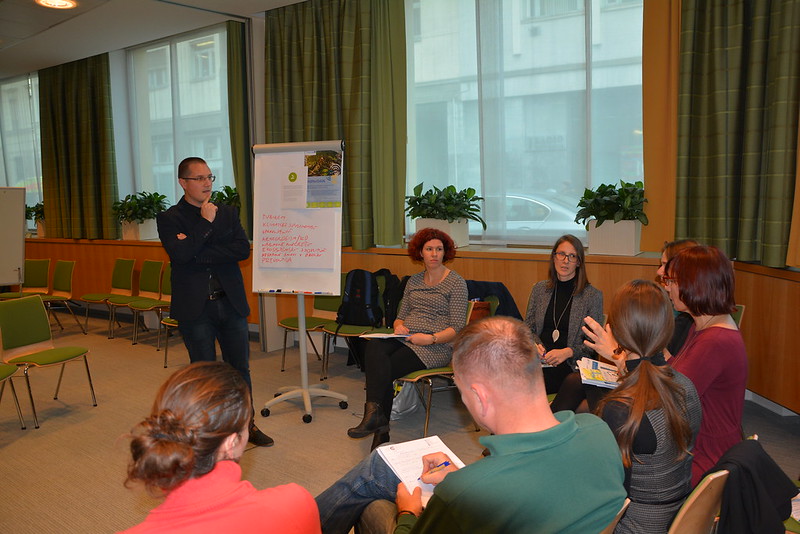
Topics in which Slovenian project partners are involved are very different. Because we are stronger together, we decided to organize an informal meeting for all of us who are active in the Danube Region. Thus, at the half-day event, we brought together projects from various transnational and cross-border programs, all involving Slovenian partners. We exchanged experiences on communication, reaching target groups, influencing policy making, discussing how the projects can work together, getting to know the EuroAccess online search tool and finding out about the role of the Danube Strategy Point that has just been established. At the end, the participants were divided in groups according to their filed of work and exchanged opportunities for cooperation with colleagues from the same field.
The Center for European Perspective as Coordinator of the Priority Area 10 – Institutional Capacity and Cooperation – EU Strategy for the Danube Region organized a meeting where about 60 participants from different fields were gathered – NGOs, institutions, ministries, agencies, private companies, municipalities, institutes, faculties and universities. They agreed that such networking event was indispensable and that it would be reasonable to repeat it sooner and even in greater number.
Click here to read more about the project in Slovenian language. 

8. 11. 2018 | Danube, PR
Do you know Danube macro region? And all the projects that Slovenian partners lead and co-create in the region? Danube is connecting a number of countries that are close to us (geographically, culturally and historically), but also some very important economic partners that are further away from us, which is why macro regions represent a good tool to get to know them better. The topics, on which Slovenian partners are working, are various and since we are stronger together, we believe we should get to know each other!
Centre for European Perspective as a coordinator of the PA 10 – Institutional Capacity and Cooperation of the EU Strategy for Danube region invites you to the 1st Danube National Day. We aim to gather everyone, working in the region in an informal environment and seek for synergies, share good practices and potentially make first steps towards our cooperation.
Danube National Day will take place on 15 November in City Hotel Ljubljana from 9.00 to 14.00. Find here the agenda (in Slovenian language).

23. 8. 2018 | Bled Strategic Forum, Danube, PR, Youth
As Priority area 10 of the EUSDR is focusing on Institutional Capacity and Cooperation we aim to include young professionals in the policy processes that are defining not only youth policies but tackle the major societal challenges. Institutions need to be able and ready to work with various groups of the society, as most of their work is dedicated back to its citizens.
We have decided to take the opportunity of the Young Bled Strategic Forum that is an integral part of the annual Bled Strategic Forum, a leading conference in Central and South East Europe focused on discussing and seeking solutions to pressing regional and global issues, organised jointly by the Ministry of Foreign Affairs of the Republic of Slovenia and the Centre for European Perspective.
Special emphasis at the Forum will be given to cross-regional cooperation. A new generation of leaders will demonstrate that such cooperation is not only necessary, but inevitable for positive next steps in democratisation, fighting corruption, terrorism and climate change, and fostering social, economic, and cross-cultural sustainable development. To do this, young leaders have to learn from their peers from different regions, sharing their knowledge, ideas and know-how. Sustainable regional cooperation programmes are the key to a comprehensive, inclusive, and innovative approach that engages youth.
The Young BSF 2018 will host young leaders that will discuss Sustainable Security: The Role of Youth in Bridging the Divides. A ‘sustainable security’ approach prioritises the resolution of the interconnected underlying drivers of insecurity and conflict, with an emphasis on preventive rather than reactive strategies. The central premise of the sustainable security approach is that we cannot control all the consequences of insecurity successfully, but have to work to deal with the root causes of instability.
We have encouraged young leaders from Danube region between 18 and 35 years to participate through the public call. They needed to list their experiences, most pressing issues in their countries and proposed solutions that would have wider impact. The YBSF team selected 30 young professionals from 12 Danube countries that will join workshops, debates, round tables and study visits in Ljubljana and Bled, Slovenia, from 7 – 10 September. They have various backgrounds and working experiences – some are students or working at the Universities, some working for non-governmental institutions, international organizations, city administrations, there are as well entrepreneurs among them.
Discussions will than continue at Bled Strategic Forum will be held from 10 – 11 September and will bring together experts, practitioners and politicians who will tackle the hot topics of the world, joined together under title Bridging the divide. There are particularly three panels that will address challenges related to the action of the Priority area 10 and its targets within the Action plan for the implementation of the EU Strategy for the Danube region:
Digital Bridge: Transformation for Institutional Resilience
Digitalisation is a modern imperative. Institutions find themselves in a fast-paced and evolving environment in which rapid changes in communications media and power dynamics have significant effect on the role and voice of governments, business, media, and civil society organisations. In order to remain resilient and pliant while further serving the best interests of society, institutions must embrace on the digital future and transform and transcend traditional ways of operating. They must form the bridge.
Bridging the Trust Divide between People and Institutions
Levels of trust in institutions vary across time and cultures. The 2018 Edelman TRUST BAROMETER, measuring trust across a number of institutions, sectors and geographies, reveals a world of seemingly stagnant distrust in business, government, NGOs and the media. However, trust in institutions is one of the most critical elements of healthy societies, as it matters for their legitimacy, well-being and, ultimately, stability. This participatory panel will seek to discuss the root causes of people’s declining trust in well-established and alternative institutions and share experiences of how this challenge is addressed in various regions and at different levels.
Western Balkans: Lost Years or New Hope?
The EU enlargement process has always been a political process. Despite the technical benchmarks, monitoring missions, evaluations and progress reports, it took only one sentence from the President of the European Commission five years ago to raise doubt and fear about belief in the enlargement policy and the Western Balkans. After several years of uncertainty, it again took only one sentence from the same President to revive hope and enthusiasm in the region, which in the past was much more concerned about having a positive external appearance than internal reforms. This hope was translated into concrete language with a new strategy on enlargement; new tasks have been divided among the countries of the region, and uncertainty has been replaced by actual dates for enlargement.
All expert discussions are designed in interesting formats, host excellent guests and are enriched with inspiring moderators. However, many times participants (more than 1100 yearly) put rich networking opportunities into the spotlight of the reasons to come to Bled. It is an excellent opportunity for seeking fresh opportunities, starting new partnerships and exchange of ideas between political and business leaders.
Check some interesting impressions at Bled Strategic Forum YouTube Channel: https://www.youtube.com/user/bledstrategicforum
More details on the topics discussed are available at Young Bled Strategic Forum and on Bled Strategic Forum website.