First National Seminar of SPS BiH – Strengthening Democratic Culture and Political Dialogue

First National Seminar of SPS BiH – Strengthening Democratic Culture and Political Dialogue

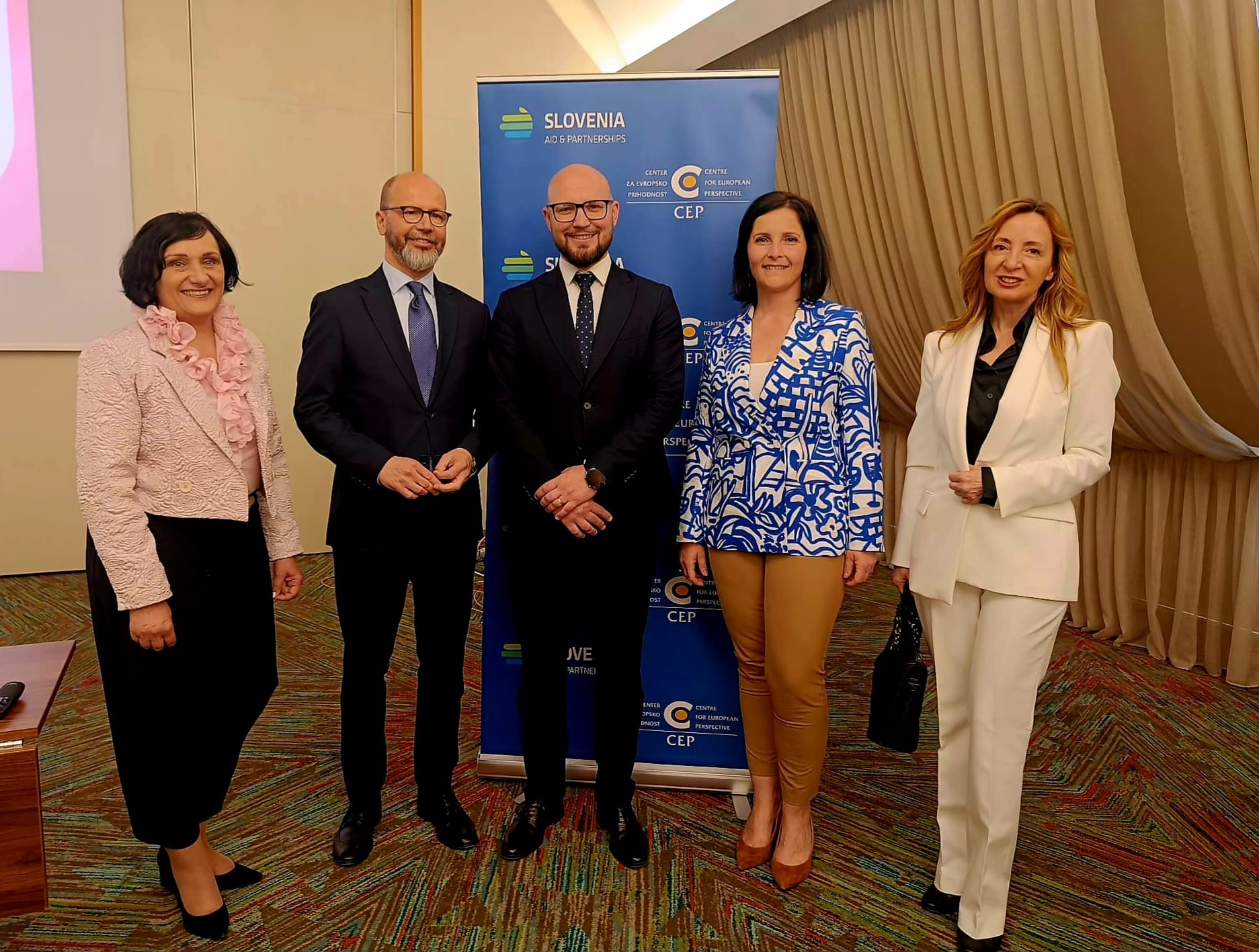
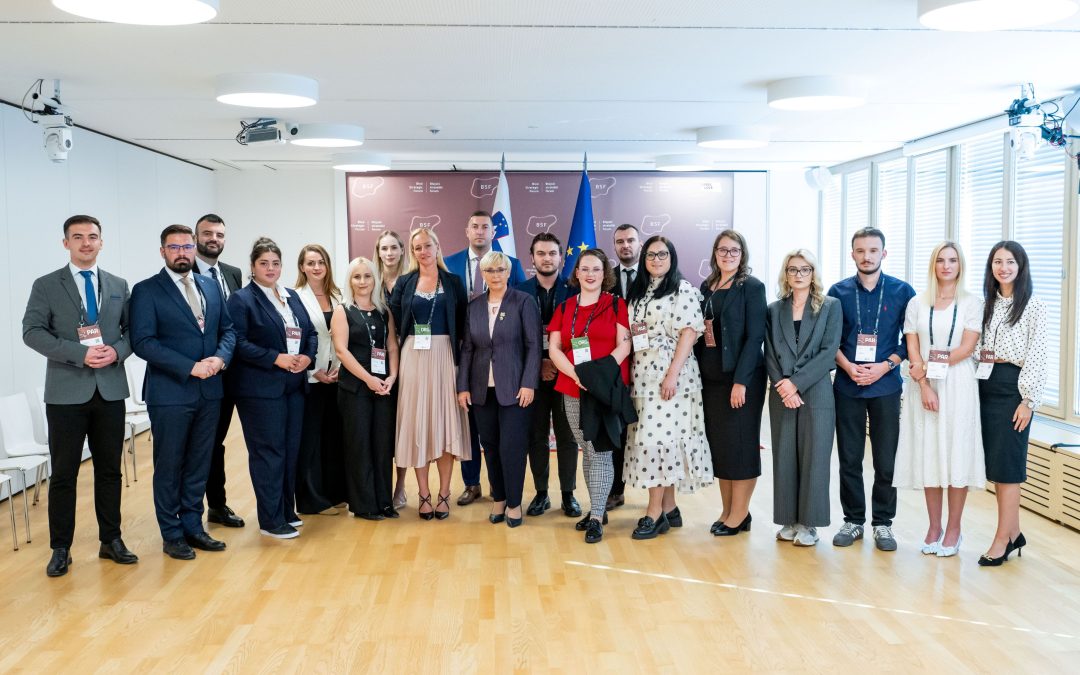
From 26 to 29 March 2026, the first National Seminar of the School of Political Studies of the Council of Europe in Bosnia and Herzegovina (SPS BiH) took place at Vlašić, bringing together a newly selected generation of young political leaders and professionals from across the country. The seminar, entitled “Strengthening Democratic Culture and Political Dialogue in Bosnia and Herzegovina”, focused on enhancing democratic standards, fostering political dialogue, and supporting the development of future leaders.

Throughout the four-day programme, participants engaged with distinguished speakers from political, academic, and media spheres, addressing key challenges and opportunities for democratic development in Bosnia and Herzegovina.

During the seminar, participants:

✔️ discussed the challenges of political compromise and reform processes in Bosnia and Herzegovina,
✔️ explored the role of political and social dialogue in building a democratic society,
✔️ examined the relationship between political stability and economic development,
✔️ addressed questions of European and Euro-Atlantic integration,
✔️ analysed the role of populism in political communication and its impact on societal polarization.

The programme featured contributions from high-level experts and practitioners, including former ministers, diplomats, members of parliament, and media representatives, who provided valuable insights and encouraged interactive discussions with participants.

In addition to formal sessions, the seminar created a dynamic platform for exchange among participants from diverse political, social, and geographical backgrounds, promoting mutual understanding and strengthening networks among emerging leaders.

The first National Seminar marked an important step in the implementation of the 2026 programme, laying the foundation for further activities aimed at reinforcing democratic culture and political dialogue in Bosnia and Herzegovina.

The activities under the ENTER: CHANGE project are supported by the Ministry of Foreign and European Affairs of Republic of Slovenia through the Slovenian Aid programme.

Skopje to Host Launch of Nursing and Midwifery Reform Project (2026–2028)

Skopje to Host Launch of Nursing and Midwifery Reform Project (2026–2028)

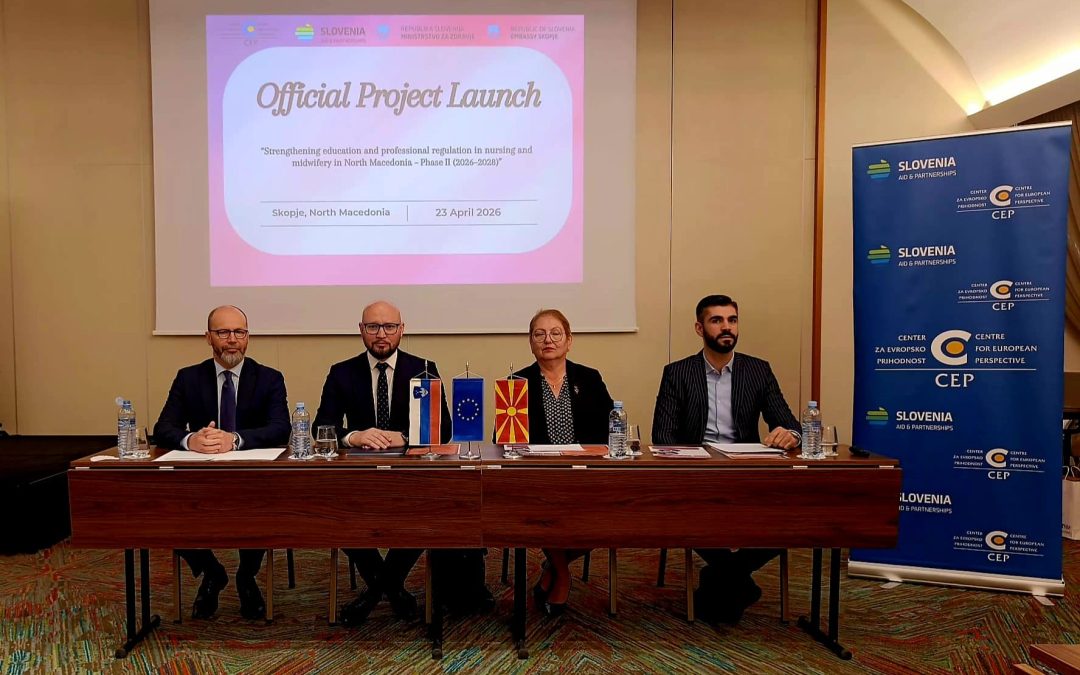
The second phase of the CEP project “Strengthening Education and Professional Regulation in Nursing and Midwifery in North Macedonia (2026–2028)” begins this April with a series of inaugural activities in Skopje. Over the next three years, the project will modernize nursing and midwifery education to align with EU standards, strengthen continuing professional development, and promote leadership and professional empowerment. It will also establish sustainable professional regulation systems, improve institutional cooperation, and deepen the partnership between Slovenia and North Macedonia.

From 20 to 24 April 2026, a week-long program in Skopje will convene representatives from the Ministry of Health and the Ministry of Education and Science of North Macedonia, along with the CEP Project Team and other local stakeholders. Expert workshops will focus on building local institutional capacity and developing practical tools to support implementation of the project and steps toward harmonization with European standards in the field of nursing and midwifery.

A highlight of the week will be the Official Project Launch Ceremony, bringing together senior representatives from the Macedonian Ministries of Health and Education and Science, the Embassy of Slovenia in Skopje, CEP, and key international partners including the WHO Office in Skopje, UNFPA, and UNICEF.


The project is implemented with the support of the Ministry of Foreign and European Affairs of the Republic of Slovenia through the International Development Cooperation and Humanitarian Aid Programme.

POTC po štirih letih sodelovanja z ukrajinskimi varnostnimi organi prvič na ukrajinskih tleh

POTC po štirih letih sodelovanja z ukrajinskimi varnostnimi organi prvič na ukrajinskih tleh

Usposabljanje z naslovom »Podnebne spremembe in obvladovanje tveganj nesreč« je bilo namenjeno pripadnikom ukrajinske civilne zaščite in strokovnjakom s področja preventive ter pripravljenosti na naravne nesreče.

Click here to read this article in English.

Čeprav je v vojnem času obseg nalog ukrajinske civilne zaščite razširjen na pomoč prebivalstvu, ostaja usposabljanje ključnega pomena tudi v takšnih razmerah, saj vojna dodatno povečuje zahtevnost odzivanja na naravne nesreče in njihove posledice. Usposabljanje hkrati predstavlja pomemben instrument za usklajevanje ukrajinskih sistemov odzivanja z mehanizmi za krizno odzivanje EU. 

Izvedba programa je eden od mnogih konkretnih izkazov bilateralne pomoči, ki jo Slovenija nudi Ukrajini. Dejstvo, da se je aktivnost odvila na ukrajinskih tleh, pa je dodaten izraz solidarnosti Slovenije z Ukrajino. 

Pripadnike ukrajinske civilne zaščite smo usposobili na področju: 

👉 razumevanja kompleksnih podnebno pogojenih nesreč in celostnih pristopov k večji pripravljenosti,  v skladu s Sendajskim okvirom, 

👉 mehanizmov zbiranja podatkov, kartiranja, napovedovanja in zgodnjega opozarjanja,  

👉 evropskih mehanizmov kriznega upravljanja ter pripravljenosti in odzivanja na naravne in druge nesreče, 

👉 mehanizmov za zaščito civilnega prebivalstva, 

👉ocenjevanja tveganj v kompleksnih okoljih z več viri tveganj, vključno z aktualno vojno. 

Ključni cilj usposabljanja je bil krepitev kapacitet ukrajinske civilne zaščite, da se na nesreče vnaprej pripravi, se nanje učinkovito odzove ter nato hitreje okreva. 

Usposabljanje je potekalo v dveh terminih – prvi med 9. in 11. februarjem ter drugi med 12. in 14. februarjem. 

Za več informacij o usposabljanju in še več nas lahko spremljate na družbenih omrežjih:

LinkedInXFacebookBluesky


Upcoming Kick-Off Meeting of the ENTER: CHANGE – Phase 2 Project in Sarajevo

Upcoming Kick-Off Meeting of the ENTER: CHANGE – Phase 2 Project in Sarajevo

From 9 to 11 February 2026, the Kick-Off Meeting of the project “ENTER: CHANGE – Establishing a network and capacity building for young future leaders in the Western Balkans – Phase 2 (2026–2028)” will take place in Sarajevo, Bosnia and Herzegovina.

The meeting will bring together the project team of the Centre for European Perspective and representatives of the project partner SPS BiH, including members of the SPS BiH alumni network. The Kick-Off Meeting will focus on the presentation of the SPS BiH programme and curriculum, discussions on alumni networking and future ENTER: CHANGE activities, an overview of possible regional synergies (Montenegro and North Macedonia), as well as the exchange of recommendations and feedback from partners and alumni.

The Kick-Off Meeting marks the official start of Phase 2 of the ENTER: CHANGE project, which aims to strengthen the networks and capacities of young future leaders across the Western Balkans.

The activities within the project Enter: Change are supported by the Ministry of Foreign and European Affairs of the Republic of Slovenia within the Slovenian Aid and Partnerships programme.
Training on Climate Change and Disaster Risk Management in Ukraine

Training on Climate Change and Disaster Risk Management in Ukraine

At the beginning of February, POTC will travel to Ukraine to deliver two additional training activities on climate change and disaster risk management.

Kliknite tukaj za branje članka v slovenskem jeziku.

The two training sessions, attended by experts from the State Emergency Service of Ukraine (SESU), will take place from 9–11 February and 12–14 February 2026. The training represents a further adaptation of the programme with the same title that POTC previously delivered for Ukrainian civil protection in May 2025 in Poland. Consecutive interpretation into Ukrainian will be provided.

The main objective of the training is to familiarise participants with an integrated, all-hazards approach to managing risks related to natural and other disasters, particularly in light of increasingly complex and evolving emergencies. The training focuses on potential mitigation measures to strengthen prevention and preparedness, while taking local specificities into account.

The programme includes lectures on new types of climate-induced natural disasters and enhancing disaster preparedness (including within the framework of the Sendai Framework), EU crisis coordination mechanisms and the new Union Preparedness Strategy, monitoring, data collection and mapping, early warning systems, and hazard risk assessment methodologies. The third and final day of the training includes a practical, simulation-based exercise.

Follow us on social media for more POTC news and content:

LinkedInXFacebookBluesky