20. 10. 2026 | POTC, PR
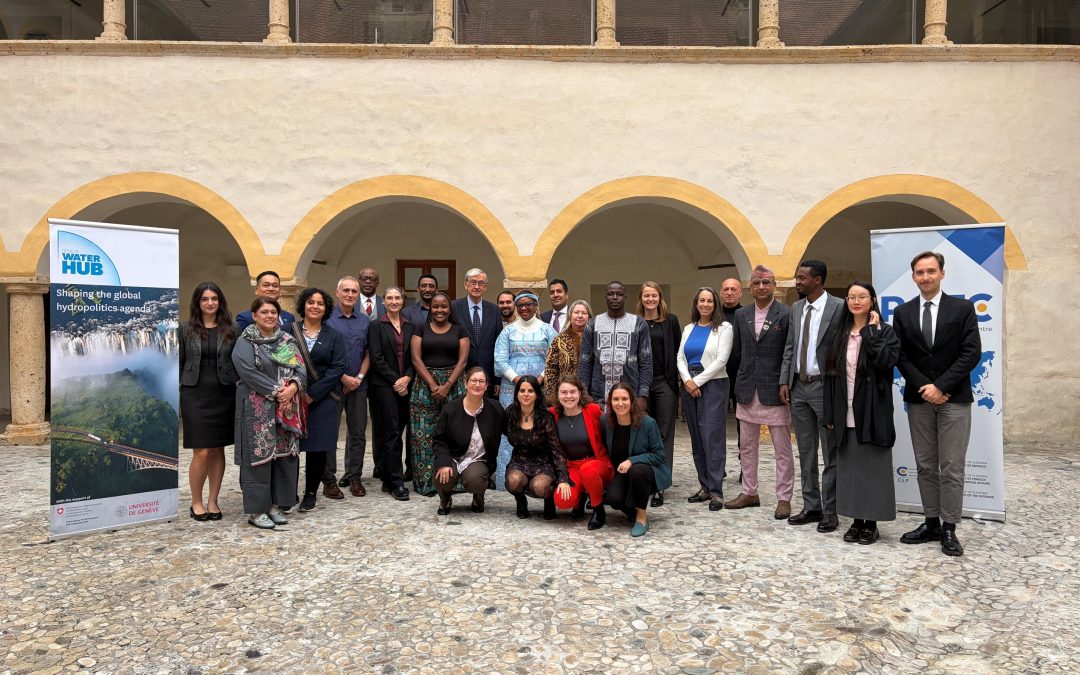
OCTOBER 16 – Reflecting a strong cooperative partnership between Slovenia and Switzerland, the specialised training programme on Law, Policy and Science in Environmental Peacebuilding successfully concluded at Jable Castle in Ljubljana. Jointly organised by the Geneva Water Hub and the Peace Operations Training Centre (POTC), the programme brought together military, police, and civilian personnel to explore the critical intersections of natural resource governance, armed conflict, and sustainable peace.
Kliknite tukaj za branje članka v slovenščini.
The curriculum focused on bridging theoretical foundations with practical applications, emphasising how equitable water sharing and sound environmental stewardship can actively prevent conflicts and support post-conflict recovery. Through expert-led sessions, interactive case studies, and group discussions, participants examined international legal frameworks, climate-security dynamics, water security, demining, and strategies to address power, justice, and inclusion in environmental management.
We extend our sincere thanks to the expert trainers for their invaluable guidance and to the dedicated participants whose active engagement drove the success of this initiative. We also thank the Ministry of European and Foreign Affairs of Slovenia. By equipping peacebuilders with multidimensional tools, this Slovenian-Swiss collaborative effort underscored the vital role that environmental cooperation plays in transforming shared natural resources from potential flashpoints into catalysts for lasting peace.
For more information about the training and more about our work, you can follow us on social media:
LinkedIn • X • Facebook • Bluesky



5. 10. 2026 | POTC, PR
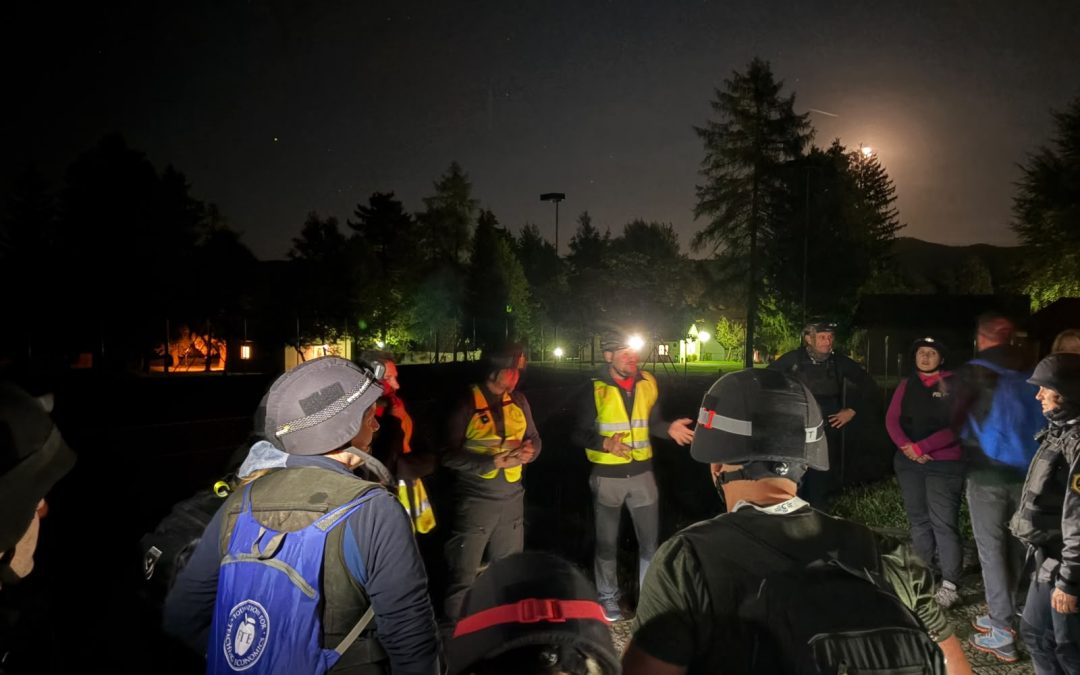
October 2, 2026 – The second edition of the 2026 Hostile Environment Awareness Training (HEAT) has successfully concluded at the Gotenica Police Training Centre. Co-organised with the European Security and Defence College (ESDC), the intensive five-day training activity brought together professionals from diverse international, non-governmental, and academic backgrounds.
Kliknite tukaj za članek v slovenščini.
Preparing for Modern Threats
Building on preparatory online modules provided by the ESDC, participants engaged on-site in a curriculum delivered by an expert team of Slovenian and foreign trainers. Key modules covered tactical medical care, orientation, secure mobility, communications and emergency threat response. Reflecting the evolving nature of global conflict zones, this year’s edition also introduced a specialised session on drone threat awareness.
The training culminated in a complex full-day field exercise featuring realistic simulations that tested participants’ stress management, team coordination, and safety protocols under simulated high-pressure conditions.
Acknowledgments
POTC extends their sincere thanks to all trainers and participants for their exceptional work, dedication, and active engagement throughout the week. The safety mindset and practical skills gained in Gotenica will serve as a strong foundation as these professionals deploy to challenging environments worldwide.
Follow us on social media for more POTC news and content:
LinkedIn • X • Facebook • Bluesky



23. 9. 2026 | Peace and security, POTC, PR, Security
Click here for the post in English.
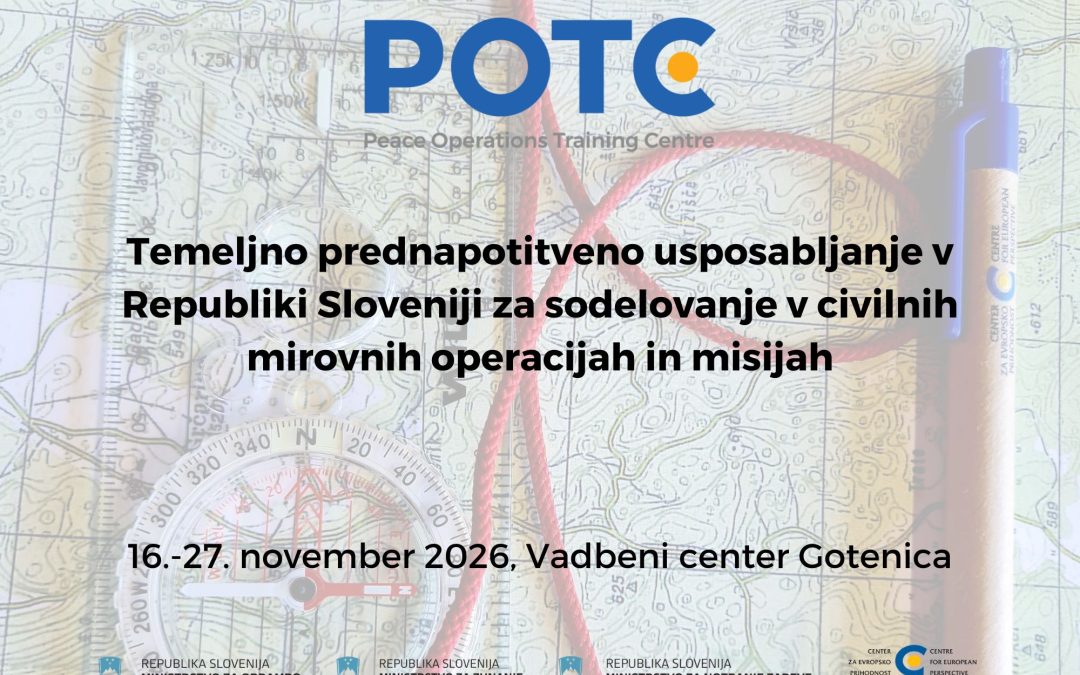
Med 16. in 27. novembrom 2026 bo Center za evropsko prihodnost (CEP) v okviru Centra za izobraževanje in usposabljanje za sodelovanje v mirovnih operacijah in misijah (POTC) v Vadbenem centru Gotenica organiziral Temeljno prednapotitveno usposabljanje za sodelovanje v civilnih mirovnih operacijah in misijah.
Sodobne mirovne operacije in misije potekajo v vse bolj kompleksnih operativnih okoljih, ki jih zaznamujejo oboroženi spopadi, politična nestabilnost, terorizem, organizirani kriminal, dezinformacijske kampanje, podnebno pogojena varnostna tveganja in humanitarne krize. Osebje, napoteno v takšna okolja, zato poleg strokovnega znanja potrebuje tudi dobro razumevanje mandatov mednarodnih organizacij, mednarodnega pravnega okvira, kulturnega okolja, zaščite civilistov in človekovih pravic ter znanja in veščine za zagotavljanje osebne varnosti.
Temeljno prednapotitveno usposabljanje je edino nacionalno usposabljanje Republike Slovenije za civilno in policijsko osebje pred napotitvijo v civilne mirovne operacije in misije. Njegov namen je udeležence pripraviti na učinkovito, strokovno in varno opravljanje nalog ter razvijati znanja, veščine in kompetence, potrebne za delovanje v kompleksnem mednarodnem okolju.
Usposabljanje je primarno namenjeno osebju Republike Slovenije, ki se napotuje v civilne mirovne operacije in misije OZN, EU, NATO, OVSE in drugih mednarodnih organizacij, vključno z uslužbenci Policije, Ministrstva za zunanje in evropske zadeve, Ministrstva za obrambo ter strokovnjaki drugih ministrstev in državnih organov. Usposabljanja se lahko udeleži tudi osebje partnerskih in zavezniških držav.
Usposabljanje bo potekalo v angleškem jeziku. Prijave so odprte do vključno 25. oktobra 2026.
Kdaj: 16.–27. november 2026
Kje: Vadbeni center Gotenica
Rok za prijavo: 25. oktober 2026
Dodatne informacije: [email protected]
Sledite nam na družabnim omrežjih za več o POTC:
LinkedIn • X • Facebook • Bluesky



22. 9. 2026 | Peace and security, POTC, PR, Strategic Communication
Med 3. in 5. novembrom 2026 bo na Gradu Jable potekalo tridnevno usposabljanje »Strateške komunikacije: od strategije do strateškega učinka«, ki ga organizira Center za izobraževanje in usposabljanje za napotitev v mirovne operacije in misije (POTC).
For the post in English, click here.
Sodobno varnostno okolje zaznamujejo vse intenzivnejša tekmovalnost v informacijskem prostoru, fragmentacija javnosti, hiter razvoj umetne inteligence ter vse kompleksnejše oblike informacijskega vplivanja. Strateško komuniciranje zato presega zgolj posredovanje sporočil in temelji na usklajevanju strateških ciljev, delovanja in komuniciranja za doseganje želenih učinkov.
Tridnevno usposabljanje bo udeležence vodilo skozi proces razumevanja, snovanja in odzivanja – od analize informacijskega okolja in javnosti do oblikovanja narativov, načrtovanja strateških komunikacijskih aktivnosti ter odzivanja na kompleksne informacijske grožnje. Posebna pozornost bo namenjena tujem manipuliranju z informacijami in vmešavanju (FIMI), dezinformacijam, umetni inteligenci ter prihodnjemu informacijskemu okolju.
Usposabljanje bo povezovalo strateški in praktični pogled na komuniciranje ter udeležencem ponudilo prostor za razmislek o tem, kako strateške cilje prevesti v komunikacijske aktivnosti in želene učinke ter kako se odzivati na hitro spreminjajoče se izzive informacijskega okolja.
Usposabljanje je namenjeno predvsem predstavnikom državnih institucij in javnega sektorja, ki se pri svojem delu srečujejo s strateškim komuniciranjem, komuniciranjem z javnostmi, oblikovanjem politik ter odzivanjem na informacijske grožnje.
Sledite nam na družabnim omrežjih za več o POTC:
LinkedIn • X • Facebook • Bluesky
17. 9. 2026 | POTC, PR
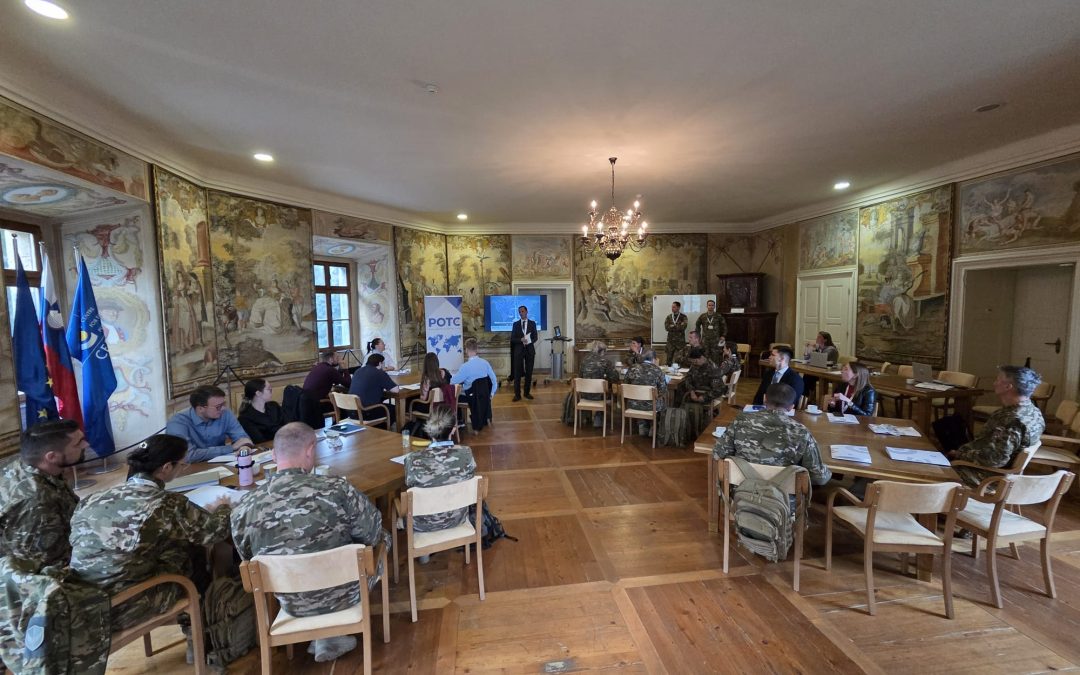
Med 16. in 17. septembrom 2026 je na Gradu Jable tudi letos potekalo dvodnevno usposabljanje »Mednarodno humanitarno in kazensko pravo«, ki ga je POTC organiziral v sodelovanju s Sektorjem za pravne zadeve Generalštaba Slovenske vojske.
Click here to read this article in English.
V okviru dvodnevnega programa so udeleženci obravnavali aktualne pravne in varnostne izzive, med drugim, odstop od Konvencije o prepovedi protipehotnih min (Ottavska konvencija) in Konvencije o kasetnem strelivu (MKKS) ter obveznosti držav zaveznic NATO (5. člen Severnoatlantske pogodbe) ter študiji primerov Venezuele in Irana.
Drugi dan usposabljanja je bil posebej namenjen izkušnjam s terena. Svoje izkušnje in strokovni pogled sta predstavila dva pravna svetovalca iz ukrajinske vojske, ki sta z udeleženci razpravljala o pravnih vidikih delovanja v aktualnih varnostnih razmerah ter praktičnih izzivih, s katerimi se pravni svetovalci srečujejo pri svojem delu.
Usposabljanje je s predavanji, predstavitvami in odprto razpravo omogočilo povezovanje teoretičnega znanja s praktičnimi izkušnjami ter spodbudilo izmenjavo različnih strokovnih pogledov na vprašanja, ki so pomembna za delo pravnih svetovalcev v nacionalnem in mednarodnem okolju.
Za več informacij o usposabljanju in še več nas lahko spremljate na družbenih omrežjih:
LinkedIn • X • Facebook • Bluesky


15. 9. 2026 | EUTI, POTC, PR
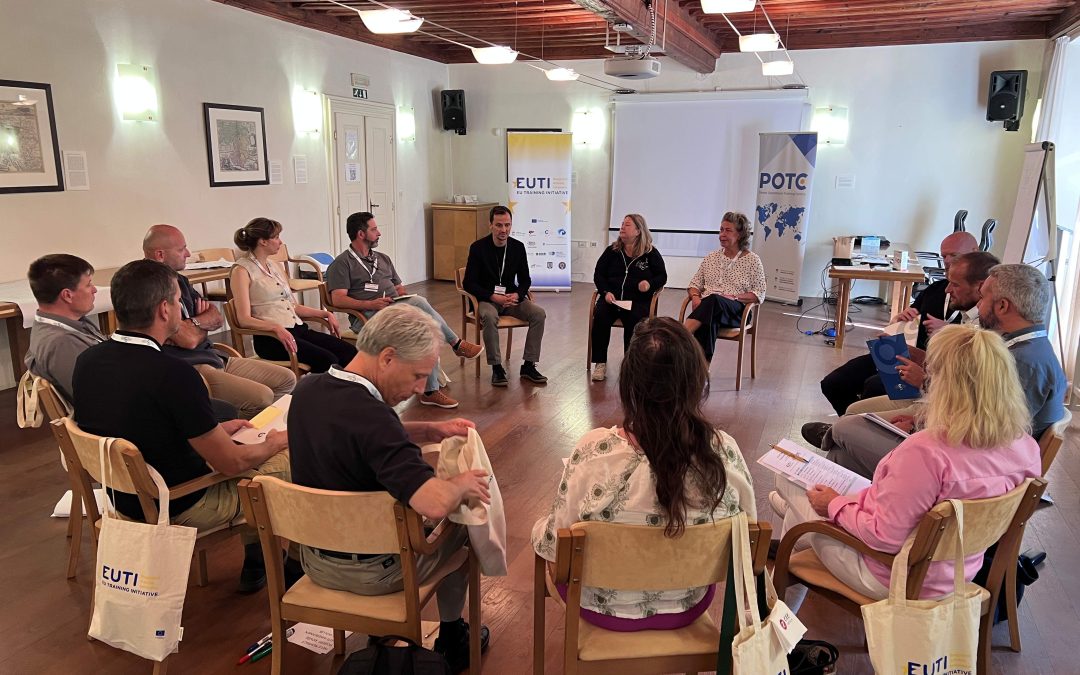
From 7 to 9 September 2026, the Centre for European Perspective (CEP) and the Peace Operations Training Centre (POTC), under the auspices of EUTI – European Union Training Initiative, successfully conducted the “Training of Trainers (ToT): Communication & Conduct” at Jable Castle in Loka pri Mengšu, Slovenia.
The intensive 3-day training was designed to equip instructors and facilitators with advanced andragogical (and heutagogical tools) and modern communication standards for peace operations.
- Training dates: 7–9 September 2026
- Training location: Jable Castle, Loka pri Mengšu, Slovenia
Background and Core Objectives
The proper preparedness of peace operations personnel and the effective dissemination of updated peacekeeping standards depend on trainers and facilitators’ ability to transfer expertise and model appropriate behaviours. Operating within complex operational environments, mission personnel must be equipped with modern communication standards that foster respect, compliance, and inclusion across diverse contexts.
This ToT empowered participants to transfer expertise and knowledge to their target groups, with a heavy emphasis on inclusive communication approaches that systematically identify and neutralise hidden barriers that can marginalise participants.
The programme focused on the following core premises and objectives:
- Inclusive Communication: Mastered non-exclusionary communication methods and learned to systematically identify and remove subtle or hidden barriers that lead to participant marginalisation.
- Knowledge Transfer & Methodology: Equipped trainers and instructors with effective facilitation and pedagogical tools to seamlessly transfer expertise and updated peacekeeping standards to mission personnel.
- Standards of Conduct: Reinforced professional ethical standards, conduct expectations, and behavioural principles required across international peace operations and national deployments.
- Practical & Experiential Learning: Applied interactive, application-oriented exercises tailored for professionals regularly facilitating workshops, training sessions, and group preparation processes.