12. 12. 2018 | ENTRi, IECEU, PR
Date: 12 – 15 February 2019
Place: Nairobi, Kenya
Overall Aim
The course will aim to consolidate the understanding of the role of a mentor and processes of mentoring in peace operations with the necessary shift of mind-set and attitude: from being a ‘doer’, alias professionals with authority and decision-making and executive functions in their area into being an observer, listener and resource person to assist local officials and stakeholders in enhancing their ability and facilitating the identification of problems and possible solutions. The main aim of the course is to equip subject matter experts with knowledge and mentoring skills and to give future mentors in peace operations the ability to successfully build a working relationship with their local counterpart and implement their project goals.
Methodology
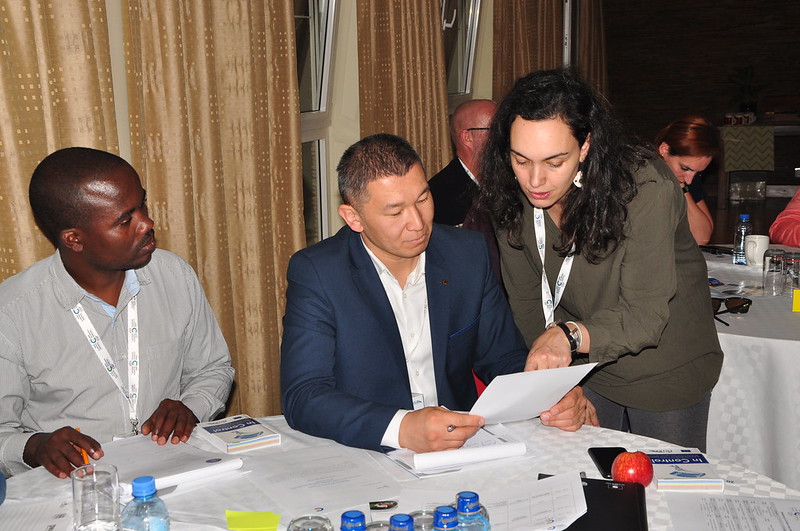
The course foresees a high degree of group work, discussions and role plays. A mixture of participatory methods encourages the creation of new knowledge and skills through the interaction that takes place among participants with diverse experience, professional skills, and cultural backgrounds.
Learning Outcome
After completion of the ENTRi Course on Mentoring, participants should be able to: 1.) Understand mentoring as capacity building 2.) Know how to build trust with a mentee 3.) Apply principles and processes of building capacity through mentoring (phases of mentoring and importance of the concept of local ownership) 4.) Utilize communication skills (working with interpreters, basic negotiation skills) and intercultural competence 5.) Develop strategies on how to build a working relationship with a mentee and how to cope with resistance from the mentee 6.) Recognise the role mentoring plays in fulfilling the overall mission mandate and how to support the evaluation process of the mission.
Pre-Requisites
– The target group of the training are civilian experts, expected to serve and/or working in civilian crisis management operations with mentoring and advising tasks in their work descriptions. Predominately this concerns the areas of rule of law, justice reform, democratization, corrections, policing, and security sector reform, but not limited to those areas.
– Maximum 20 participants, preferably from international civilian crisis management/peace support missions (EU, UN, OSCE, AU etc). Experts from NGOs are also welcome to apply.
– The organizers also welcome applications from national mission staff.
9. 12. 2018 | Albania - Local Governments, PR, Slovenian Development Assistance
A training course “Training of the Trainers – From Listener to Successful Trainer” took place in Durres, Albania from 3 to 6 December 2018 as part of the CEP development project “Support to Albanian LGU on Preparation of the EU and Other International Projects”. Following a series of trainings, it served to transfer the skills and knowledge, gained from the trainings conducted in the previous years.
At the Training Opening, CEP Secretary General Mr Andrej Vrčon, BCCD Executive Director Ms Elvana Zhezha and Deputy Head of Mission at the Slovenian Embassy in Albania Ms Milena Radenković greeted the participants. Over 20 participants got acquainted with the AT-AP technique, characteristics of successful training, needs-based trainings, Kolb’s cycle of experiential learning and tell-tell-tell method on the first day of the training. They also looked into effective communication and skills of a good public speaker.
Second day was oriented to practice the skills acquired and allowed the participants to draft, create and propose their own project ideas that would be eligible for EU or other international funding and train their skills of presenting such projects in an effective way, while also learning how to train their colleagues and co-workers to do the same. On the third day trainers also involved participants into a session where they recorded their performances on a camera in order to learn how to deliver effective feedback to the videos. The fourth day of the training concluded with evaluation, future planning session and an address and concluding ceremony with Ambassador Stančič, Slovenian Ambassador to Albania.
The project “Support to Albanian LGU on Preparation of the EU and Other International Projects” focuses on the transfer of good practices from Slovenia in the field of strategic programming on the national level and implementation of the projects on the local level. It is based on a number of workshops, through which Slovenian experts offer training in project management to the representatives of Albanian municipalities, regional development agencies and representatives of various non-governmental organizations.
The execution of the project is done in cooperation with the BCCD – Balkan Center for Cooperation and Development.
The training is organised within the framework of the Centre for European Perspective project “Support to Albanian LGU on Preparation of the EU and Other International Projects” supported by the Slovenia’s Development Cooperation Department of the Ministry of Foreign Affairs of the Republic of Slovenia.
Click here to read more about the project in Slovenian language. 
Photo Gallery:

7. 12. 2018 | PR
The Western Balkans Summit in London was the first meeting within the Berlin Process after the adoption of the European Commission’s strategic document on the Western Balkans and the follow-up discussions during the Sofia Summit. The London Summit was the last station of a half-a-year long trip of the EU engine aiming to change the backsliding climate in the Western Balkans and give a new impetus to their ruling structures starting to look for more interested regional and global partners.
Finally,London was also the last Summit of the originally envisaged 5-years long Berlin Process. From this point onward, the whole Berlin Process has become more uncertain without a clear strategy for its continuation or future prospects.
Read about the main gains from the summit:
Policy paper: 2018 Western Balkans Summit: 3 key takeaways from London
Infographic PDF

5. 12. 2018 | PR
Centre for European Perspective kindly invites you to our Annual Policy Discussion “Central and Eastern Europe at the Crossroads” and Pre-New Year’s Reception on Wednesday, 12 December 2018, starting at 11 am, followed by a reception at 1 pm, at Jable Castle (Grajska cesta 1, 1234 Loka pri Mengšu, Slovenia).
The policy discussion will address the current state of affairs in the Central and Eastern Europe – the growing split between the East and West, the discrepancies between the EU member states and the non-member states and the new reality of the constellation of global powers in the region.
Welcome address:
Ms Špela Lajmiš
President of the Executive Board, Centre for European Perspective
Panelists:
Mr Matej Marn
Political Director/Director General,
Ministry of Foreign Affairs of the Republic of Slovenia
Ambassador Iztok Mirošič
BSF Programme Director,
Ministry of Foreign Affairs of the Republic of Slovenia
Ms Nina Pejič
Faculty of Social Sciences, East Asia Resource Library and THINK Initiative Researcher
Active listener:
Mr Ingo Mayr-Knoch
CEO, WBE Think Initiative
Moderator:
Ms Katja Geršak
Executive Director, Centre for European Perspective
The discussion will be followed by a Pre-New Year’s Reception, hosted by the Centre for European Perspective.
RSVP by 10 December here:

5. 12. 2018 | Helicopter, PR, Slovenian Development Assistance
Imediately after the signature, the Programme for International Development Cooperation between the Government of the Republic of Slovenia and the Government of Montenegro for the period 2018-2019 is already implemented in the area that is of vital importance for Montenegro.
From 27 to 29 November 2018, training of members of the Aircraft-Helicopter Unit of the Ministry of the Interior of Montenegro took place in Montenegro, where we exchanged the Montenegrin and Slovenian experiences on the most important aspects of safe helicopter flying in the highlands. In parallel with the training, activities related to the preparation of the proposal for the development of the Avio-Helicopter Unit of the Ministry of the Interior of Montenegro were also acquired.
In order to ensure direct applicability, the workshops were very practical and included tactical exercises in the air with AB412 helicopter. Before each exercise in the air, an interactive briefing was carried out on the ground, and after an exercise in the air, an analysis was carried out, within which the participants received feedback on the exercise carried out and on potential improvements of flying in high mountains. We also discussed horizontal issues such as sensitivity to gender dimension and vulnerable groups.
The set of public services of the helicopter units of the Ministry of the Interior is diverse and important for ensuring the safety and protection of human security in the country. In order to carry out monitoring, search and rescue as well as helicopter emergency medical operations and other operations in the public interest, in accordance with EU standards, the current capacity of the unit needs to be further developed. The activities carried out in 2018 present a beginning of a long-term development cooperation between the Republic of Slovenia and Montenegro, aimed at developing the capacity of the Aviation Helicopter Unit of the Ministry of the Interior of Montenegro.
The project is part of the program activities carried out in cooperation with the Ministry of the Interior of the Republic of Slovenia / Police of the Republic of Slovenia and is financed by the Ministry of Foreign Affairs of the Republic of Slovenia from the funds for international development cooperation.
Click here to read more about the project in Slovenian language. 
4. 12. 2018 | Albania - Local Governments, PR, Slovenian Development Assistance
A training course “Training of the Trainers – From Listener to Successful Trainer” is taking place in Durres, Albania this week as part of the CEP development project “Support to Albanian LGU on Preparation of the EU and Other International Projects”. Following a series of trainings, it will ensure transfer of skills and knowledge, gained from the trainings conducted in the previous years.
At the Training Opening, CEP Secretary General Mr Andrej Vrčon, BCCD Executive Director Ms Elvana Zhezha and Deputy Head of Mission at the Slovenian Embassy in Albania Ms Milena Radenković greeted the participants.
Over 20 participants got acquainted with the AT-AP technique, characteristics of successful training, needs-based trainings, Kolb’s cycle of experiential learning and tell-tell-tell method on the first day of the training. They also looked into effective communication and skills of a good public speaker.
Second day is practice-oriented and allows the participants to draft, create and propose their own project ideas that would be eligible for EU or other international funding and train their skills of presenting such projects in an effective way, while also learning how to train their colleagues and co-workers to do the same.
The execution of the project is done in cooperation with the BCCD.
See the photos from the training in the gallery below:

The training is organised within the framework of the Centre for European Perspective project “Support to Albanian LGU on Preparation of the EU and Other International Projects” supported by the Slovenia’s Development Cooperation Department of the Ministry of Foreign Affairs of the Republic of Slovenia.