20. 2. 2018 | PR, Serbia - Opening Data
Centre for European Perspective is organizing international conference „Experience Exchange in Opening of Public Sector Data“, which will take place on Wednesday, 28 February 2018 in Belgrade, Hotel Zlatnik, Dobanovačka 95. A dynamic conference in an interesting format is organized in the framework of the Official Development Cooperation between the Republic of Slovenia and Republic of Serbia in order to present the best experiences and practices from both countries.
Data in the public sector are a newly discovered drivers of development. In Europe, there is a growing awareness of the fact that the public sector generates a large amount of data that are not useful only within the state administration system, but bring multiple benefits to the economy, science and society as a whole. Among its key priorities, the European Union has set the goal to increase the exchange of information and knowledge, to open up public data and facilitate cooperation among public bodies while creating and delivering public services. This will make public administration more efficient and offer user-friendly and tailored public services at a lower cost and with less administrative difficulties. The strategy of opening up public administration and its data is related to citizens’ participation in the public processes and decision-making. Such approach is embedded both in the strategic documents of Slovenia and Serbia.
While implementing the policies of opening the public sector data, the states go through different development stages of readiness and preparedness – from access to public information and data, governance and data exchange within the Government, e-Government, opening and publishing data for reuse and to various applications that use public sector data or so-called open data portals; all for the stages aiming to provide good public services for citizens and business. The ultimate goal is a free flow of all public data across Europe.

The purpose of the conference is to enable a comprehensive exchange of thoughts, experiences and practices between all interested parties (representatives of government, independent institutions, experts from the public administration, representatives of business sector, the media, academic institutions and civil society). The format of the conference will serve as a tool to obtain new ideas for encouraging an open, transparent and inclusive public administration, which is an important aspect of the endeavour for the EU membership, with a goal to strengthen the public sector data opening.
The conference is part of the CEP program activities financed by the Ministry of Foreign Affairs of the Republic of Slovenia in the scope of international development cooperation.
Read this article in Serbian or Slovenian.

20. 2. 2018 | PR, V4, Youth
It is our pleasure to announce selected young participants for the public debate in Brussels ‘Back on the Agenda: EU Enlargement and Western Balkans’. The event will actively involve young individuals from all Western Balkan countries!
We will be addressing the EU enlargement fatigue on one side and Western Balkans’ lack of reform on the other. In January, CEP has launched a call for applications among young who outlined solution and policy recommendation proposals on the most pressing challenges in their countries.
The winning essays were authored by:
Alba Brojka
Aleksandra Kapetanović
Emina Balota
Besnik Avdiaj
Lolita Hasani
Mak Selimović
Participants will be invited to actively participate at the public discussion in Brussels in April 2018.
Congratulations!
Event is done in cooperation with Institute for Foreign Affairs and Trade (IFAT) (Hungary), EUROPEUM Institute for European Policy (Czech Republic), Slovak Foreign Affairs Association (SFPA)and Polish Institute of International Affairs (PISM) and supported by International Visegrad Fund.

20. 2. 2018 | PR, Start:up Balkan, Youth
Centre for European perspective (CEP) has successfully concluded its third pit-stop of the Start:up Balkan tour in Tirana. 50 young entrepreneurial people participated in the workshop and 7 start-ups pitched their idea in front of business experts and potential investors.
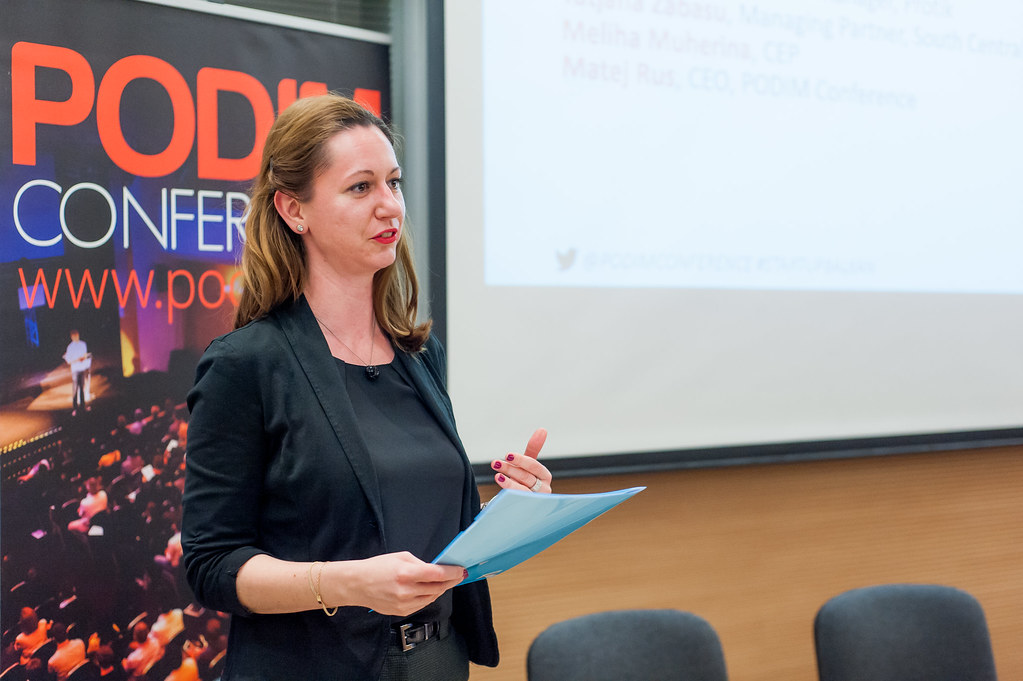
Event in Tirana was opened by Milena Radenković, Deputy Head of Mission at the Embassy of the Republic of Slovenia, who welcomed the participants and expressed her support to CEP for the work done, continued by Kebiana Doci, Political, Press and Public Affairs Officer at British Embassy who presented the work of UK in the field and stated that they are supporting initiatives like this as one of the leaders in technology and development. She also gave an insight into the topic of digital technology and youth, which in her opinion greatly helps in creating job growth and economic opportunities for the countries. Further on participants were welcomed by Ernest Nako, Ecocystem Manager at the host organization, Protik. He shortly presented the work they do and start-up ecosystem in Albania, while he also stressed the importance of such opportunities for youth and growth in Albania. Fourth on the agenda was Tatjana Zabasu, Managing Partner, South Central Ventures, who strongly encouraged the participants to apply for Podim challenge, as well to step out of their comfort zone and think globally, but especially not to give up early in the process. She was followed by Meliha Muherina, CEP Project Manager, who gave an insight into the beginnings of the project started by CEP within Positive Agenda for the Youth in the Western Balkans, adopted at the Brdo-Brijuni process summit in Slovenia in April 2015. Finally Matej Rus presented Podim conference and ways for startups to join.
First keynote speech was delivered by Igor Madzov, South Central Ventures Partner, giving an insight into what it means to be investable, what funding to consider, how to be prepared for the avalanche of questions, and gave five essential elements that lead to success: idea; team/execution; business model; funding; timing. Second keynote speech was delivered by Mateja Lavrič, Kolektor Ventures, elaborating on finding synergies and cooperation between corporations and start-ups. Start-ups (Tomi Kallanxhi, Altro Post; Vitjola Viso, Co-Founder at VIS(i)O(n) Design), potential investors (Tatjana Zabasu, Managing Partner, South Central Ventures; Mateja Lavrič, Kolektor Ventures) and local organization (Ergest Nako, Protik Innovation Center) joined into a panel on funding landscape and business opportunities in 2018 in the region
7 local start-ups were given a chance for a three-minute pitch, followed by a feedback delivered by experts and potential investors. Event concluded with informal meeting in relaxed environment between investors and startups.
Start:up Balkan is program in the framework of the project ‘Establishing an Integrated Start-up Ecosystem in the Western Balkans’ powered by CEP and PODIM and supported by the British Embassy in Ljubljana.

19. 2. 2018 | PR
Na gradu Jable se je 16. februarja odvil tretji dialog v seriji razprav o prihodnosti Evropske unije, tokrat osredotočen na demokratično legitimnost EU in institucionalne spremembe, ki ga je organiziralo Ministrstvo za zunanje zadeve RS, udeležili pa so se ga tudi predstavniki Centra za evropsko prihodnost. Dogodka se je udeležilo več kot 30 udeležencev med katerimi so bili predstavniki ministrstev, državne uprave, izobraževalnih institucij, nevladnih organizacij in medijev.
Središče razprave se je osredotočilo na izmenjavo strokovnih stališča glede vprašanj institucionalnega ustroja, s katerimi se soočamo kratkoročno v luči prihajajočih volitev v Evropski parlament naslednje leto, ter širših in dolgoročnejših vprašanj, povezanih z demokratično legitimnostjo EU.
Dogodek je bil odprt s strani državnega sekretarja Iztoka Mirošiča, ki je predstavil glavne izzive s katerimi se soočata tako Slovenija kot tudi EU, s poudarkom na težave med EU in nacionalno identiteto, integracijo, naravo razmerij med državami članicami ter EU institucijami in težave pri doseganju sprememb. Vsa ta vprašanja so v prvi vrsti politična, a zaradi pomena za celotni ustroj in način delovanja Unije tudi izrazito ustavnopravnega značaja. Udeleženci so se strinjali, da so za legitimnost institucij ključnega pomena enakost držav članic, komunitarni način odločanja z neodvisno Evropsko komisijo ter vključujoče, pregledni in demokratični postopki odločanja znotraj EU institucij.
Živahna razprava med udeleženci se je dotaknila tudi težav pri izstopu Združenega kraljestva iz EU, morebitne bodoče vzpostavitve transnacionalnih list za evropske volitve, postopek izbire in imenovanja predsednika Evropske komisije, predlog za združitev funkcij predsednika Evropske komisije in predsednika Evropskega sveta ter vprašanje morebitnega zmanjšanja števila evropskih komisarjev. Udeleženci na dogodku so se strinjali, da je potrebno slediti slovenskim nacionalnim interesom, ki gredo v smeri iskanja rešitev za povečanje demokratičnosti EU.

16. 2. 2018 | PR, Slovenian Development Assistance
Since the adoption of the historic resolution 1325 in the UN Security Council in 2000 the women, peace and security agenda has gained importance. Many countries consequently developed national action plans or other strategic documents for the implementation of the resolution and its subsequent resolutions. Ministries of Foreign Affairs of Slovenia and Norway on Thursday and Friday organised an event to exchange views and experiences (good practices and lessons learned) between Slovenia and Norway as well as with experts from the Western Balkan region on the development and implementation of national action plans on women, peace and security. Special attention will be paid to the role that national action plans can play in interlinking all elements of the agenda and in synergizing efforts to achieve sustainable peace, security, and prosperity in conflict-affected or fragile countries based on a human rights-based approach.
Centre for European Perspective has been active in the field of peacebuilding, conflict prevention and crisis management in the last decade with a series of research, capacity building and development assistance projects, on a national level but also through various EU projects, building its internal expertise in this topic.
UN Resolutions are extremely important in this area but so is the notion that there is no ‘one size fits all’ solution to this topic when we look at different countries. A possible lack of resources might also add to the fact that results in some countries might be a bit more modest. The variations of focus related to gender topics was changing quite fast from the Resolution 1325 to Resolution 2242, which is additionally focusing on weapons, terrorism and extremism. Countries must therefore be quick to adapt their strategies in recruitment, training and deployment.
Overall, the topics of peace, security and development assistance seem to be far from the hearts of the Slovenian public. The general public in Slovenia has difficulties understanding why exactly Slovenia should be part of it and relations between the external and internal security nexus. Those topics are also not particularly interesting for the media. A very narrow professional audience in the military, police and foreign affairs seems to understand what might all be about.
To have more peacekeeping representatives and then consequently also women’s representatives should be a strategic choice of a country and demands decision makers’ support.
Slovenia is the ninth country in the World with 4,2% of its military active with troops abroad. Out of almost 1000 military representatives deployed in 2016, almost 10% were women and their share rose from 7% in 2011. Slovenian Police deployed 23 representatives in 2016 and 5 of them were women, which constitutes an almost 22% share. In case Slovenia would want to have more female representatives active in the peacekeeping activities, it should have a clear objective defined first and then a strategy how to achieve it. Applicable research on the topic would help to understand why more women do not apply for peacekeeping missions.
There seems to be great imbalance between the military and civilian secondments in Slovenia. The civilian deployments namely do not only include police deployments but several other civilian positions, from mediators to judges, prosecutors, legal assistance and areas involving access to justice, border security, human rights and gender equality expertise, forensic pathology, victim identification and investigation of war crimes, rapid search and rescue support, correctional services, competence related to the operating environment as well as conflict and culture sensitivity. If properly developed, the export of Slovenian know-how in this field could be increased. Slovenia should therefore seriously consider developing its civilian niche capabilities in the field of conflict prevention, possibly include the gender equality as one of the topics and then create and maintain a pool of experts, who are trained to be deployed to the missions.
The overall framework of civilian crisis management would need a separate strategy and boost, simultaneously more should be invested in the education and promotion of topics in the field of security (peacekeeping, terrorism, migrations, etc.) in general but also in attracting proper civilian experts and the legislation should be adapted that those are not just public officials. Smaller countries might achieve greater foreign policy impact and visibility with higher civilian representation in the peacekeeping missions. Germany seconds 7 military representatives per one civilian. In Finland that ratio is 5 to one, whereas in Slovenia there are over 30 military deployments per 1 civilian.
It is therefore important that one country knows itself, which areas is it good in and then develops those capabilities in a coherent and planned manner. Slovenia definitely has also women representatives, who are very good subject matter experts in various areas. Strategic orientation in the field of crisis management is crucial. We need to know what do we want and then encourage what we want.

Op-ed was written by Ivana Boštjančič Pulko, Project Manager and Researcher at the Centre for European Perspective since 2008. Her focus are mainly development assistance projects in the Western Balkans in the area of security sector and rule of law reform as well as research activities in the field of conflict prevention and crisis management.
The views expressed in CEP commentary are the views of the author alone.