28. 2. 2018 | PR, Start:up Balkan, Youth
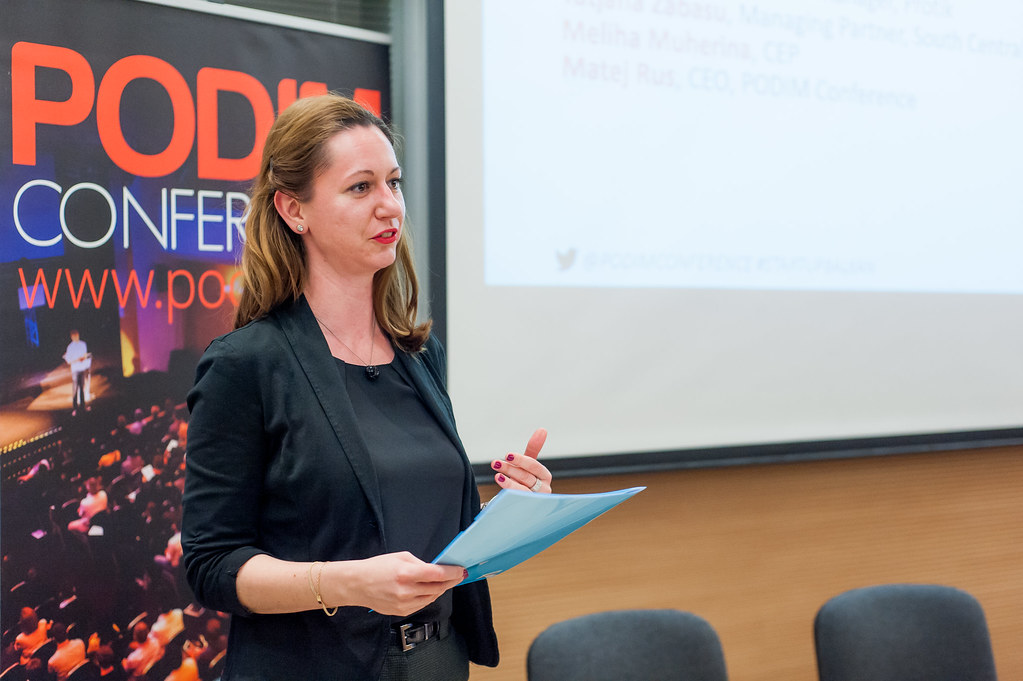
Centre for European perspective (CEP) has successfully concluded its sixth and last event in the framework of the Start:up Balkan tour in Podgorica. 50 young entrepreneurial people participated in the workshop and 6 start-ups pitched their idea in front of business experts and potential investors.
Participants in Podgorica were welcomed by H.E Mr Mitja Močnik; Ambassador of the Republic of Slovenia, who stressed the importance of transfer of good practices from Slovenia to the countries of WB and role of CEP as one of the key players in the region. Further on participants were welcomed by Vanja Madzgalj, Director at British Council, Podgorica, with importance of quality of education for all children and growing inequalities in the region. She also presented various projects British Council is currently working on in the region. Further on, participants were welcomed by the local host, Predrag Lešić, Smart Whatever enthusiast, Co-founder, Digitalizuj.Me, who expressed his satisfaction with the large crowd that gathered at the premises and said couple of words on the startup ecosystem in Montenegro. Gorazd Justinek, CEP Director shed a light on role of CEP as the initiator of the project held as one of the first projects within Positive Agenda for the Youth in the Western Balkans adopted at the Brdo-Brijuni process summit in Slovenia in April 2015. Finally Matej Rus presented Podim conference and ways for startups to join.
Three keynote speeches were delivered. First one on the stage was Florian Kandler, Fundraising Expert and Startup Mentor, GetFunding.how, from Vienna with tips and tricks for successful fundraising. He focused his speech on how can startups at the beginning of their path get funding, how to recognize a fundable business and elaborated on why founders often fail (start too late, under-estimate the time required, don’t know how investors work and don’t know how to create momentum). Further on debate revolved around fundraising process and importance of good research. Second lecture was by Matt Kuppers, Founder&CEO, Startup Manufactory, London who elaborated on how to identify competitive advantage in AgroBusiness, with offering some advices on acquiring EU funds. Third lecture was delivered by Letitia Seglah, Fintech and RegTech Consultant, Startup Manufactory, from London with a lecture on: “Is your business ready for Blockchain, cryptos or ICOs?”, elaborating on what is an ICO; ICO vs IPO; campaign timeline and ingredients for successful ICO: skill, game theory, fast reflexes and luck.
Elma Hot, BeeAnd.Me, Jovana Miljanić, DVARP, Jan Kobler, SC Ventures, Predrag Lešić. Digitalizuj.Me and Verena Wahlandt, Startup PR joined into a panel an investor’s panel, discussing funding landscape in the region. Debate revolved around smart cities, technology and architecture, ICOs, block chain technology, startup PR and getting media attention. Panelists discussed also current status of funding landscape in the region, recognizing main issues and troubles that startups at the beginning of their path are facing, such as funding, scaling, finding support, good team, lack of entrepreneurship mentality and dealing with failures.
6 local and international start-ups were given a chance for a three-minute pitch, followed by a feedback delivered by experts and potential investors. Event concluded with informal meeting in relaxed environment between investors and startups.
Start:up Balkan is program in the framework of the project ‘Establishing an Integrated Start-up Ecosystem in the Western Balkans’ powered by CEP and PODIM and supported by the British embassy in Ljubljana.

21. 2. 2018 | PR, Start:up Balkan, Youth
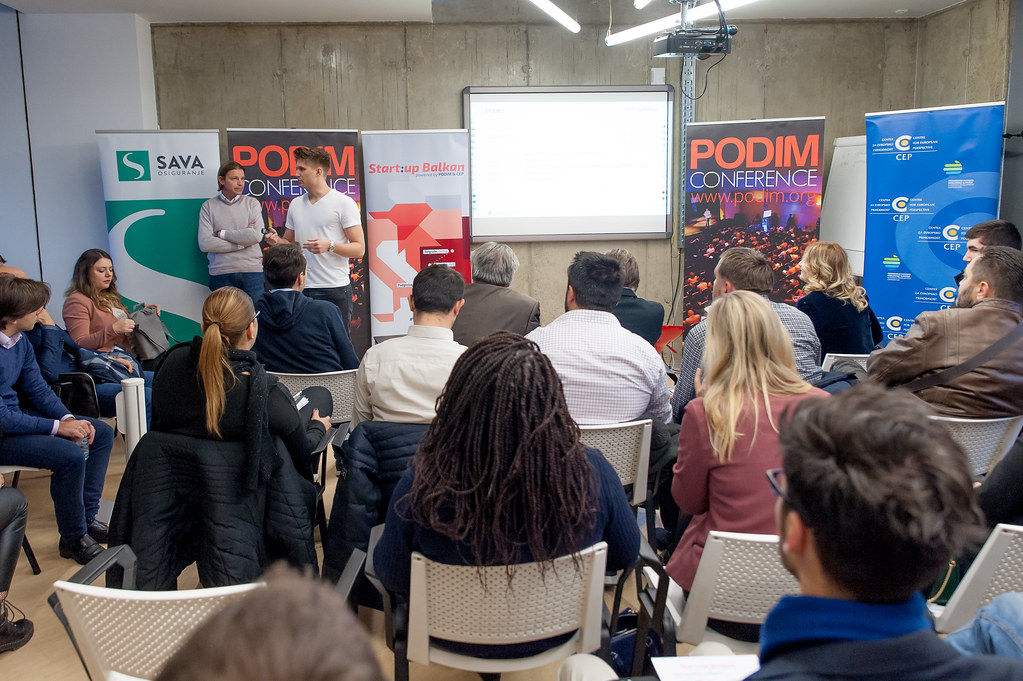
Centre for European perspective (CEP) has successfully concluded its fifth event in the framework of the Start:up Balkan tour in Skopje. 70 young entrepreneurial people participated in the workshop and 6 start-ups pitched their idea in front of business experts and potential investors.
Participants in Skopje were welcomed by H.E Prof. Dr. Milan Jazbec; Ambassador Extraordinary and Plenipotentiary, Slovenia, who stressed he sees CEP as a key instrument of Slovenian soft power and compared it to top ten European think tanks around Europe. He also mentioned the importance of such projects for the region and encouraged youth to develop their ideas into plans. Further on participants were welcomed by local host, Vesna Ivanoska, CEO, Seavus Educational and Development Center who shared her satisfaction with seeing such a large crowd of highly potential and inspirational people. Gorazd Justinek, CEP Director shed a light on role of CEP as the initiator of the project held as one of the first projects within Positive Agenda for the Youth in the Western Balkans adopted at the Brdo-Brijuni process summit in Slovenia in April 2015. Finally Matej Rus presented Podim conference and ways for startups to join. Two potential investors, Iskratel and Sava representatives presented themselves, work they do, and ways youth can join into their activities, while stressing the importance of such events for giving new possibilities and creating new opportunities.
Three keynote speeches were delivered. First one on the stage was Igor Madzov, Associate, South Central Ventures, who gave an insight into what it means to be investable, what funding to consider, how to be prepared for the avalanche of questions, and listed five essential elements that lead to success: idea; team/execution; business model; funding; timing and explained what they offer is infrastructure for succeeding. Second was Elena Draganovska, InPlayer, with suggestions on how to build and grow the company into a successful business, explaining that road to success leads through market analysis, getting the expertise you need, and building a good team. Third speech was done by Maris Prii, Startup Wise Guys, with an insight on accelerator programs and their value offers. She explained her views on different start up phases, accelerator vs. incubator; as well as selection criteria done by different organizations, where largest focus is given to the selection of the team.
Csaba Kakosy, Managing Partner, CEO, Day One Capital, Elena Draganovska, Head of Customer and Sales Support, Inplayer, Ivana Stanković, Investment Manager, South Central Ventures and Maris Prii, COO, Startup Wise Guys joined into an investors panel, discussing funding landscape in the region. Debate revolved around differences between different investors, cooperation between investors, private vs. public funds, ICOs and general state of affairs in the region.
6 local and international start-ups were given a chance for a three-minute pitch, followed by a feedback delivered by experts and potential investors. Event concluded with informal meeting in relaxed environment between investors and startups.
Start:up Balkan is program in the framework of the project ‘Establishing an Integrated Start-up Ecosystem in the Western Balkans’ powered by CEP and PODIM and supported by the British embassy in Ljubljana.

20. 2. 2018 | Kosovo - Entrepreneurs, PR, Start:up Balkan, Youth
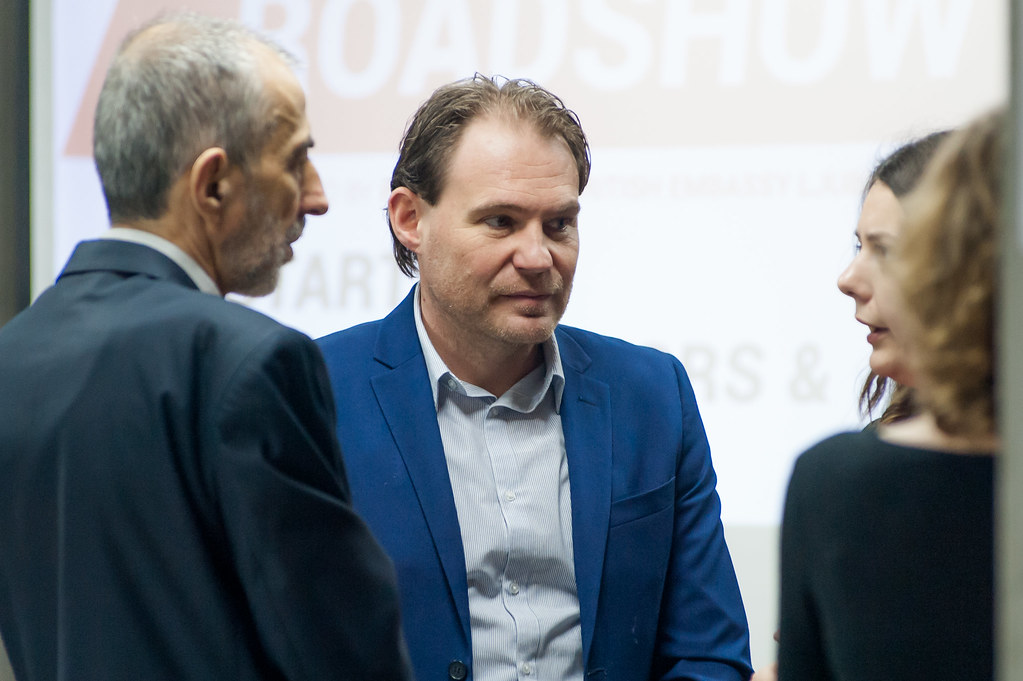
Centre for European perspective (CEP) has successfully concluded half of its way with fourth pit-stop of the Start:up Balkan tour in Pristina. 70 young entrepreneurial people participated in the workshop and 15 start-ups pitched their idea in front of business experts and potential investors.
Event in Pristina was opened by H.E Mr Bojan Bertoncelj, Ambassador of the Republic of Slovenia, who thanked CEP for organizing the event and stressed CEP is one of the leading organizations in development cooperation field in the region. He expressed his satisfaction with the turnout at the event, and the importance of such events for Kosovo, which is facing large brain drain and is in need of such opportunities. Participants were at the venue welcomed by host, Uranik Begu, Executive Director, Innovation Centre Kosovo, presenting start-up ecosystem in Kosovo, and arguing such events are not only important for the region, but especially to Kosovo, as one of the most isolated countries in the region, and involving them into such conferences presents a window of opportunity for Kosovo youth, a meeting space for meeting peers from the region, and removes a big communication barrier. Third on the agenda was Tatjana Zabasu, Managing Partner, South Central Ventures, who strongly encouraged the participants to apply for Podim challenge, and is looking forward meeting youth startups, since they have not yet had any investments in the region. She was followed by Meliha Muherina, CEP Project Manager, who gave an insight into the beginnings of the project started by CEP within Positive Agenda for the Youth in the Western Balkans, adopted at the Brdo-Brijuni process summit in Slovenia in April 2015. Finally Matej Rus presented Podim conference and ways for startups to join.
Keynote speech was delivered by Igor Madzov, South Central Ventures Partner, giving an insight into what it means to be investable, what funding to consider, how to be prepared for the avalanche of questions when pitching, and gave five essential elements that lead to success: idea; team/execution; business model; funding; timing. Fireside chat was done with Mergim Cahani, Founder & Chief Executive Officer, Gjirafa, who presented the beginnings of their start-up journey, current start-up ecosystem in Kosovo, advices on keeping competitive, stressing the use of local languages, and importance of minimalizing the risks, dealing with failures and improving after recognizing the failures. Investors and startups joined into a panel on current funding landscape in the region, where good pitching, red flags, team dynamics, role of advisors and many more were discussed.
15 local start-ups were given a chance for a three and one-minute pitch, followed by a feedback delivered by experts and potential investors. Event concluded with informal meeting in relaxed environment between investors and startups.
Event in Pristina is part of the project ‘Empowering Kosovo young entrepreneurs’, financed by the Ministry of Foreign Affairs of Republic of Slovenia in the framework of Slovenia’s development cooperation.

20. 2. 2018 | PR, Serbia - Opening Data
Centre for European Perspective is organizing international conference „Experience Exchange in Opening of Public Sector Data“, which will take place on Wednesday, 28 February 2018 in Belgrade, Hotel Zlatnik, Dobanovačka 95. A dynamic conference in an interesting format is organized in the framework of the Official Development Cooperation between the Republic of Slovenia and Republic of Serbia in order to present the best experiences and practices from both countries.
Data in the public sector are a newly discovered drivers of development. In Europe, there is a growing awareness of the fact that the public sector generates a large amount of data that are not useful only within the state administration system, but bring multiple benefits to the economy, science and society as a whole. Among its key priorities, the European Union has set the goal to increase the exchange of information and knowledge, to open up public data and facilitate cooperation among public bodies while creating and delivering public services. This will make public administration more efficient and offer user-friendly and tailored public services at a lower cost and with less administrative difficulties. The strategy of opening up public administration and its data is related to citizens’ participation in the public processes and decision-making. Such approach is embedded both in the strategic documents of Slovenia and Serbia.
While implementing the policies of opening the public sector data, the states go through different development stages of readiness and preparedness – from access to public information and data, governance and data exchange within the Government, e-Government, opening and publishing data for reuse and to various applications that use public sector data or so-called open data portals; all for the stages aiming to provide good public services for citizens and business. The ultimate goal is a free flow of all public data across Europe.

The purpose of the conference is to enable a comprehensive exchange of thoughts, experiences and practices between all interested parties (representatives of government, independent institutions, experts from the public administration, representatives of business sector, the media, academic institutions and civil society). The format of the conference will serve as a tool to obtain new ideas for encouraging an open, transparent and inclusive public administration, which is an important aspect of the endeavour for the EU membership, with a goal to strengthen the public sector data opening.
The conference is part of the CEP program activities financed by the Ministry of Foreign Affairs of the Republic of Slovenia in the scope of international development cooperation.
Read this article in Serbian or Slovenian.

20. 2. 2018 | PR, V4, Youth
It is our pleasure to announce selected young participants for the public debate in Brussels ‘Back on the Agenda: EU Enlargement and Western Balkans’. The event will actively involve young individuals from all Western Balkan countries!
We will be addressing the EU enlargement fatigue on one side and Western Balkans’ lack of reform on the other. In January, CEP has launched a call for applications among young who outlined solution and policy recommendation proposals on the most pressing challenges in their countries.
The winning essays were authored by:
Alba Brojka
Aleksandra Kapetanović
Emina Balota
Besnik Avdiaj
Lolita Hasani
Mak Selimović
Participants will be invited to actively participate at the public discussion in Brussels in April 2018.
Congratulations!
Event is done in cooperation with Institute for Foreign Affairs and Trade (IFAT) (Hungary), EUROPEUM Institute for European Policy (Czech Republic), Slovak Foreign Affairs Association (SFPA)and Polish Institute of International Affairs (PISM) and supported by International Visegrad Fund.

20. 2. 2018 | PR, Start:up Balkan, Youth
Centre for European perspective (CEP) has successfully concluded its third pit-stop of the Start:up Balkan tour in Tirana. 50 young entrepreneurial people participated in the workshop and 7 start-ups pitched their idea in front of business experts and potential investors.
Event in Tirana was opened by Milena Radenković, Deputy Head of Mission at the Embassy of the Republic of Slovenia, who welcomed the participants and expressed her support to CEP for the work done, continued by Kebiana Doci, Political, Press and Public Affairs Officer at British Embassy who presented the work of UK in the field and stated that they are supporting initiatives like this as one of the leaders in technology and development. She also gave an insight into the topic of digital technology and youth, which in her opinion greatly helps in creating job growth and economic opportunities for the countries. Further on participants were welcomed by Ernest Nako, Ecocystem Manager at the host organization, Protik. He shortly presented the work they do and start-up ecosystem in Albania, while he also stressed the importance of such opportunities for youth and growth in Albania. Fourth on the agenda was Tatjana Zabasu, Managing Partner, South Central Ventures, who strongly encouraged the participants to apply for Podim challenge, as well to step out of their comfort zone and think globally, but especially not to give up early in the process. She was followed by Meliha Muherina, CEP Project Manager, who gave an insight into the beginnings of the project started by CEP within Positive Agenda for the Youth in the Western Balkans, adopted at the Brdo-Brijuni process summit in Slovenia in April 2015. Finally Matej Rus presented Podim conference and ways for startups to join.
First keynote speech was delivered by Igor Madzov, South Central Ventures Partner, giving an insight into what it means to be investable, what funding to consider, how to be prepared for the avalanche of questions, and gave five essential elements that lead to success: idea; team/execution; business model; funding; timing. Second keynote speech was delivered by Mateja Lavrič, Kolektor Ventures, elaborating on finding synergies and cooperation between corporations and start-ups. Start-ups (Tomi Kallanxhi, Altro Post; Vitjola Viso, Co-Founder at VIS(i)O(n) Design), potential investors (Tatjana Zabasu, Managing Partner, South Central Ventures; Mateja Lavrič, Kolektor Ventures) and local organization (Ergest Nako, Protik Innovation Center) joined into a panel on funding landscape and business opportunities in 2018 in the region
7 local start-ups were given a chance for a three-minute pitch, followed by a feedback delivered by experts and potential investors. Event concluded with informal meeting in relaxed environment between investors and startups.
Start:up Balkan is program in the framework of the project ‘Establishing an Integrated Start-up Ecosystem in the Western Balkans’ powered by CEP and PODIM and supported by the British Embassy in Ljubljana.