3. 4. 2019 | PR
Izvršna direktorica Ustanove – Center za evropsko prihodnost (CEP) Katja Geršak in generali sekretar Ministrstva za zunanje zadeve Damjan Bergant sta danes podpisala dvoletno pogodbo o financiranju osmih projektov v okviru mednarodnega razvojnega sodelovanja, ki jih bo CEP v letih 2019 in 2020 izvajal v državah Zahodnega Balkana. Trije projekti so regionalni in vključujejo več držav v regiji, skupna vrednot pogodbe pa je 542.000 evrov.
Vlada Republike Slovenije je CEP ustanovila leta 2006 in od ustanovitve je Center uradni izvajalec mednarodnega razvojnega sodelovanja. Svoje aktivnosti v okviru MRS CEP usmerja predvsem na države Zahodnega Balkana, kjer je s prenosom slovenskih dobrih praks in znanja za krepitev stabilnosti in varnosti v regiji ter kot podpora državam pri njihovem približevanju evro-atlantskim integracijam center izvedel že preko 200 različnih usposabljanj. V zadnjih letih CEP krepi tudi svoje think-tank aktivnosti, saj se želi uveljaviti kot eden izmed slovenskih ‘možganskih trustov’.
Projekti CEP, ki bodo s pomočjo sredstev mednarodnega razvojnega sodelovanja izvedeni v naslednjih dveh letih so:
Krepitev preglednosti pri delu volilnih organov v Albaniji
Projekt je usmerjen v prenos dobrih praks in izmenjavo izkušenj na področju izvedbe transparentnih in demokratičnih volitev. Namen projekta je, da se albanske organizacije, ki se ukvarjajo z volitvami, spodbudi k povečanju transparentnosti volitev v celotnem volilnem ciklusu.
Pomoč BiH na poti v EU
Cilj projekta je izvedba usposabljanj za javne uslužbencev na vseh ravneh vlade BiH iz izbranih poglavij acquis communautaire, ki jih je BiH identificirala kot prednostne v letih 2019 in 2020 in sicer poglavja 2 – Prost pretok delovne sile, 3 – Pravica do ustanovitve in prost pretok izvajanja storitev, 10 – Informacijska družba in mediji, 19 – Socialna politika in zaposlovanje ter 23 – Pravosodje in temeljne pravice.
Podpora pri razvoju Avio-helikopterske enote MNZ Črne gore
Cilj projekta je razvoj zmogljivosti Avio-helikopterske enote Črne gore za izvajanje različnih javnih storitev. Povečana zmogljivost je pomembna zaradi boljše odzivnosti in kakovosti javnih storitev na področjih, ki jih pokriva helikopterska enota in so življenjskega pomena za prebivalce Črne gore.
Pomoč Republiki Severni Makedoniji pri Poglavju 24 – finančne preiskave
Cilj projekta je nadaljnja krepitev zmogljivosti Severne Makedonije na področju finančnih preiskav za uspešen boj proti organiziranemu kriminalu, težkim oblikam kriminala in korupcije ter učinkovito izvajanje acquisa communautaire iz Poglavja 24. Finančno preiskovanje je pomembno orodje v boju proti kriminalu saj z odvzemom protipravno pridobljene premoženjske koristi in premoženja nezakonitega izvora preprečimo nadaljnje izvajanje kaznivih dejanj.
Evropska izmenjava aktivnosti digitalne diplomacije
Cilj regionalnega projekta je nadaljnja krepitev zmogljivosti držav pri načrtovanju, usklajevanju in pripravi digitalnih kampanj, kar ima neposreden vpliv na oblikovanje javnega mnenja. Sofinancirani bosta dve iz niza usposabljanj, ki so namenjena vladnim komunikatorjem iz držav Zahodnega Balkana Gruzije, Moldavije in Ukrajine. Projekt financira Zunanje ministrstvo ZDA ob podpori urada predsednika vlade in kabineta Združenega kraljestva.
Kompas učenja – izobraževanje učiteljev za delo z otroki s posebnimi potrebami
Specifični cilj regionalnega projekta je izboljšanje položaja osnovnošolskih otrok s posebnimi potrebami z izobraževanjem učiteljev iz osnovnih šol v bolj odročnih krajih v štirih državah Zahodnega Balkana – Albanije, Kosova, Severne Makedonije in BiH. Na podlagi izvedenih delavnic, analize primarnih in sekundarnih virov ter slovenskih izkušenj bodo predstavljeni konkretni predlogi za izboljšanje stanja dela z otroki s posebnimi potrebami v osnovnih šolah.
Spodbujanje podjetništva med mladimi na Zahodnem Balkanu
Projekt nagovarja mlade podjetnike in zagonska podjetja s področja Zahodnega Balkana, ki si želijo predstaviti svojo podjetniško idejo, razviti svoje poslovne modele, poiskati investitorje ter sodelovati s somišljeniki v regiji. Cilj projekta je izobraževanje in povezovanje mladih podjetnikov, ki se soočajo s podobnimi izzivi. Previdene so delavnice za akterje podpornega okolja (pospeševalnike, inkubatorje, univerze) in mlade podjetnike v vseh šestih državah Zahodnega Balkana, ki bodo s svojo izdelano idejo in jasnim načrtom korakov za nadaljnji razvoj prišli tudi na delavnico v Slovenijo. Projekt sofinancira regionalna pisarna GIZ Sarajevo.
Krepitev zmogljivosti upravljanja patrulj
Cilj projekta je okrepiti zmogljivosti Srbije za boljše vodenje patrulj in s tem ustreznejši odziv na migracije in upravljanje razvojnih potencialov. Tako se bodo zmanjšale težave pri nadzoru državne meje, racionalizirana pa bo tudi uporaba človeških zmogljivosti. Ob zaključku projekta bodo zbrane vse potrebne informacije in pripravljena IKT-oprema za spremljanje in vodenje patrulj. Projekt sofinancira Swiss Agency for Development and Cooperation.


1. 4. 2019 | PR
Click here to read more about the project in Slovenian language. 
NATO remains vital to providing stability and security in the world and the region, a debate marking the alliance’s 70th anniversary and Slovenia’s 15-year membership of it heard on Monday.
NATO is a unique partnership which has despite various threats successfully provided for stability and security for 70 years, Katja Geršak, the executive director of the Centre for European Perspective, which organised the round-table, said.
She believes Slovenia is safer in NATO than outside it, she said. The public takes security for granted, so second thoughts about NATO which occasionally emerge in Slovenia are actually a result of the alliance’s success as a political and military alliance, she believes.
Similarly, Jelena Juvan from the Ljubljana Faculty of Social Sciences believes NATO will continue to pay an important role in European security and globally.
She agrees the key to success is cooperation rather than exclusion, both within NATO as well as with Russia and China.
Time and again, NATO proves to be a sufficient framework for providing security, which Juvan believes is a reason why various other initiatives about military cooperation are not successful.
She also highlighted NATO’s expansion to the Western Balkans, saying current developments in Bosnia and Serbia showed how fragile the situation in the region was.
Defence Ministry State Secretary Klemen Grošelj noted the public did not connect NATO with prosperity and security, so more should be done to change this.
He said Slovenia was committed to its NATO-related goals, noting a white paper on defence would provide a clear and realistic plan about their implementation.
Meanwhile, Laura E. Anderson from the US Embassy in Ljubljana stressed as she addressed the participants that the fact that NATO members would fight for and protect one another was what made it attractive.
She added the alliance was connected through common history and values, and its members worked towards preventing conflicts and keeping peace.
Anderson, highlighting NATO’s enlargement to the Balkans, noted that by expanding, NATO also expanded its responsibility and adapted to new security challenges.
Lawrence Chalmer, an US expert on international security, described NATO through three segments: cooperative security, common defence and crisis management.
While providing security has been its basis throughout the seven decades, mechanisms and contexts of its activity have been changing, he said, adding he considered Slovenia a voice of reason in NATO in the Western Balkans (source: STA).


1. 4. 2019 | PR
Click here to read more about the project in Slovenian language.
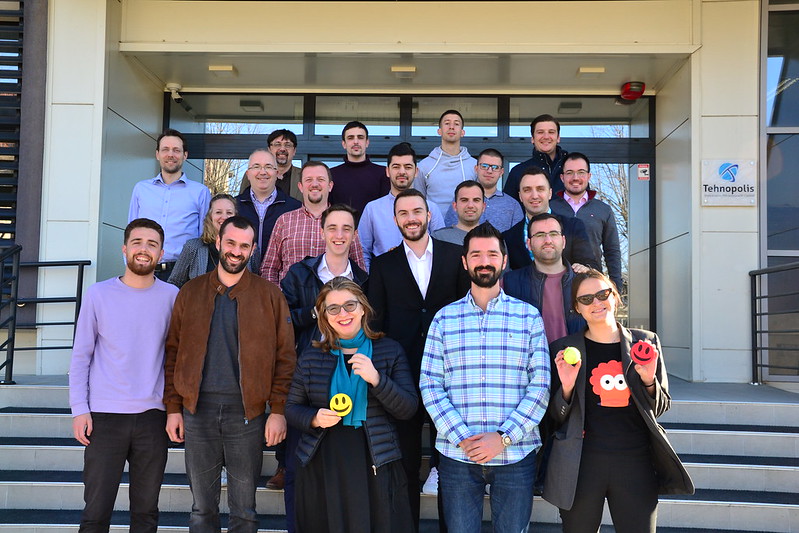
At the end of March Niksic in Montenegro hosted group of young with great business ideas, while three international experts have supported them in presentation skills, preparation of business plans and helped in search for right type of financing. This was second out of four workshops under project ‘Startup Academy’ that this spring Centre for European Perspective is implementing with GIZ office from Sarajevo.
First workshop was held in beginning of March in Tirana and was organized for supporting actors of the entrepreneurial environment (accelerators, incubators, universities), while this time we invited startups and young entrepreneurs from all six Western Balkans countries.
Interactive workshop gathered 17 youngsters that got a detailed insight in steps and in discussions and negotiations with investors, met different legal and economic expressions that are common in startup world, calculations of various costs and listened about rich experiences of the three experts from the region. Selma Prodanović, Florian Kandler and Sreten Vranić brought to the table immense know-how on investments, own experiences about startup development and knowledge about the WB region, its limitations and opportunities it is offering. Great emphasis was put as well on peer to peer learning as many startups share common challenges in different countries, but the answers might often be very similar.
In the second part of the workshop each of the participants presented his business idea in two-minute pitch, while the others put themselves in the shoes of investors that were asking about details and explanations that would be interesting for potential partners and/or investors. Each got several useful advice and information that they will be able to take into account when working on their next presentation or negotiations in near future.
All workshop activities were streamed toward one goal – to prepare young entrepreneurs as well as possible on attendance and cooperation at the regional startup Podim conference that is traditionally held in Maribor in May. Until then, group will meet once again in Pristina, and go through intensive 1:1 mentorship, which aims at making the best presentation for best yield at the conference when searching for potential investors, partners and supporters. Nobody has any doubt that the ideas presented are very good, it is now on the youngsters to represent and present them as good as they can.
 Project is part of the activities that are through the Slovenia’s Development Cooperation financed by the Ministry of Foreign Affairs of Slovenia.

30. 3. 2019 | PR
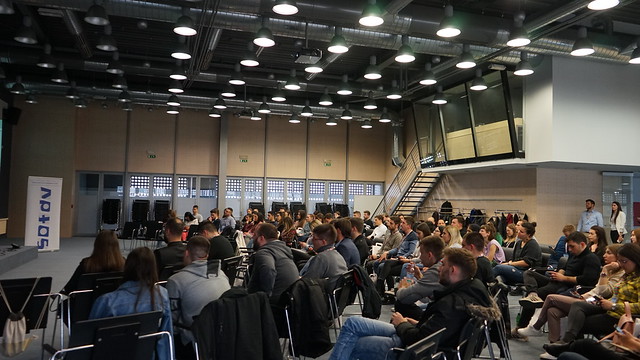
The Faculty of Social Sciences in Ljubljana was the setting of a panel discussion named „The Balkan Spring? Western Balkans and the rule of law” this Wednesday, March 27th. Public demonstrations in various countries of the region have expressed the will for societal change, and addressed their respectful governments to deal with focus points as corruption, limited civil liberties and media freedom. International forums for discussion and policymaker’s internal decisions in each of the countries will therefore determine the future of the region, and the future steps of their societies. The event unveiled the protest movements „1 in 5 million“ and „Justice for David“, focusing on the direction in which their momentum is leading the public debate of their countries. The discussion was a setting for a constructive debate among the guest speakers and the audience, that touched upon many interesting perspectives and insights.
The panel discussion welcomed representatives from academia, governmental institutions and media. CEP Executive director Ms. Katja Geršak, Mr. Daniel Fazlič, Editor and Journalist working for PRO PLUS, Ambassador Iztok Mirošič as Bled Strategic Forum Programme Director at the Ministry of Foreign Affairs of the Republic of Slovenia and Ambassador Vojko Vovk were invited as panel guests. The discussion was moderated by Ms Nina Pejič, Junior Researcher at the Faculty of Social Sciences.
CEP is very proud and honoured, that our Executive director Ms. Katja Geršak had the opportunity to participate in the discussion as a panel speaker and contribute her vast knowledge in the field of International relations, especially in the region of Western Balkans to this debate. CEP will continue to work closely within the region , where we are participating with a series of international projects that aim at establishing cooperation and sharing of best practices. A bright future in international and domestic politics will be highly dependant upon synergies and cooperation, that is why CEP is proud of every opportunity to work as a partner, inspiration or just a mediator, bringing a small piece of our effort to the colourful wider picture.

29. 3. 2019 | PR, U-LEAD: with Europe, Waste management
On 28th of March, the fourth study visit “Travel to Know – Travel to Change” in the framework of „U-LEAD with Europe – Ukraine – Local Empowerment, Accountability and Development” programme concluded with a closing ceremony in Krško.
The visit took place between 24th and 28th of March 2019 with 18 public officials from Ukraine visiting Ljubljana, Logatec, Vrhnika, Celje and Krško under the patronage of U-LEAD with Europe Programme. The project on the topic of waste management – “Upgrading Municipal Waste Management Services” – helps key actors of 36 selected amalgamated hromadas (AH) in three Ukrainian regions (Dnipropetrovsk, Volyn and Zhytomyr) to implement green approaches in the waste management sector and to obtain knowledge about the best practices of transparent and accountable waste management services, which is responsive to the needs of population.
The fourth international study visit put an emphasis on positive and negative cases of implementation of efficient waste management in Slovenia. Participants learned more about the experience in municipal waste management planning, municipal waste collection, treatment and disposal options during the visits to waste management companies Snaga Ljubljana, Kemis Vrhnika and Kostak Krško. Visiting a modern incineration and a waste treatment plant in Celje (Toplarna Celje) gave the participants an opportunity to get acquainted with new technologies that could be taken into consideration for further contribution of AHs to the regional waste management planning.
The fourth study visit was especially fruitful for Deputy Head of Krynychanska amalgamated territorial community from Ukraine, Mrs Trotsenko and the Mayor of Logatec, Mr Menard, who signed the letter of intent for cooperation during the visit to the Municipality of Logatec. The participants also met with the Mayor of Krško, Mr Stanko, who received the group and met with Mr Yevtukh, Deputy Head of Yemilchynska amalgamated territorial community, with whom they discussed the possibility for cooperation in the future.
The multi-donor action U-LEAD of the European Union and its Member States Denmark, Estonia, Germany, Poland and Sweden was established in order to carry out demand-driven and targeted training for officials at the national, regional and local level.
See the photo gallery of the project below.

28. 3. 2019 | Albania - Election, PR
Click here to read the news in Slovenian language
Within the framework of the International Development Cooperation of the Republic of Slovenia, the Center for European Perspective launched the two-year project “Strengthening the Transparency of the Electoral Bodies-Exchange of Experiences between Albania and Slovenia 2019-20”. The opening conference was held on Tuesday 26. March at the premises of the Central Election Commission. The conference will be followed by a workshop which will be held at the Hotel “Tirana”. between 26 and 28 March 2019. The conference was opened by her exellency Ms Lea Stančič Ambassdor of Republic of Slovenia to Albania, President of the Electoral Commission of Albania Klement Zguri and President of the National Election Commission of Slovenia Dušan Vučko.
The project addresses strengthening of democratic institutions, which is of utmost importance for Albania as a candidate country for EU membership. This process also includes elections and electoral system, which is one of the cornerstones of democratic development and the rule of law. The project focuses on the niche of ensuring transparency of the elections, which is an essential element of the credibility of the elections. The implementation of the project includes recognized experts from the field of election management: dr. Alenka Verbole, dr. Igor Gaon and Director of the State Election Commission of the Republic of Slovenia Dušan Vučko, who will share Slovenian and other experiences in this field. In addition to Albanian election experts, representatives of the Central Election Commission also representatives of international community were present at the opening. In the next two days, the workshop will be dedicated to representatives of non-governmental organizations, domestic observers and professional public. The recommendations regarding the observation of local elections will be discussed.
 The project is financed from the funds for International development cooperation of the Ministry of Foreign Affairs of the Republic of Slovenia.


26. 3. 2019 | PR
Centre for European Perspective (CEP) kindly invites you to a round-table discussion on 1st of April at 9.45. Slovenia is celebrating the 70th Anniversary of the signing of the North Atlantic Treaty and 15th Anniversary of Slovenian membership in the Alliance. Seven decades ago twelve countries from both sides of the Atlantic signed an agreement in Washington, seeking to promote stability and well-being in the North Atlantic area. They committed to fostering peaceful and friendly relations between members and beyond.
The North Atlantic Alliance was founded on the principles of democracy, individual liberty and the rule of law, it remains the backbone of our collective defence. After 70 years it still embodies the transatlantic link that binds North America and Europe in a unique defence and security partnership. NATO has experienced many challenges on its path from rebuilding of Europe after the WW II, the Cold War era, the fall of the Berlin Wall, the attacks of 9/11 and the so far only instance of Article 5 activation.
At 70 year anniversary we would like to reflect on the path traveled and on the future of NATO alliance. The round-table will discuss the role of NATO in our region, particularly in light of changes in our security environment as well as the importance of the transatlantic alliance. How will the alliance, which has overcome historic divisions and became the most successful alliance in history, overcome internal and external challenges? What will the NATO alliance look like in the 21st century? What is the future of NATO in the Western Balkans?
DATE: 1 April, 09.45 – 11.30
Location: Jable Castle
SPEAKERS:
Dr. Klemen Grošelj, State Secretary, Ministry of Defense, Slovenia
Lawrence Chalmer, Consultant on NATO and international security
Dr. Jelena Juvan, Faculty of Social Sciences
Moderated by Aleš Kocjan, Večer

25. 3. 2019 | PR, U-LEAD: with Europe, Waste management
U-LEAD with Europe: Ukraine – Local Empowerment, Accountability and Development Programme 4th international study visit that Slovenia is hosting began on Monday, 25th of March at Jable castle.
There are currently 18 public officials from Ukraine taking part in the fourth study visit from three Ukrainian regions: Dnipropetrovsk, Volyn and Zhytomyr. The topic of the visit is waste management and the visit is a part of the project “Upgrading Municipal Waste Management Services”, which helps key actors of 36 selected amalgamated hromadas in the mentioned Ukrainian regions to implement green approaches in the waste management sector.
Participants began their visit with an introduction day at Jable Castle, where they were welcomed by CEP Executive Director Ms Katja Geršak, Ms Andreja Purkart Martinez from the Ministry of Foreign Affairs and Mr Andrii Borodenkov, First Secretary from the Embassy of Ukraine in Slovenia.
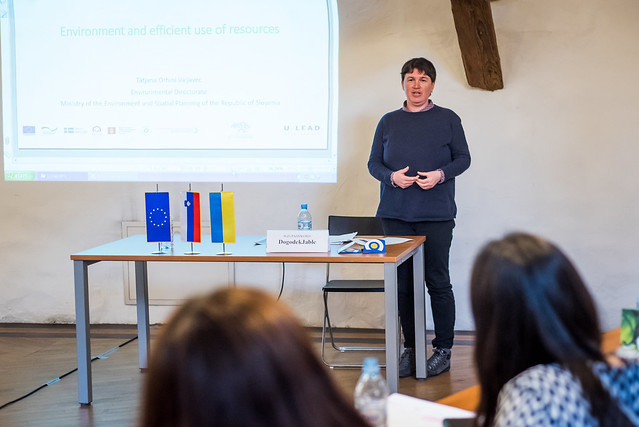
First day at Jable castle kicked-off with an activity organized by the moderator of the visit, Ms Meliha Muherina and a lecture on the topic of waste management in Slovenia by Dr Lucija Jurić Soršak from the Ministry for Environment and Spatial Planning , a lecture on EU approach to waste management and extended producer responsibility by Mag Radovan Tavzes, former director general of the directorate for environment. Ms Tatjana Orhini-Valjavec then led an active lecture on efficient use of resources and circular economy.
In the following days, the participants will learn more about the role of NGOs in efficient waste management and the importance of communication between the community and the municipality. They will also be able to experience Slovenian waste management in practice, as they will visit Snaga Ljubljana, Kemis Vrhnika, RCERO Celje, Toplarna Celje and Kostak Krško. The participants will also meet with the Mayor of Logatec and the Mayor of Krško.
The visit is taking place in the framework of the multi-donor action U-LEAD established by the European Union and its Member States Denmark, Estonia, Germany, Poland and Sweden. It is aimed to contribute to the establishment of multilevel governance that is transparent, accountable and responsive to the needs of the population of Ukraine. U-LEAD with Europe is supporting the Ukrainian Government, represented by the Ministry of Regional Development, Construction, Housing and Communal Services of Ukraine (MinRegion) as a key political partner, in the coordination and implementation of the decentralisation and regional policy reforms. The Programme carries out demand-driven and targeted trainings for officials at the national, regional and local level.